At Turkey’s COP31, artists put fossil fuels in the frame
Resumen detallado
ANTALYA, Turkey — Silver-plated dried plants rotated eerily in their terracotta pots. An old typewriter rose above a hill of shredded paper. There was also a portrait of Enver…
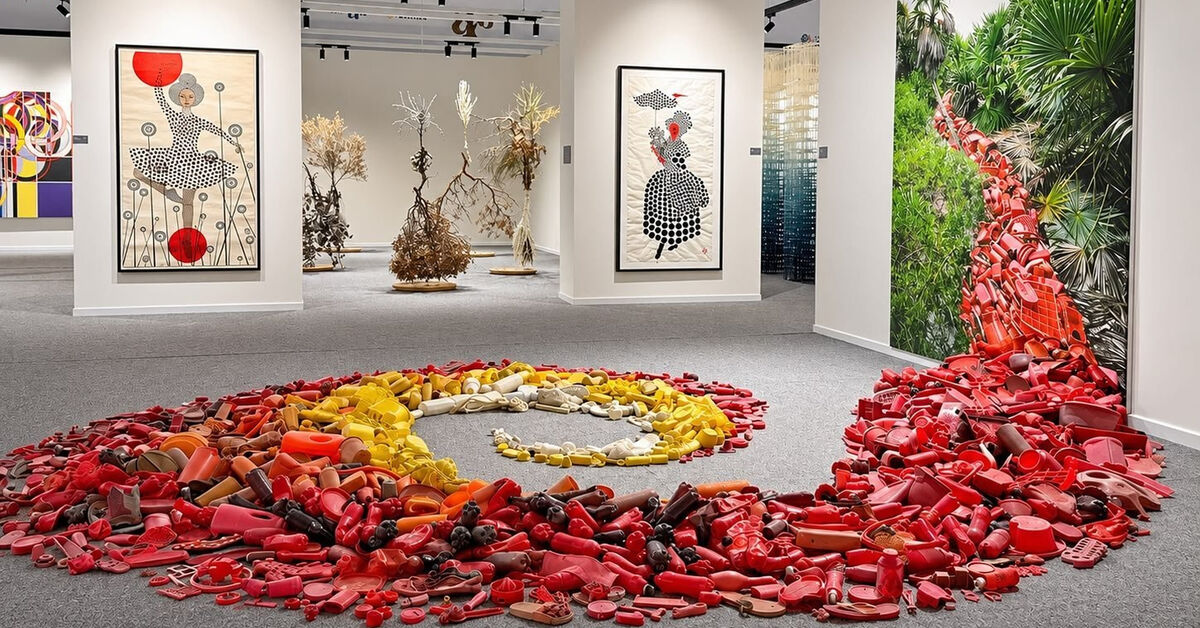
ANTALYA, Turkey — Silver-plated dried plants rotated eerily in their terracotta pots. An old typewriter rose above a hill of shredded paper. There was also a portrait of Enver Pasha, the war minister who led the Ottoman Empire into World War I, by Osman Hamdi Bey, who holds the Turkish auction record with his “Young Woman Reading,” which sold for about $7.8 million in 2019. In an 8,100-square-meter (roughly 2-acre) gallery in the Green Zone of the sprawling COP31 complex in Antalya, COPArt, the summit’s art program, put the ecological angst of artists from Turkey and beyond on display under the title “Still Possible.”
Many negotiators, activists and journalists will remember COP31 for how it ended. Initially scheduled for Nov. 9-20, the summit ran two days over as delegations struggled to reach a deal. It became the first COP since Copenhagen in 2009 to close without a cover decision, the overarching political text known this time as the Antalya Pact. The European Union and dozens of other countries rejected a final draft that made no direct mention of fossil fuels.
For the summit’s cultural organizers, however, the scorecard reads differently. “We did a world first,” Nagihan Ozel, who directed COPArt and curated its contemporary art selection, told the program’s closing panel on Nov. 20. Meanwhile, the Turkish Environment Ministry boasted that the United Nations had recognized COPArt as a legacy of Turkey’s presidency, to be carried forward at future climate summits.
“The work for COPArt started in May,” Samed Karagoz, COPArt’s art director and curator of its Palestinian section, told Al-Monitor. “We organized it in five parts: Ottoman calligraphy, classical Turkish painting, contemporary art, digital art and Palestine.”
“We reached out to galleries in the country and abroad, to private collectors and to artists directly,” Karagoz said. He cited as a major success the loan of Anselm Kiefer’s “Fur Rabbi Low,” in which the German artist uses a pair of scales to weigh…
Peo…
Inicio del artículo, extracto de Al-Monitor. Para leer el resto, abra el artículo en el sitio del medio.
MarketNews muestra el titular y el resumen publicados por el medio. El artículo completo se lee en el sitio del editor. (www.al-monitor.com)