Ebola’s Death Toll Tops 5,700. Can the Outbreak Be Contained?
Resumen detallado
Ebola is spreading faster than Congo’s health workers can respond. To save lives, they need stronger frontline clinics, community trust, and a vaccine.
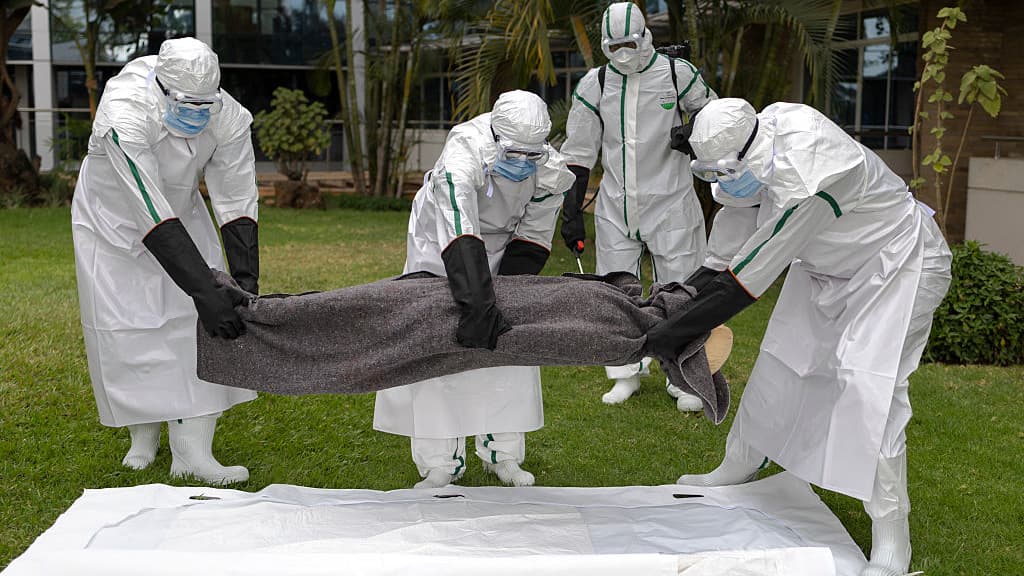
The Ebola outbreak that originated in the Democratic Republic of Congo (DRC) has surpassed 11,700 confirmed cases and 5,700 deaths as of Nov. 19, making it the largest and deadliest Ebola outbreak in the country’s history and the second-deadliest worldwide.
Katie Thomas-Canfield, who is based in Bunia, Congo, and serves as the Ebola response director for the International Rescue Committee, tells TIME that this outbreak’s deadly pace is informed by numerous converging factors.
“There's some element of it that is a perfect storm, and there's some very specific elements of this moment in time that have contributed to the fast evolution,” Thomas-Canfield says.
The latest outbreak crossed the 10,000-case mark in just 163 days—51 days sooner than the West Africa epidemic in 2014-2016, which was the world’s deadliest Ebola outbreak. It shows no signs of slowing as cases spread beyond Congo. Beyond Congo, Uganda has reported 20 confirmed cases and two deaths, Kenya nine cases and two deaths, and Nigeria one case. France confirmed a case in June in a doctor returning from a humanitarian aid mission in Congo. In November, a British doctor who tested positive in Congo was flown to London for treatment and has since recovered.
Thomas-Canfield and other experts argue that delayed detection, the specific strain of the virus being spread, and mistrust within the affected communities toward health care providers are all hampering the response—and suggest what needs to happen next.
Experts tell TIME that there are several reasons why this outbreak has spread so quickly and resisted containment.
A main contributor was late detection, according to Dr. Abdou Sebushishe, a senior health adviser with the nonprofit International Medical Corps. There was a large gap between when the outbreak started and when it was discovered, he says. According to the U.S.
“It’s quite serious because we now don't have access to all the [contacts] of the first case,” Sebushishe says.
Experts have linked this gap…
Inicio del artículo, extracto de Time. Para leer el resto, abra el artículo en el sitio del medio.
MarketNews muestra el titular y el resumen publicados por el medio. El artículo completo se lee en el sitio del editor. (time.com)