Study reveals secrets of ancient settlement in Arabian Peninsula
Resumen detallado
MUSCAT: An international scientific study, with the participation of Omani researchers, revealed that the availability of fresh water and ...
MUSCAT: An international scientific study, with the participation of Omani researchers, revealed that the availability of fresh water and suitable rocks for the manufacture of stone tools together formed a decisive factor in the spread of ancient humans and their settlement in the desert environments of the Arabian Peninsula during the past hundreds of thousands of years.
This study was featured on the cover of the latest issue of the international journal Nature under the title 'Stone and Water: The Rules of Ancient Human Settlement in the Desert'. It was prepared by Dr Ali bin Hamoud al Mahrouqi, a researcher in the Department of Archaeological Surveys and Excavations at the Ministry of Heritage and Tourism, and Dr Mohammed bin Hilal al Kindi, a geologist and CEO of the Earth Sciences Consulting Center, as part of an international scientific team comprising ten researchers from six countries in cooperation with a number of international research institutions and universities.
The study is the result of more than two decades of archaeological surveys and research in the Sultanate of Oman, carried out under the supervision of the Ministry of Heritage and Tourism, and has contributed in documenting hundreds of archaeological sites dating back to the Middle Stone Age, including sites in the Dhofar Governorate and the western slopes of Al Hajar Mountains.
The study said that the presence of fresh water alone was not enough for ancient humans to settle in desert areas, contrary to what previous scientific models had assumed. Rather, the availability of rocks suitable for making stone tools, especially flint, was a key factor in determining areas of human settlement. The results showed that about 57 per cent of the lands near ancient river courses in the Arabian Peninsula are located above geological formations that do not provide those rocks.
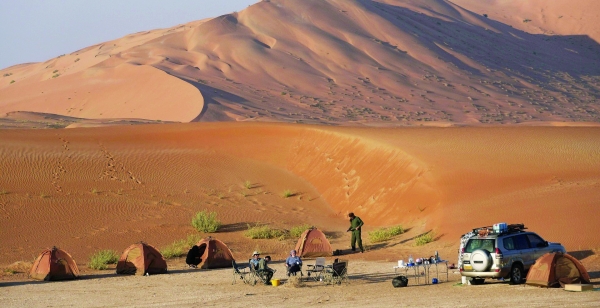
The researchers reached these conclusions following an expedition across the Empty Quarter desert in late 2023 that extended for a…
Th…
Inicio del artículo, extracto de Oman Observer. Para leer el resto, abra el artículo en el sitio del medio.
MarketNews muestra el titular y el resumen publicados por el medio. El artículo completo se lee en el sitio del editor. (www.omanobserver.om)