A New Mission Arrives at the Solar System's Most Mysterious Planet
Resumen detallado
The BepiColombo mission is about to go into orbit around Mercury. Its data could reveal how our solar system’s resident oddball formed.
The BepiColombo mission is about to go into orbit around Mercury. Its data could reveal how our solar system’s resident oddball formed.
Scientists once thought Mercury was a dead world, a blasted rock circling close to the sun. Like the moon, the planet was thought to be too small to still have a liquid core that could generate a magnetic field. The cores of small planets are thought to solidify soon after forming. So it was a big surprise when the Mariner 10 space probe detected traces of a magnetic field during its flybys of the planet in the 1970s. If Mercury had a magnetic field, the planet must also have a liquid iron in its core.
And Mercury just got weirder. Data from NASA's MESSENGER probe from between 2011 and 2015 revealed that its strange surface, seared by the sun, hid unexpected geological activity beneath. MESSENGER also detected a distinctive side-to-side "wobble" as Mercury orbits. This rocking motion meant the planet’s core had to be huge—about 60 percent of the volume of the planet, compared to about 15 percent for Earth.
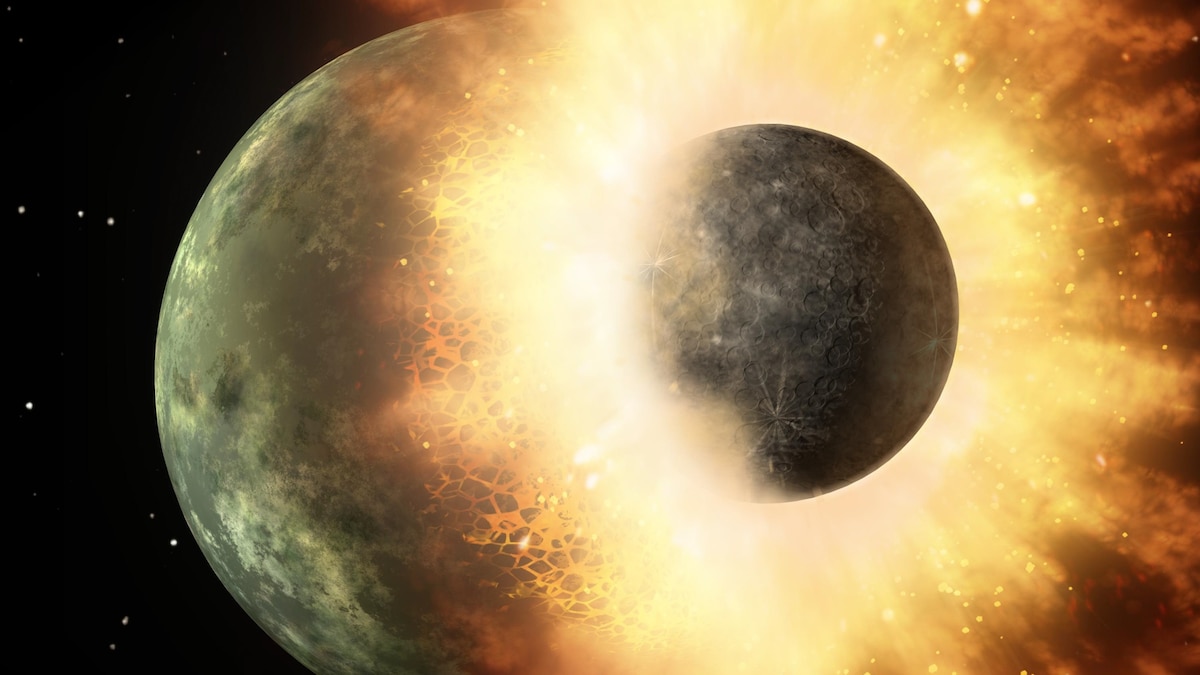
Scientists have taken this data and run it through various planetary formation models over the years. None of them fit. They wondered if perhaps Mercury had once been larger and lost its outer layers to a blast from the sun or a collision with another baby planet in the early solar system. But, so far, a full explanation for Mercury’s strange structure has eluded scientists.
Now, another robotic probe called BepiColombo, named after the Italian mathematician Giuseppe Colombo, is about to reveal much more about the solar system's most mysterious planet than ever before. After an eight-year journey, the mission’s two orbiters—the European Space Agency's Mercury Planetary Orbiter (MPO) and the Mio orbiter built by Japan's space agency JAXA—will finally be "captured" by Mercury's gravity on November 21.
BepiColombo is arriving just when understanding Mercury has become important for understanding how planets formed around distant…
Part of…
Inicio del artículo, extracto de National Geographic. Para leer el resto, abra el artículo en el sitio del medio.
MarketNews muestra el titular y el resumen publicados por el medio. El artículo completo se lee en el sitio del editor. (www.nationalgeographic.com)