Seeing Sea Country: how Traditional Owners are leading the way in caring for our oceans
Resumen detallado
First Nations communities have cared for Australia’s oceans over millenia.
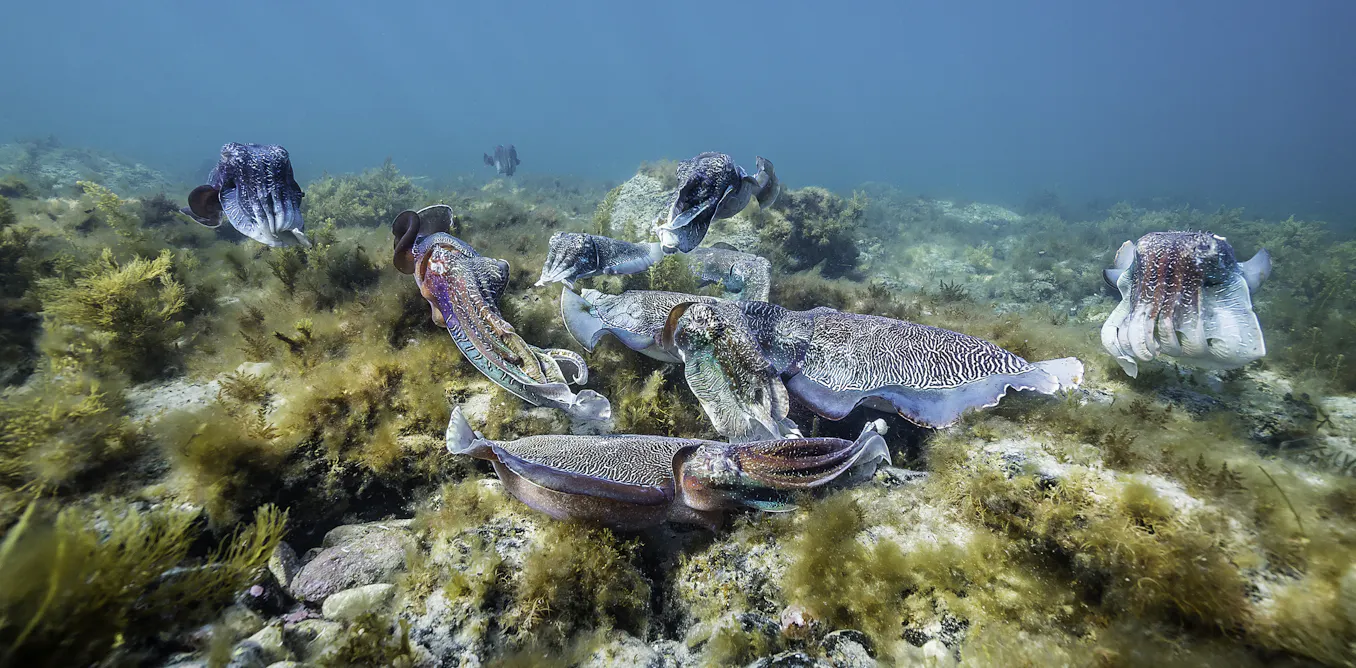
Every winter, giant Australian cuttlefish (Sepia apama) congregate in the cold shallows off Point Lowly near Whyalla in South Australia.
It’s the only mass gathering of cuttlefish on Earth. In a good year, more than 100,000 gather along eight kilometres of rocky reef to breed. Males flash blue, green, purple and gold as they compete for mates.
But this year, few of these technicolour giants made the trip. Scientists link low cuttlefish numbers to South Australia’s recent toxic algal bloom, fuelled by a marine heatwave.
Point Lowly sits on the traditional lands of the Barngarla people. The waters that surround it have been Sea Country for thousands of years.
For Aboriginal and Torres Strait Islander peoples, oceans and coastlines are not just places to visit or resources to exploit. They are “Sea Country”: living, kin-based territory that First Nations communities have cared for over millennia.
The disappearance of the cuttlefish is just one sign Sea Country is under threat. But our new study reveals not all hope is lost – if we embed First Nations knowledge into marine conservation.
Like Country on land, Sea Country is tied to First Nations culture, law and identity. Under Indigenous law, people are kin to the creatures, places and ancestral beings of the sea. Caring for Sea Country is like caring for a relative, and Sea Country cares for people in return. According to Mayala Elder Mitchell Tigan, Sea Country is something you come to know by listening and feeling, not by simply reading a book.
However, Sea Country remains a little-known concept. Our 2024 study found that virtually none of the South Australian students we surveyed were familiar with the term Sea Country.
Just as terra nullius provided the legal fiction that no one owned the land, colonial law treated the seas around Australia as empty space that belonged to no one, a concept known as “mare nullius”.
Inicio del artículo, extracto de The Conversation AU. Para leer el resto, abra el artículo en el sitio del medio.
MarketNews muestra el titular y el resumen publicados por el medio. El artículo completo se lee en el sitio del editor. (theconversation.com)