Trump had 4 reasons to ‘convince’ Nvidia to rehire Jensen Huang. Here’s why it matters globally
Resumen detallado
Who’s leading Nvidia matters well beyond the US – including the speed at which data centres are built worldwide.
Just 11 days after resigning as chip maker Nvidia’s chief executive, Jensen Huang has been rehired by the company he co-founded, vowing “I’m going to be a better CEO the second time around”.
The company’s board said its unexpected, unanimous decision came after “input from senior levels of the United States government”.
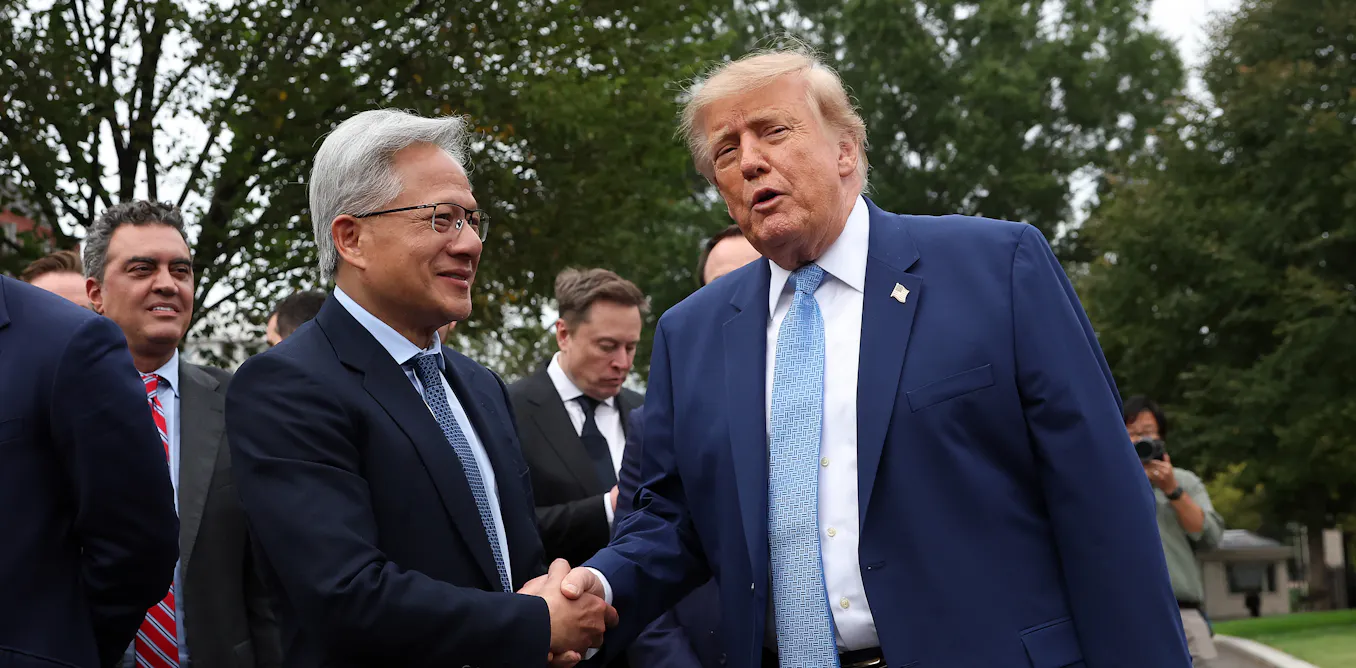
US President Donald Trump went even further, declaring in an interview that he “convinced them” to bring Huang back. The company had bluntly ruled out Huang’s return just days ago.
But why would a US president meddle so openly in the world’s second-most valuable company? And why does the leader of Nvidia matter beyond the US – including the speed at which data centres are built worldwide?
Nvidia’s stocks plunged after Huang announced his resignation on November 12, following reports of extramarital affairs, one with a woman identified by US intelligence as being in touch with China’s top spy agency and another with an Nvidia employee. Both raised concerns about Huang’s judgement as CEO.
Allegations of previously publicly belittling staff – including a senior executive who temporarily succeeded him as CEO – have also been reported by the Wall Street Journal and New York Times.
Nvidia’s stock closed at US$174 a share on November 11, the day before Huang quit. Within eight days, the share price had fallen to about US$126, knocking as much as US$1.2 trillion off its market value – and dragging down the wider US share market.
On the day of Huang’s return, the company’s shares surged 31% to US$165, pushing its market valuation back up by nearly US$1 trillion.
The relationship between the US government, Nvidia and other tech companies has become really entangled.
Inicio del artículo, extracto de The Conversation AU. Para leer el resto, abra el artículo en el sitio del medio.
MarketNews muestra el titular y el resumen publicados por el medio. El artículo completo se lee en el sitio del editor. (theconversation.com)