Health expert accuses NZ Food Safety of 'very poor' performance over campylobacter rates
Resumen detallado
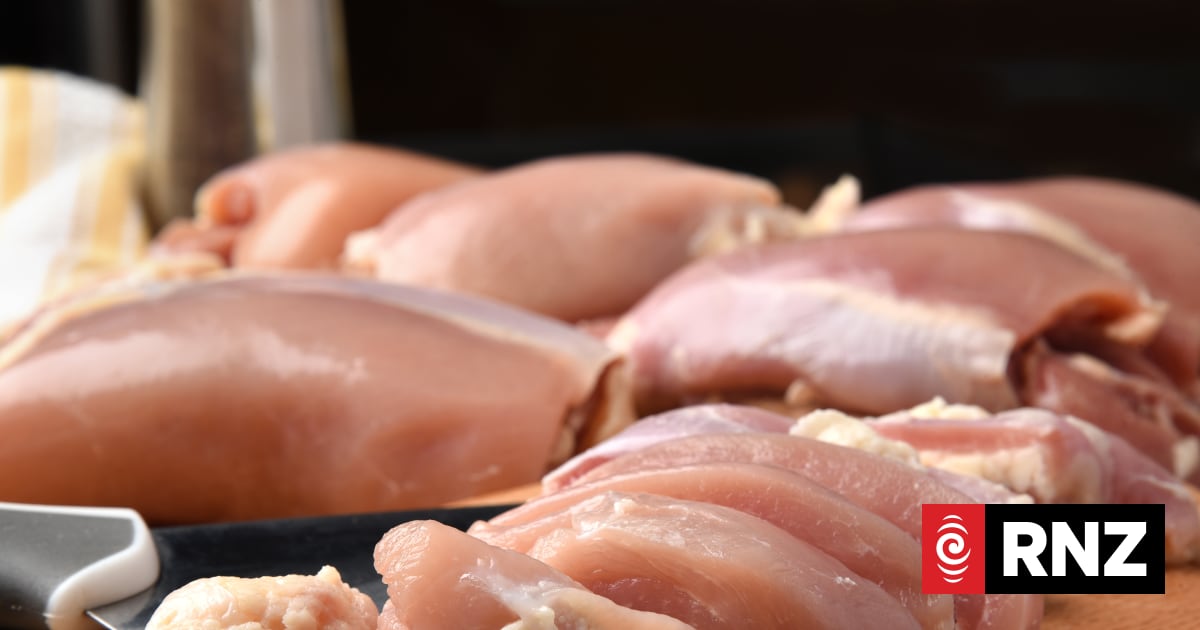
A leading public health expert is accusing the Ministry for Primary Industries (MPI) of not protecting consumers from contaminated fresh chicken meat.
A leading public health expert is accusing the Ministry for Primary Industries (MPI) of not protecting consumers from contaminated fresh chicken meat.
Professor of Public Health at the University of Otago Michael Baker said the performance of MPI's food safety unit, New Zealand Food Safety (NZFS), had been "very poor".
He said the country not being close to eliminating campylobacter infection from raw chicken was a "regulatory failure".
In a press release this week, NZFS warned against washing uncooked chicken, while announcing a new goal to lower the campylobacter infection rate by 15 percent (from 76 to 65 cases per 100,000 people) by 2030.
NZFS deputy director-general Vincent Arbuckle said many people incorrectly thought washing raw chicken made it safer to eat.
"In fact, washing chicken increases the risk of getting sick. That's because, when you rinse raw chicken under the tap, bacteria such as Campylobacter can be spread in water droplets onto sinks, benches, utensils and other foods around the kitchen."
"Putting out a media release telling consumers, 'Don't wash your chicken'. Is that it? They have to do better than that."
"There's a whole list of behaviours we'd have to change to make [raw chicken] even remotely safe in the kitchens of New Zealand. Even if you're very careful, you can still make mistakes.
"I think it's more responsible for our food safety regulator to put more effort into possibly not entirely eliminating but significantly reducing contamination of fresh chicken. We've got an industry that has huge sales of fresh chilled chicken, which is often contaminated, and that's what has caused this preventable foodborne epidemic."
Inicio del artículo, extracto de RNZ. Para leer el resto, abra el artículo en el sitio del medio.
MarketNews muestra el titular y el resumen publicados por el medio. El artículo completo se lee en el sitio del editor. (www.rnz.co.nz)