Holy Grail: Mathematician says he has solved a 167-year-old problem using AI
Resumen detallado
The Riemann Hypothesis has confounded mathematicians around the world since its formulation in 1859 and there is a $US1 million prize on offer if it is solved.
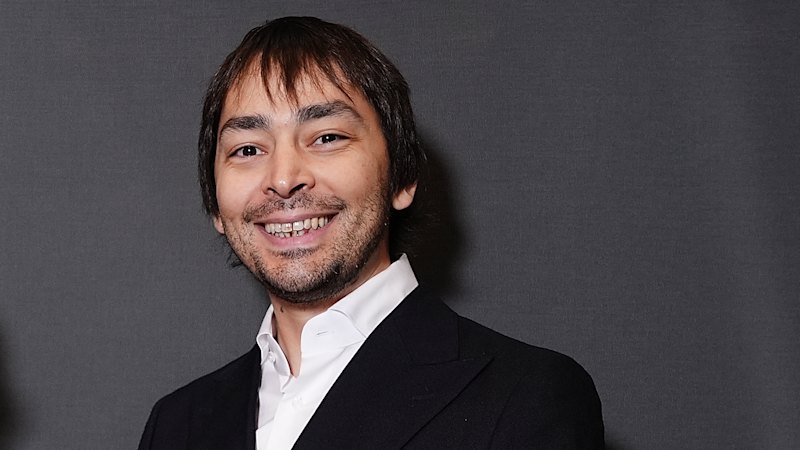
A mathematician who works for artificial intelligence giant Anthropic claims he has solved a Holy Grail of maths problems with the help of the company’s AI tool Claude.
It marks the second time in recent months that an AI company or someone linked to one claims to have cracked a famed unsolved mathematics problem.
Levent Alpöge, a member of the company’s technical staff, made the announcement by way of a four-page explanation posted on his website. He said that he believes by working with Claude, he has found a proof of the Riemann Hypothesis.
“Claude and I have had a great time together with such breadth in recent months, but this time Claude far outpaced me near the finish line,” Alpöge wrote. “No, Claude flew, and danced, and sparkled near that finish line.”
Formulated in 1859, the Riemann Hypothesis centres on the distribution of prime numbers — those that are only divisible by one and themselves — as they grow towards infinity.
Alpöge said his discovery came late one night. He messaged Anthropic CEO Dario Amodei to ask about “my ability to announce,” as the San Francisco-based company was about to make major news with its stock market debut.
A day after the company’s initial public offering — the most valuable in history — Alpöge revealed he’d solved the problem that has proved elusive for more than 150 years. Anthropic did not respond to an email from The Associated Press requesting comment on Alpöge’s claim.
Alpöge released his and Claude’s proof of the Riemann Hypothesis within 17 million lines of Lean code, a programming language that allows people to program proofs of mathematical theorems. Traditionally, the findings buried in that code would be published in a formal paper, said Alex Kontorovich, distinguished professor and department chair of mathematics at Rutgers University.
“Usually when somebody gives you a paper, that’s also kind of code for a proof and you have to actually read the paper, follow it yourself, figure out if you believe every single line in…
Inicio del artículo, extracto de WAtoday. Para leer el resto, abra el artículo en el sitio del medio.
MarketNews muestra el titular y el resumen publicados por el medio. El artículo completo se lee en el sitio del editor. (www.watoday.com.au)