Four WCM-Q students contribute to research on autism and brain cancer
Resumen detallado
Doha, Qatar: Four students at Weill Cornell Medicine Qatar (WCM Q) have contributed to two new research publications examining biological processes as...
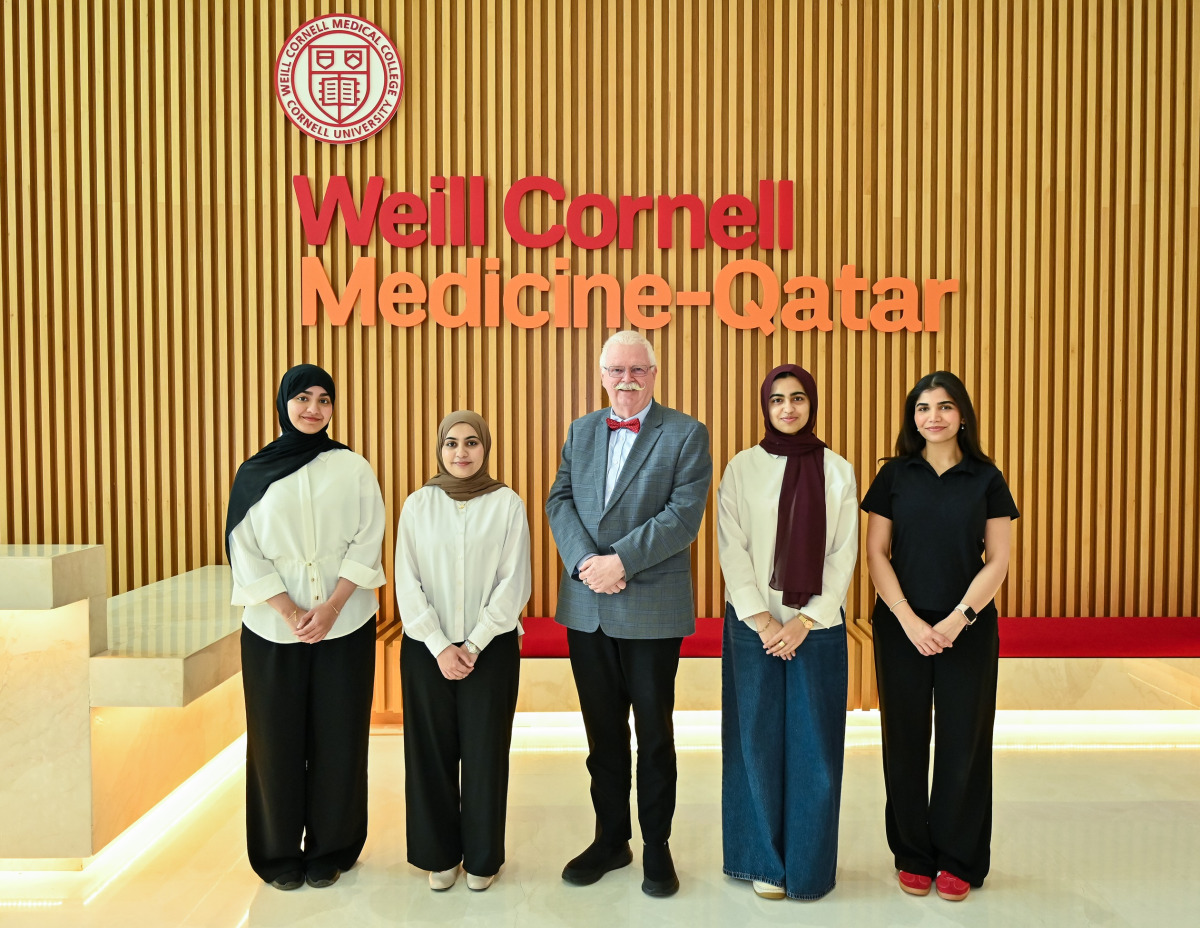
Moomena Gulzar (left), Noor Numan, Dr. Dietrich Büsselberg, Aiza Tanveer Hassan and Maryam Sohail.
Doha, Qatar: Four students at Weill Cornell Medicine-Qatar (WCM-Q) have contributed to two new research publications examining biological processes associated with brain health, neurodevelopmental disorders such as autism, and brain cancer.
The studies, published in the leading journals Neuroscience & Biobehavioral Reviews and Frontiers in Microbiomes, highlight emerging opportunities to understand disease mechanisms and identify potential biomarkers and therapeutic targets.
The publications feature research contributions from current WCM-Q students Maryam Sohail, Aiza Tanveer Hassan, Moomena Gulzar, and Noor Numan, as well as Dietrich Büsselberg, associate dean for admissions and student affairs/professor of systems and computational biomedicine. Alice Njolke Mafe, research scientist at Taraba State University in Nigeria, also contributed to both papers.
The first paper, titled “IGF signaling in autism and related neurodevelopmental disorders: Biomarkers and therapeutic targets,” was published in Neuroscience & Biobehavioral Reviews. It examines the role of insulin-like growth factor (IGF) signaling in autism spectrum disorder (ASD) and related neurodevelopmental conditions, including Rett syndrome, Angelman syndrome, Fragile X syndrome, Phelan-McDermid syndrome, and schizophrenia.
The review explores how two important proteins, IGF1 and IGF2, influence biological pathways involved in brain development and function. These include two signalling pathways (PI3K/AKT/mTOR and MAPK/ERK) that play key roles in neuronal survival, neurogenesis, synaptic plasticity, and cognitive function.
The authors examined evidence suggesting that disruptions in IGF signaling may contribute to the biological mechanisms underlying these conditions. IGF1 has shown particularly promising clinical relevance in Rett syndrome and Phelan-McDermid syndrome, while IGF2 has emerged as a potential…
The…
Inicio del artículo, extracto de The Peninsula. Para leer el resto, abra el artículo en el sitio del medio.
MarketNews muestra el titular y el resumen publicados por el medio. El artículo completo se lee en el sitio del editor. (thepeninsulaqatar.com)