Oil! – 100 years ago, Upton Sinclair wrote the great American anti-capitalist epic
Resumen detallado
Oil has left its unctuous residue across every aspect of economic, political, social and cultural life, often with disastrous consequences.
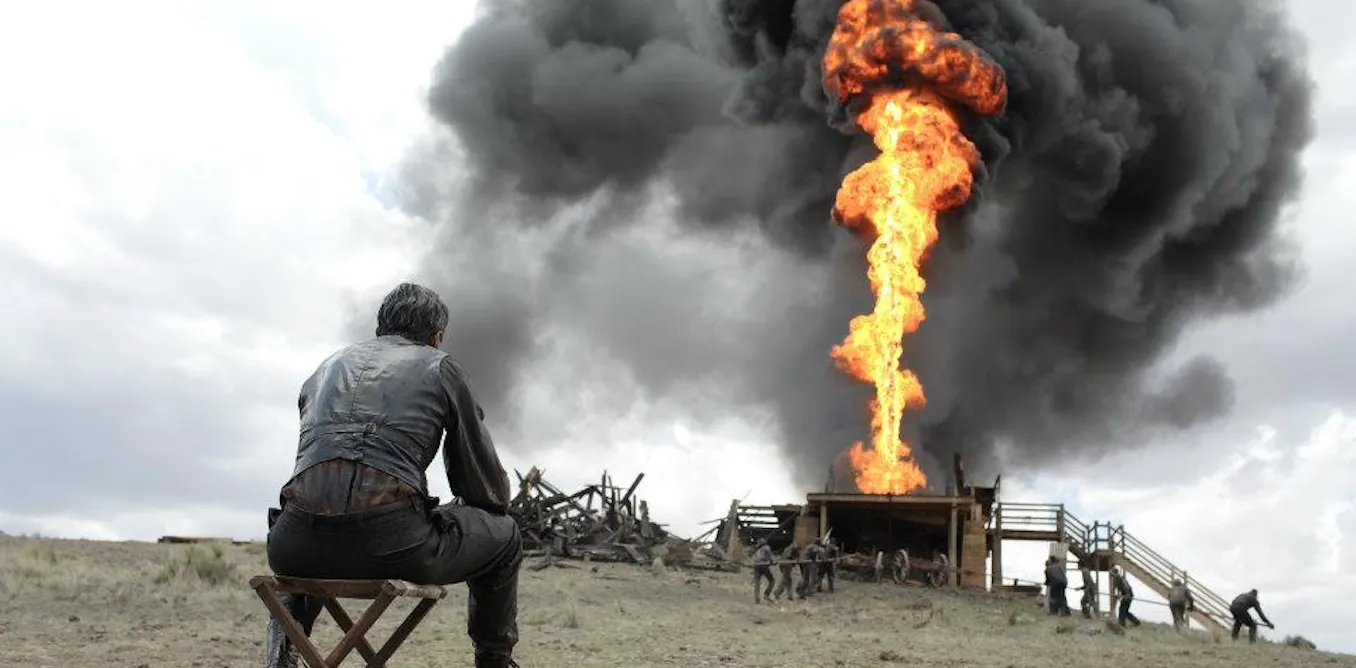
First serialised in the Communist Party publication The Daily Worker in 1926–7, Upton Sinclair’s Oil! is now known as the inspiration for Paul Thomas Anderson’s loose film adaptation There Will Be Blood (2007). But the novel is one of American literature’s most prescient anti-capitalist epics.
Set against the backdrop of California’s oil boom in the 1910s and the United States’ entry into World War I, Oil! is a family saga that identifies the dark shadow looming behind almost all of modernity’s uneven developments and pressing social issues. The oil industry is to Sinclair’s socialist worldview what whaling is to Herman Melville’s Moby-Dick. Whether spermaceti or crude, oil makes legible the entire incomprehensible sweep of the modern world as we know it.
Sinclair sets out to prove that oil is not an inert substance; it is the all-too-real lubricant that keeps the cogs of capitalism turning. Oil fuels progress, development and the growth of modern civilisation; it is the supreme metaphor of modernity itself.
The story of modernity is one of violent struggles and inequalities, and oil has left its unctuous residue across every aspect of economic, political, social and cultural life, often with disastrous consequences.
Sinclair was born in 1878 – in the first decade that fossil fuels “provided more energy to societies than traditional photosynthesis”, as literary critic Michael Tondre has noted.
His childhood in Baltimore, Maryland, coincided with a period of increasing economic inequality and labour wars across the US. He likened his family life to “a series of Cinderella transformations” between scarcity and comfort, depending on whether his father, an alcoholic liquor salesman, “had the money for that week’s board”.
Lifting himself out of poverty by writing dime novels, Sinclair increasingly sought to educate himself about the labour struggles that were rumbling around the nation in the 1890s.
Sinclair produced an astonishing quantity of fiction and non-fiction.
“Great…
Inicio del artículo, extracto de The Conversation AU. Para leer el resto, abra el artículo en el sitio del medio.
MarketNews muestra el titular y el resumen publicados por el medio. El artículo completo se lee en el sitio del editor. (theconversation.com)