He’s savvy, telegenic and knows how to draw a crowd: Why this mayoral candidate has China on edge
Résumé détaillé
With just over a year until Taiwan’s next presidential election, Taipei’s too-tight-to-call mayoral race is shaping up as a pulse test of support for the nation’s leadership.
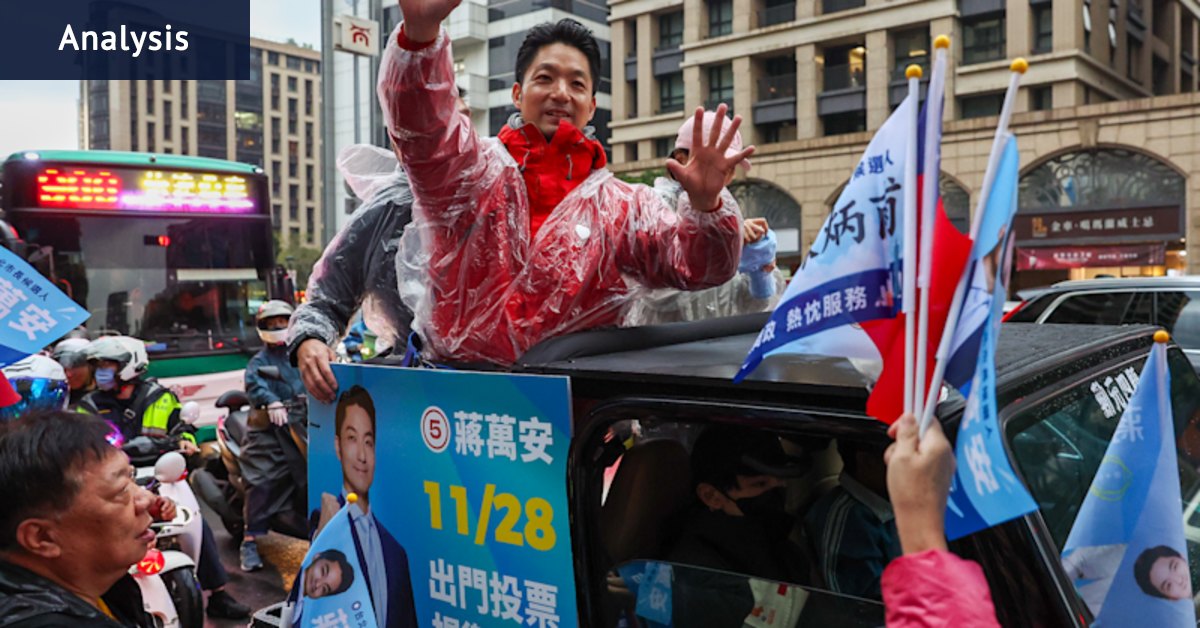
Taipei: On the streets of Taiwan’s capital, Puma Shen has somehow turned a mayoral race into a celebrity spectacle.
His supporters swelled into the hundreds, chanting his name and mobbing him for a photo as soon as he arrived for a street walk event on Wednesday evening in Taipei’s Shilin district.
It took the bespectacled academic-turned-politician 30 minutes to weave a path through the crowd and walk a few hundred metres to a nearby temple for a customary pre-polling day visit.
“I’m not a political guy, but I live in this neighbourhood and I have to tell Puma Shen I support him,” says Daniel Tseng, a 32-year-old manufacturing worker, who joined the crowd. “The way he is running – it’s unprecedented.”
Shen’s campaign team has dubbed this groundswell the “Ocean Current” and his supporters “water droplets” – and they could carry the 44-year-old candidate for the ruling Democratic Progressive Party (DPP) to an upset victory at Taiwan’s local elections on Saturday.
Across the strait, Beijing will be closely watching the Taipei race and the broader island-wide voting trends, as Taiwanese citizens elect more than 11,000 mayors and local officials in their home towns.
With just over a year until Taiwan’s next presidential election, in January 2028, it will be a pulse test of support for President Lai Ching-te and his DPP administration. Beijing denounces Lai as a “Taiwan independence separatist” and refuses to engage with his government.
The Beijing-friendly opposition party, the Kuomintang, has traditionally dominated local politics. Its party machinery is deeply embedded in local communities, with strong ties to public servants and military families that date back to the late 1940s, when KMT forces fled the mainland and set up in Taiwan after the Chinese civil war.
The KMT controls 14 of Taiwan’s 22 cities and counties, while the DPP has just five.
Début de l'article, extrait de WAtoday. Pour lire la suite, ouvrez l'article chez le média.
MarketNews présente le titre et le résumé publiés par le média. L'article complet se lit sur le site de l'éditeur. (www.watoday.com.au)