Burnham breaks Brexit taboo ahead of EU summit
Resumen detallado
Britain’s prime minister has reopened the debate about the nations’ relationship with the EU and a possible reversal of Brexit.
Britain’s prime minister has reopened the debate about the nations’ relationship with the EU and a possible reversal of Brexit.
That was the promise offered to millions across Britain a decade ago. All they had to do was vote to end their country’s 43-year partnership with their nearest neighbors – a so-called Brexit from the then 28-nation European Union.
Brexit did win, narrowly, in June 2016. Its support was powered by a nationalistic, anti-immigrant “Make Britain Great Again” message with echoes of another campaign then underway: Donald Trump’s run for the U.S. presidency.
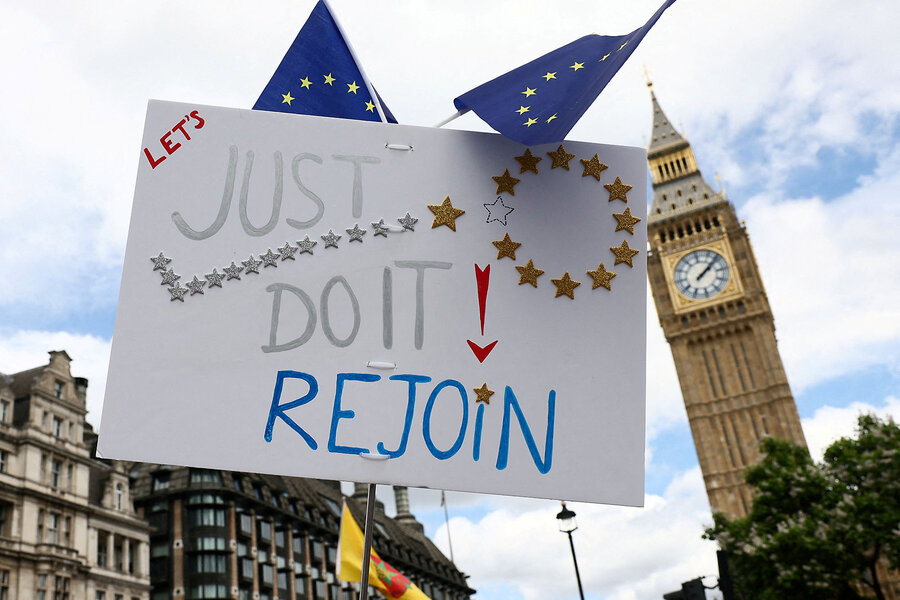
Since Britain’s decision to leave the European Union 10 years ago, discussing rejoining has been a taboo subject. But now the prime minister has reopened the debate, and will meet EU leaders Nov. 20 to discuss ways of resetting their relationship.
Yet now, Britain is embarking on a very different debate. With polls finding a majority of Britons convinced that Brexit was a mistake, Prime Minister Andy Burnham last month broke a decadelong taboo for major-party leaders by saying it out loud, and raising the possibility of eventually rejoining the EU.
And he’s due to meet EU leaders in Brussels on Nov. 20 for talks on efforts to smooth his country’s relationship with the bloc.
The political tremors that’s causing, along with the practical obstacles to reversing Brexit, might also hold lessons for the United States, should a future president seek to revisit equally dramatic changes Mr. Trump has made to U.S. partnerships and alliances.
The reason for the buyer’s remorse over Brexit has its roots in the referendum campaign.
Britain’s two main parties – the Conservatives of then-Prime Minister David Cameron, and Labour, now under Mr. Burnham’s control – backed staying in the tariff-free EU. It was Britain’s main trading partner. Leaving, they argued, would be an exercise in economic self-harm.
Inicio del artículo, extracto de The Christian Science Monitor. Para leer el resto, abra el artículo en el sitio del medio.
MarketNews muestra el titular y el resumen publicados por el medio. El artículo completo se lee en el sitio del editor. (www.csmonitor.com)