A way of life is disappearing on Cambodia’s Tonle Sap as El Niño pressures lake communities
Detailed summary
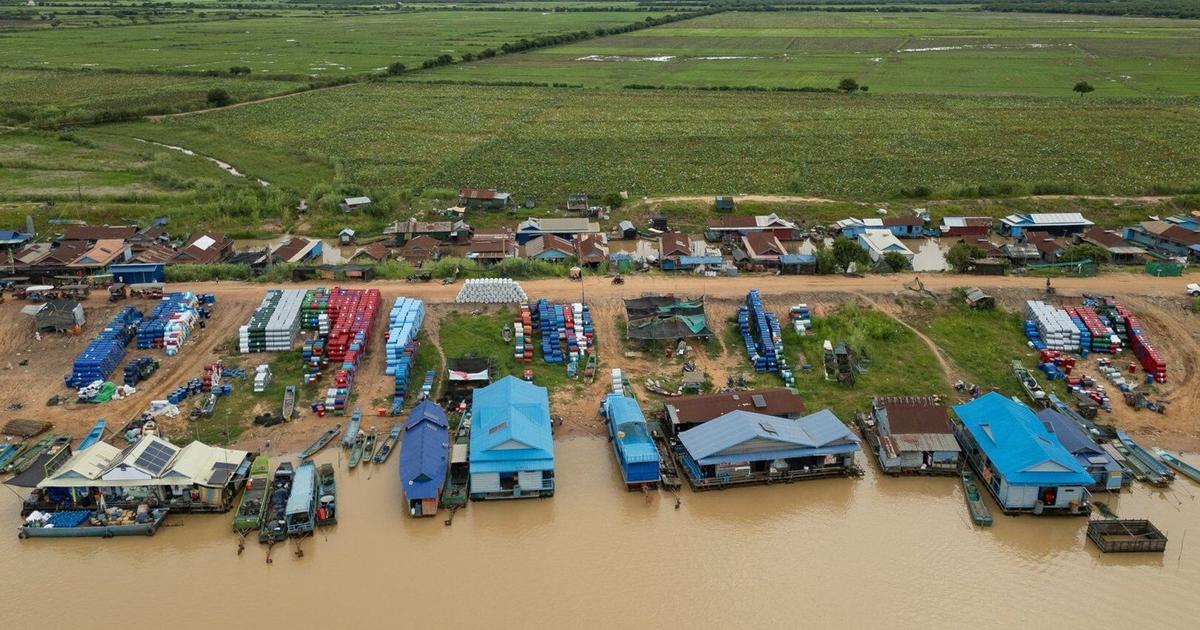
At the edge of Cambodia's great Tonle Sap lake, a wall of red, blue and yellow metal drums rises bright against the muddy water.
CHONG KNEAS, Cambodia (AP) — At the edge of Cambodia’s great Tonle Sap lake, a wall of red, blue and yellow metal drums rises bright against the muddy water.
Meas Chou stockpiles these drums wherever he can and sells them to families who use them to keep their houses afloat on Southeast Asia’s largest lake. About 1.5 million people live on Tonle Sap, their homes rising and falling with the ebb and flow of the lake’s water levels.
This year’s record-breaking El Niño is predicted to bring hotter, drier weather across Southeast Asia, threatening both fisheries and farms. For Cambodia, which is already in a time of extreme drought, this could stunt Tonle Sap’s annual water flows from the Mekong River, which usually refill the lake each monsoon season.
In early October, the water level in the town of Prek Kdam — about halfway between the capital city of Phnom Penh and Tonle Sap — stood at nearly 7 meters (nearly 23 feet). That’s more than a meter below average and 1.5 meters (about 5 feet) lower than last year.
Lower water levels mean meager fish catches and less business for Chou. Higher fuel prices due to the Iran war also are hurting his sales and other aspects of life on the lake. There’s little he can do but hope the rain comes and the fish return.
“If fishermen can earn a lot, I can sell my goods a lot. But if they earn less, I sell a little less too,” he said.
Tonle Sap rises and falls with an extraordinary natural rhythm that scientists call a “flood pulse.”
Each year, monsoon rains swell the Mekong River so much that its water flow reverses direction, sending water back upstream into the lake, which then quintuples in size. Sediment-laden flood waters carry nutrients from forests and grasslands into the lake, and the fish follow.
This makes Tonle Sap one of the world’s most productive freshwater fisheries.
Opening of the article, excerpted from Toronto Star. To read the rest, open the article on the publisher's site.
MarketNews shows the headline and summary published by the outlet. The full article is on the publisher's website. (www.thestar.com)