Media reaction: Who is to blame for COP31 ‘failure’?
Resumen detallado
COP31 came to a dramatic close last weekend when a coalition of nations rejected the proposed “Antalya pact”, citing its… The post Media reaction: Who is to blame for COP31…
COP31 came to a dramatic close last weekend when a coalition of nations rejected the proposed “Antalya pact”, citing its failure to mention fossil fuels.
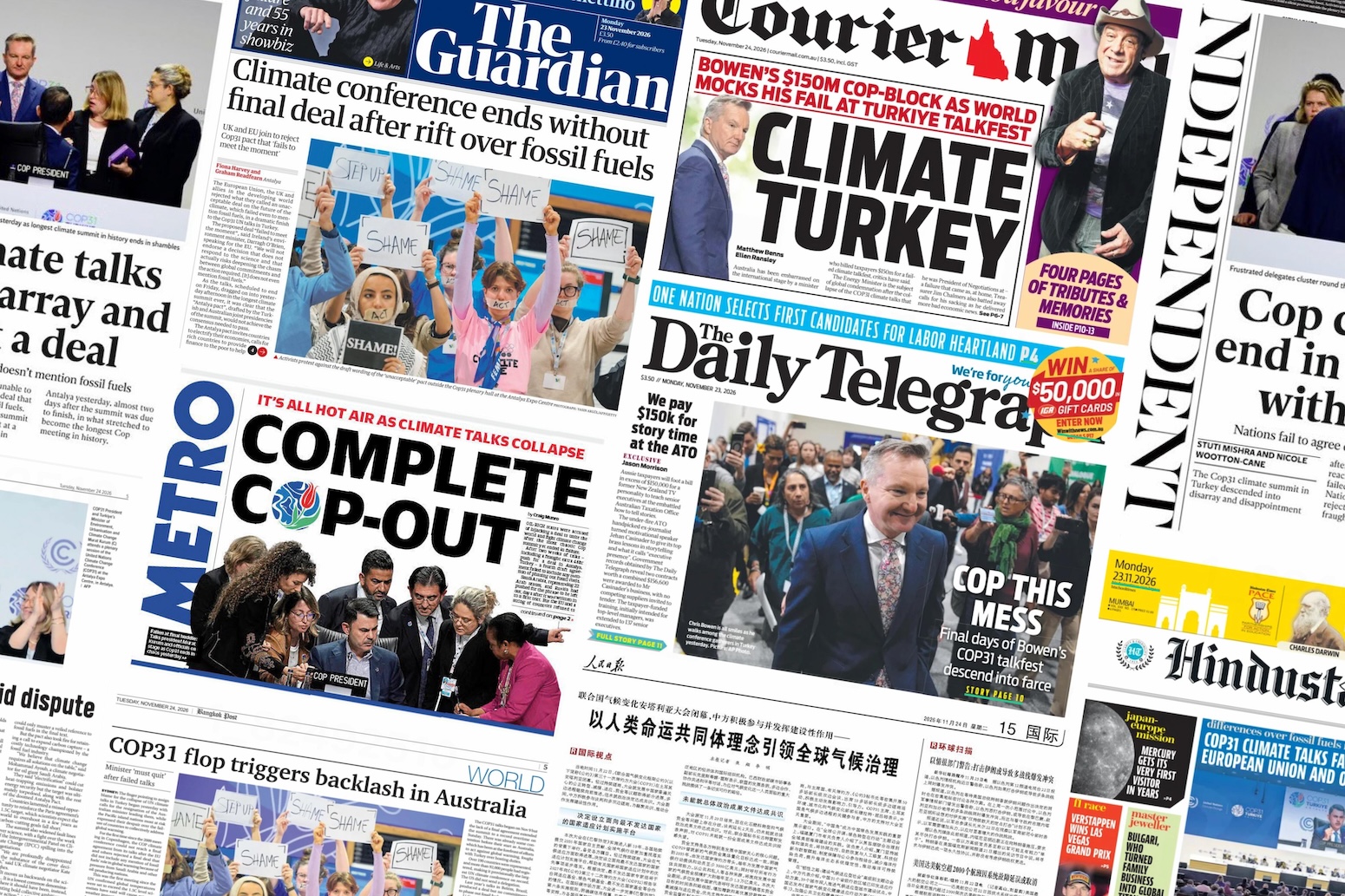
The tense final moments and lack of a much-anticipated “pact” have sparked extensive media coverage around the world.
Many commentators have rushed to label the COP31 outcome a “failure”, questioning what it means for the future of the UN climate process and a “divided world”.
There has been much finger-pointing, with some outlets attributing COP31’s “collapse” to “oil-rich nations”, while others blame Europe’s “reluctance” to provide more climate finance.
While it is not accurate to say there was “no agreement” at COP31, the media response demonstrates the complexity of the divergent views on display at the Antalya conference.
In this article, Carbon Brief draws together media reactions from around the world to show the diversity of responses to the COP31 outcome.
COP31 ended without agreement on a proposed “Antalya pact”, which had been pushed by the Turkey-Australia presidency.
The final text was rejected by at least 32 countries, including the EU, the UK and some climate-vulnerable countries, in chaotic scenes as the talks overran by two days.
An Irish Times editorial said the outcome was an “unprecedented ending of a COP without any agreement or roadmap forward”.
Inicio del artículo, extracto de Carbon Brief. Para leer el resto, abra el artículo en el sitio del medio.
MarketNews muestra el titular y el resumen publicados por el medio. El artículo completo se lee en el sitio del editor. (www.carbonbrief.org)