Sustainability Isn't a Fixed Plan. It's an Iterative One.
Resumen detallado
Project Management Institute, Enterprise agility, Organizational coherence, Agile leadership, Decision-making at scale, Decentralized decision-making, Shared enterprise outcomes, Cross-functional collaboration, Strategy execution, Strategy translation, Strategic alignment, Decision rights, Empowered teams, Customer-centric decision-making, Distributed leadership, Continuous innovation, Innovation in established…
Sustainability commitments are usually announced as destinations: a net-zero year, a renewable energy target. The longer the horizon, the more disruption a commitment has, to survive along the way. That is exactly why sustainability demands agility.
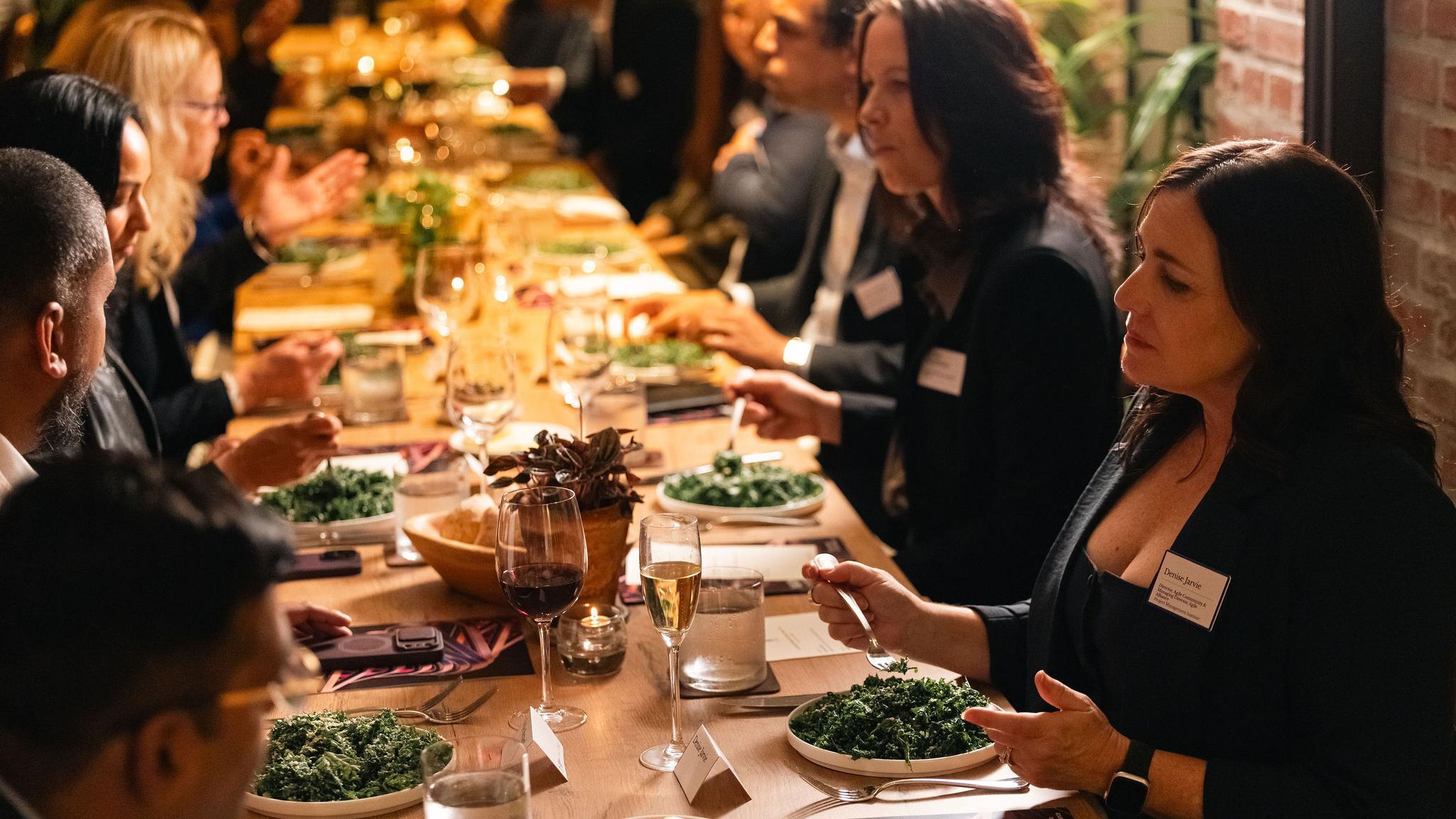
During Climate Week, leaders gathered for an executive dinner to explore a challenge facing organizations pursuing long-term sustainability commitments: how to respond when the conditions around a commitment change, without losing sight of what the organization set out to achieve. Volatile markets, shifting regulation and climate impacts can all require organizations to rethink how they get from commitment to execution. It’s the type of challenge the Manifesto for Enterprise Agility was created to help leaders navigate. Released this year by PMI and Agile Alliance, it offers a guide for leaders facing frequent disruption and business challenges.
Most leaders already agree on the destination. According to PMI research, 79% of leaders say sustainability drives long-term success. Yet only 41% have fully integrated it across projects and functions. Managing a changing pathway without losing the destination is what enterprise agility describes: the capacity to adapt at scale without losing coherence. The same gap exists for agility itself: 85% of executives call enterprise agility critical, yet 65% have implemented it only partly or not at all. In both cases, the ambition is there, but the ability to execute is not. That is where sustainability and transformation have the same problem.
So what does it take to keep a long-term sustainability commitment when every route to it keeps changing?
Sumant Sinha, Founder, Chairman and CEO of ReNew, started the company 15 years ago as a wind power developer. For its first eight to ten years, the job was simply to prove it could execute projects at scale.
ReNew didn't pick one. It pursued four or five at once, without knowing which would succeed. A couple became outstanding successes.
"Very…
Th…
Inicio del artículo, extracto de Time. Para leer el resto, abra el artículo en el sitio del medio.
MarketNews muestra el titular y el resumen publicados por el medio. El artículo completo se lee en el sitio del editor. (time.com)