China’s Huawei Starts Presales of First Self-Driving Sanitation Vehicles With Fulongma
Resumen detallado
In September, Fulongma said Huawei Cloud had agreed to develop self-driving technology for its sanitation vehicles, in a deal under which it will pay service fees of CNY200…
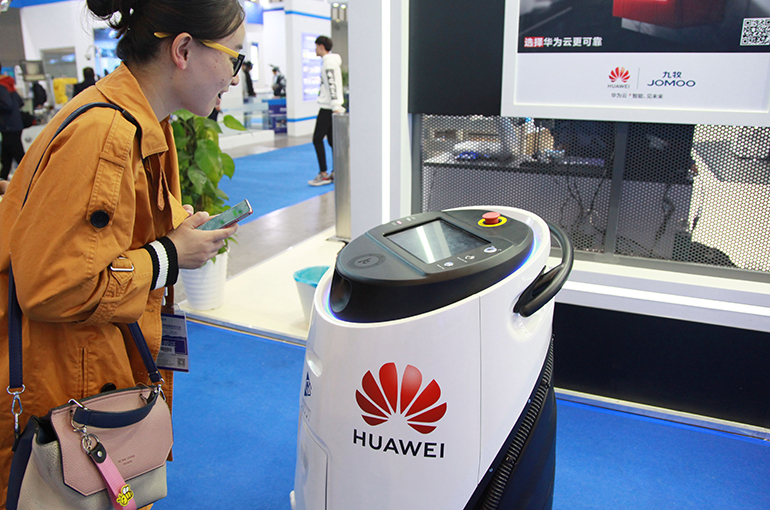
(Yicai) Nov. 17 -- Huawei Technologies’ cloud computing arm said presales for the next-generation smart autonomous-driving sanitation vehicles developed with environmental sanitation equipment supplier Fulongma Group have kicked off.
Huawei Cloud provided its CloudRobo development toolchain, perception and planning models, agentic runtime platform, and Ascend computing power for the vehicle, it announced yesterday. The new product incorporates a world model that enables it to recognize environments and predict future states in dynamic physical spaces.
Shenzhen-based Huawei has decided not to produce robot hardware itself, instead providing models, computing power, and development tools through its CloudRobo platform, aiming to become a shared tech foundation for different robot manufacturers. In the sector, Huawei Cloud has also allied with Yijiahe Technology, Topstar, and Youibot Robotics on power line inspection, industrial material handling, and other scenarios.
In September, Fulongma said Huawei Cloud had agreed to develop self-driving technology for its sanitation vehicles, in a deal under which it will pay service fees of CNY200 million (USD30 million) over three years.
Huawei Cloud will lead the adaptation and validation of self-driving algorithm software for three- and six-ton payload vehicle models for dry-sweeping and sweeping-and-washing uses, Fulongma said, adding that the pair will seek to establish a closed-loop data process that enables incremental model and algorithm training and continuous iteration based on operational data.
Embodied intelligence still faces considerable technical barriers before large-scale commercial application. Once robots enter real-world environments, they must cope with object occlusion, changing viewpoints, sudden obstacles, and differences between hardware platforms.
In addition, real-time inference with world models has high demands for computing power and fast response times.
Inicio del artículo, extracto de Yicai Global. Para leer el resto, abra el artículo en el sitio del medio.
MarketNews muestra el titular y el resumen publicados por el medio. El artículo completo se lee en el sitio del editor. (www.yicaiglobal.com)