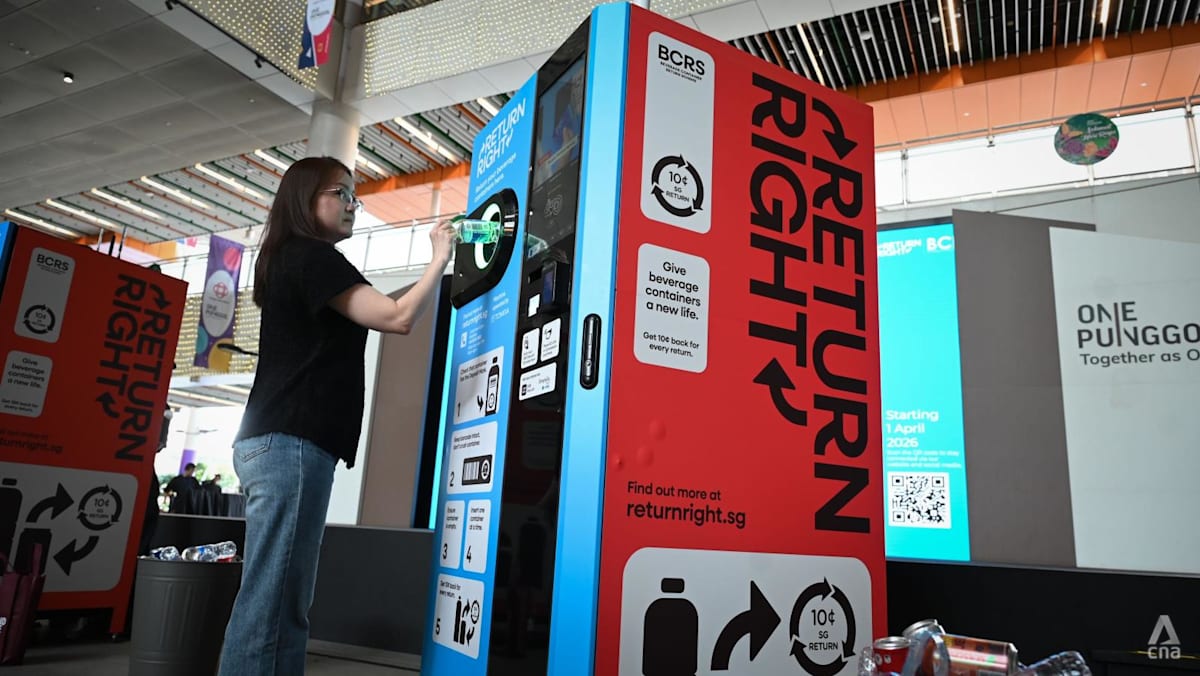
Commentary: Why has a 10-cent deposit on beverage containers given Singaporeans so much to complain about?
Resumen detallado
Since its launch, it feels like not two weeks passes without the Beverage Container Return Scheme making the news. Writer Annie Tan explores why Singaporeans appear to be so…
Since its launch, it feels like not two weeks passes without the Beverage Container Return Scheme making the news. Writer Annie Tan explores why Singaporeans appear to be so triggered by these reverse vending machines.
SINGAPORE: When an acquaintance discovered that one of her favourite beverages is now under the Beverage Container Return Scheme (BCRS), she was so annoyed that she decided to boycott it rather than carry it in her shoulder bag after consumption.
But it appears that she is not alone. Since the BCRS was launched in April, it has unleashed a litany of grievances. It feels like not two weeks passes without the BCRS making the news.
First, we were frustrated with faulty machines, rejected containers and refund delays. Then came complaints about collectors overturning rubbish bins and scattering waste to find empty bottles and cans. Some complained about foul smells and flies from these machines.
More recently, people begrudged those who came with large bags of recyclables, causing long waits or machines to become full or unavailable. Some have even falsely accused conservancy workers of scavenging for cans to earn “double salary”.
At a glance, these may seem like unrelated complaints. But look deeper and it might involve a hidden resistance to changing our relationship with disposable packaging, convenience and consumerism.
A big part of this relationship comes from a consumer revolution spurred by the take-off of plastic in the 1950s.
Then, improvements in manufacturing processes brought the cost of making plastics down dramatically. From toys to food storage containers, furniture, bags and hair accessories, a plastic wave swept across the world, replacing costlier materials such glass, metal, ceramic, wood and leather.
This was also the time of rapid industrialisation. More factory produced items needed storage options and plastic was perfect for the purpose. It was cheap, durable and lightweight, keeping transportation costs low.
Inicio del artículo, extracto de CNA. Para leer el resto, abra el artículo en el sitio del medio.
MarketNews muestra el titular y el resumen publicados por el medio. El artículo completo se lee en el sitio del editor. (www.channelnewsasia.com)