Dung Beetle
Resumen detallado
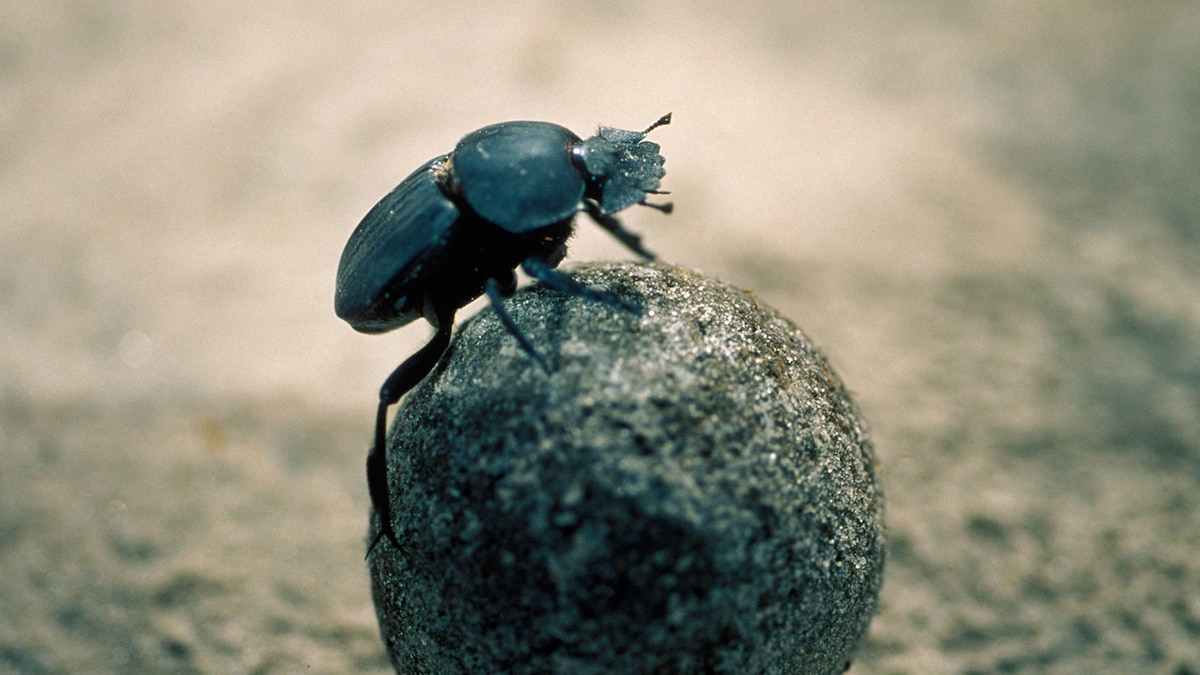
Wherever there is dung (also known as poop), there are most likely dung beetles. They belong to three basic groups: rollers, tunnelers, and dwellers. Those words describe how these beetles use the dung they find. The rollers shape pieces of dung into balls and roll them away from the pile. They bury their ball to either munch on later or to use as a place to lay their eggs.
Dung beetles are found worldwide, on every continent except Antarctica. They live in habitats that range from desert to forest.
The rollers shape pieces of dung into balls and roll them away from the pile. They bury their ball to either munch on later or to use as a place to lay their eggs. Tunnelers bury their dung treasure by tunneling underneath the pile. And dwellers actually live inside dung piles. (Play Dung Beetle Derby.)
Most prefer dung from herbivores, or animals that eat only plants, but some will seek dung from omnivores, or animals that eat plants as well as meat. When an animal such as an elephant chews, swallows, and digests, there are always parts of its meal that pass through undigested. Those undigested bits pass out of the animal in its dung—and that is what provides food for dung beetles. Dung beetle larvae, or young, eat the solid dung while adult dung beetles stick to liquids. There is a good bit of nutritious moisture in dung, and adult beetles suck up that juice.
Inicio del artículo, extracto de National Geographic. Para leer el resto, abra el artículo en el sitio del medio.
MarketNews muestra el titular y el resumen publicados por el medio. El artículo completo se lee en el sitio del editor. (kids.nationalgeographic.com)