ASEAN’s South China Sea code is ‘85% to 90%’ done. Will it bind China?
Resumen detallado
A source familiar with past South China Sea Code of Conduct negotiations told Rappler that despite progress, the most contentious issue remains unresolved: whether the agreement will be legally binding
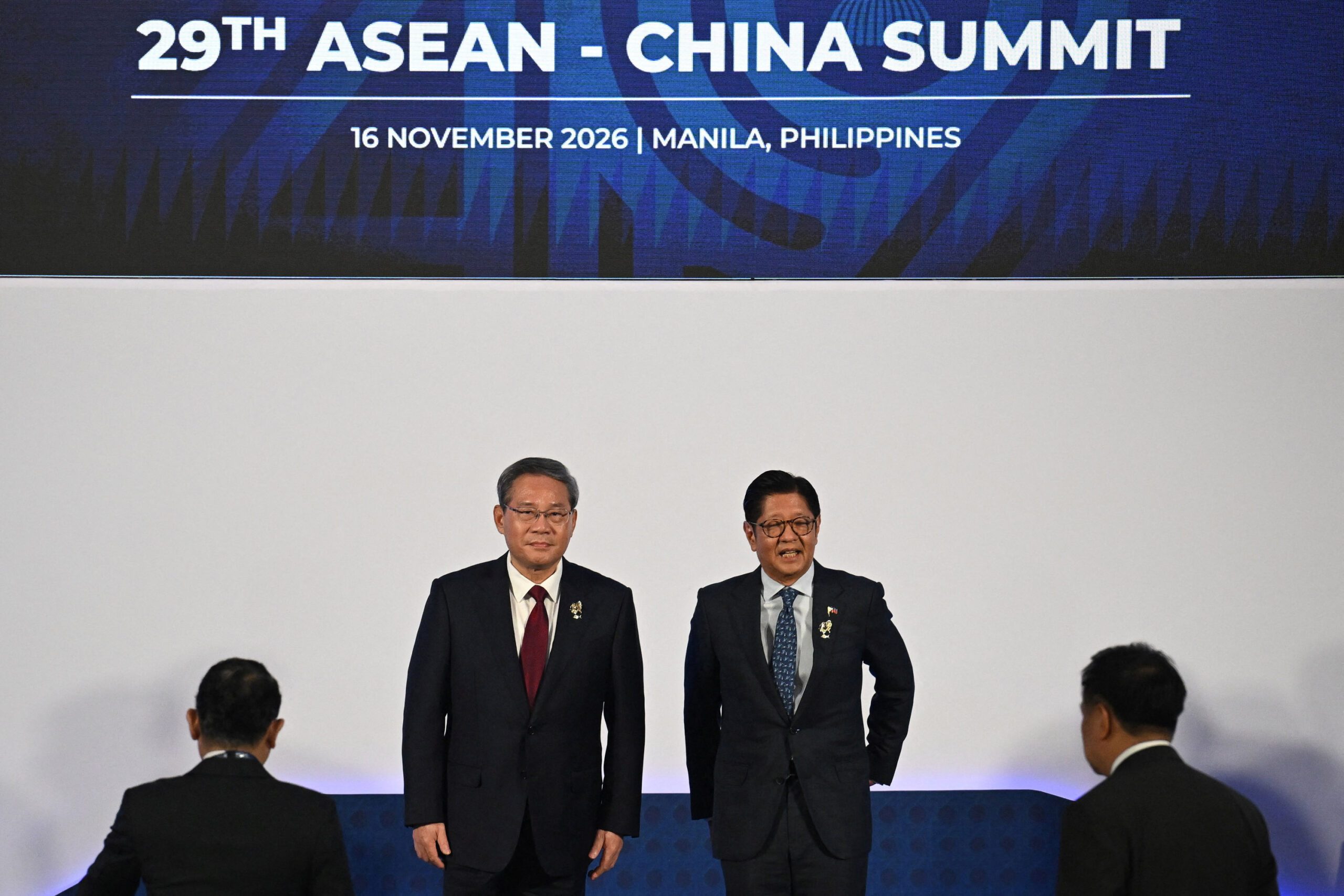
ASEAN-CHINA SUMMIT. Chinese Premier Li Qiang stands with Philippine President Ferdinand Marcos Jr. during the 29th ASEAN-China Summit in Manila on November 16, 2026.
This is AI-generated. Read the article for full context. Report any errors.
After more than two decades of negotiations, ASEAN and China appear tantalizingly close to completing their Code of Conduct (COC) in the South China Sea.
As the Philippines’ ASEAN chairmanship ended on November 17, President Ferdinand Marcos Jr. said negotiations were 85% to 90% complete, with only definitions and wording left to iron out.
But a source familiar with earlier COC negotiations was hardly impressed. The source, who requested anonymity to speak candidly about the diplomatic process, said those percentages distract from the fact that the hardest questions remain unanswered.
Chief among them is whether the COC will be legally binding. Without legal force, the source argued, the new code wouldn’t offer much of an improvement over the existing Declaration on the Conduct of Parties in the South China Sea (DOC), adopted way back in 2002.
But while the new code remains unfinished, Marcos said ASEAN and China had reached a “tacit agreement” to continue observing the existing Declaration on the Conduct of Parties in the South China Sea (DOC), adopted way back in 2002.
That is the very declaration the Philippines has previously accused China of violating.
The DOC already calls on countries to exercise self-restraint, including by refraining from occupying previously uninhabited maritime features. In 2015, Manila accused Beijing of breaching this commitment through its island-building activities. China rejected the accusation.
Inicio del artículo, extracto de Rappler. Para leer el resto, abra el artículo en el sitio del medio.
MarketNews muestra el titular y el resumen publicados por el medio. El artículo completo se lee en el sitio del editor. (www.rappler.com)