El Niño leaves small farmers feeling the heat
Resumen detallado
The onslaught of the warming El Niño climate pattern may stretch until early next year, leaving small-scale Indonesian farmers particularly vulnerable to reduced crop yields and failed harvests without tangible interventions to avert extreme weather ahead.
Your browser is out of date, and may not be compatible with our website. A list of the most popular web browsers can be found below. Just click on the icons to get to the download page.
The onslaught of the warming El Niño climate pattern may stretch until early next year, leaving small-scale Indonesian farmers particularly vulnerable to reduced crop yields and failed harvests without tangible interventions to avert extreme weather ahead.
he onslaught of the warming El Niño climate pattern may stretch until early next year, leaving small-scale Indonesian farmers particularly vulnerable to reduced crop yields and failed harvests if left without without tangible interventions to avert extreme weather ahead.
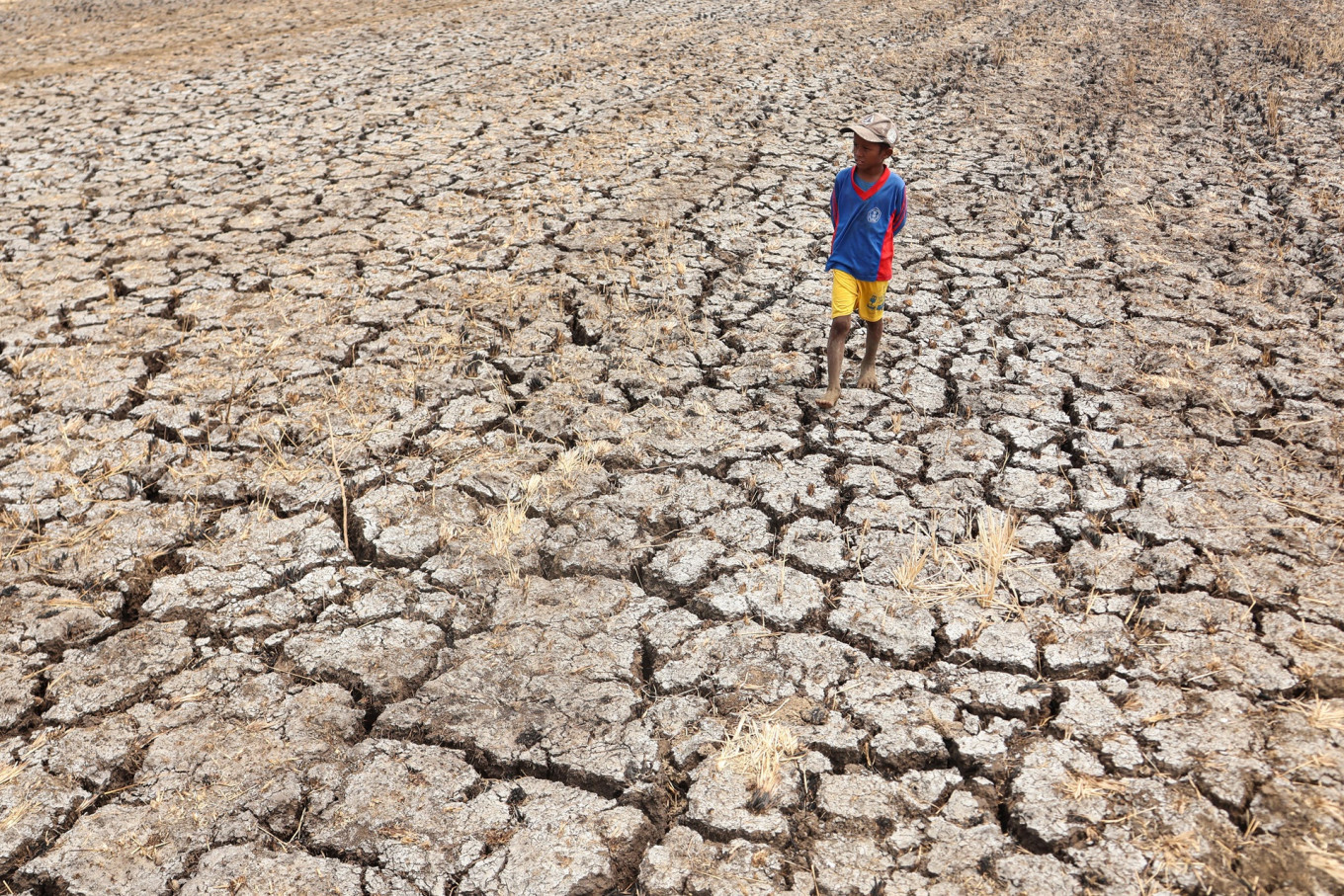
In Indonesia, a strong El Niño observed over the Pacific Ocean has resulted in delayed and uneven rainfall, dry spells and extreme temperatures, leading to agricultural drought and forest fires.
Since at least April, many farmers across East Java, West Java, West Nusa Tenggara (NTB), East Nusa Tenggara (NTT) and parts of Sumatra have suffered from crop failures, according to the Indonesian Farmers Union (SPI).
“The depletion of water resources, particularly those sourced from rivers flowing across parts of Java, has forced many farmers to either delay production or face crop failures,” Kusnan, SPI agroecology department head, told The Jakarta Post on Monday.
Access to alternative water infrastructure, he said, remained difficult. By relying on solar-powered groundwater pumps to avert the water crisis, for instance, farmers must spend much more for energy, thereby increasing the overall production budget.
The union comprises more than 1 million farmers across the archipelago, most of whom cultivate water-intensive rice crops, a staple food for the country’s 280 million people.
Delivered straight to your inbox three times weekly, this curated briefing provides a concise overview of the day's most important issues, covering a wide range of topics from politics to culture and…
Inicio del artículo, extracto de The Jakarta Post. Para leer el resto, abra el artículo en el sitio del medio.
MarketNews muestra el titular y el resumen publicados por el medio. El artículo completo se lee en el sitio del editor. (www.thejakartapost.com)