How a personalised approach may ease eczema’s toll
Resumen detallado
For patients with moderate-to-severe eczema, managing the condition means considering symptoms and triggers, as well as treatment effectiveness, safety and cost.
For patients with moderate-to-severe eczema, managing the condition means considering symptoms and triggers, as well as treatment effectiveness, safety and cost.
Until recently, meeting new people was often stressful for Mr Roger Tay*, who has eczema. He was conscious of his appearance and often found himself receiving unsolicited medical advice.
“People tended to ask about my skin, or they would tell me that they knew of ‘magic doctors’, traditional healers or herbs that might cure my condition,” recounted the 45-year-old real estate professional.
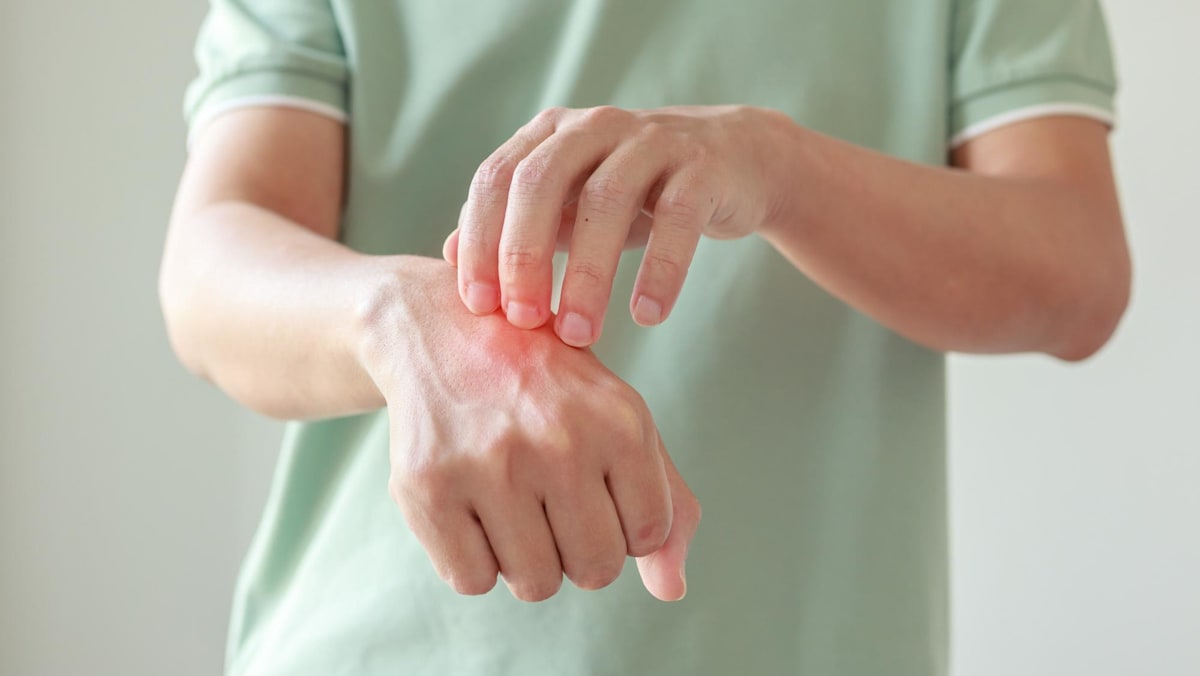
Eczema, also known as atopic dermatitis, is a chronic inflammatory skin condition that causes dry, itchy and inflamed skin. It tends to flare and settle over time, and symptoms can vary widely from person to person. An estimated 20 per cent of school-aged children in Singapore have eczema, and 30 to 40 per cent continue to experience symptoms into adulthood.
The condition is not contagious. It is linked to a combination of factors, including genetics, changes in the immune system, environmental triggers and a weakened skin barrier. When the skin barrier is weakened, it is less able to retain moisture and protect against irritants, which can worsen dryness, itching and inflammation.
In more severe cases, the skin may ooze, crust or bleed. Flare-ups can also affect sleep, mood and daily activities.
Mr Tay was diagnosed with eczema at the age of eight, when it first appeared behind his knees. By 12, it had spread to other parts of his body, including his neck and face. Because his flare-ups were triggered by heat and sweat, he avoided sports and outdoor activities. At night, the itch made it difficult for him to sleep, leaving him tired during the day.
Depending on its severity, atopic dermatitis may be managed with self-care, topical treatments or systemic therapies such as oral or injectable medication.
“Atopic dermatitis is a heterogeneous condition – no two patients present with the same symptoms or respond to treatment in the…
Inicio del artículo, extracto de CNA. Para leer el resto, abra el artículo en el sitio del medio.
MarketNews muestra el titular y el resumen publicados por el medio. El artículo completo se lee en el sitio del editor. (www.channelnewsasia.com)