The world’s ice is in real peril from climate change – and will keep melting even if we reach net zero
Resumen detallado
As temperatures overshoot 1.5°C, some ice loss may be irreversible. Rapid emissions cuts can still preserve parts of the cryosphere and limit future sea-level rise.
In 2015, the world agreed to work to hold climate change below 1.5°C. But that goal is no longer possible.
Earth will pass 1.5°C by 2030. Some years are already over 1.5°C warmer than the pre-industrial average. This means we are set for climate overshoot – heading for even more dangerous levels of climate change.
Are there ways of temporarily going past 1.5°C and then pulling carbon dioxide back out of the atmosphere to return us to a safer temperature? In a September report, experts from the United Nations Environment Programme point out this would rely on sustained net-negative emissions, likely to be slow and uncertain.
We might assume net-negative emissions would mean planetary systems will start to return to a climatic “safe operating space” of the relatively stable 11,700 years prior to our time, during which human civilisation developed and flourished.
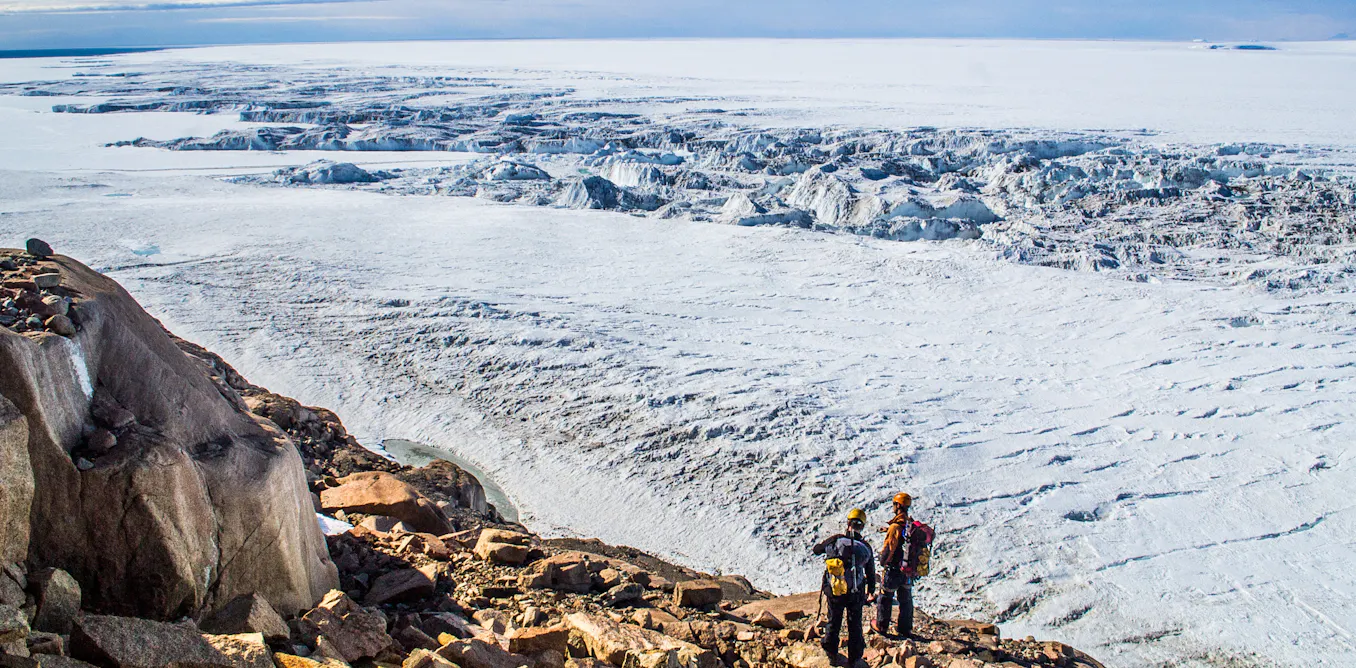
Ice sheets regulate the climate in three ways. They reflect solar energy back to space, due to their great height which cools the atmosphere and influences global wind patterns. They also regulate the climate via ocean circulation through their input of cold fresh water, and their control on sea levels.
Concerning new research shows the world’s ice will keep melting, even if we reach net-negative emissions quickly.
Many parts of the cryosphere have a long memory. So if the melting of glaciers and ice sheets hits critical thresholds, it will lock in centuries of sea-level rise – even if the world’s emissions have become net-negative.
New research shows the world’s sea ice, snow and permafrost are already outside the previously stable climatic envelope, meaning that losses may be irreversible. The authors find that land ice as a whole (the combination of glaciers and ice sheets) has not yet crossed into unsafe territory. However, because land ice responds slowly, enough losses are now locked in to cause dangerously advancing sea levels by the end of the century.
Almost 90% of the world’s land ice is locked up in…
Inicio del artículo, extracto de The Conversation AU. Para leer el resto, abra el artículo en el sitio del medio.
MarketNews muestra el titular y el resumen publicados por el medio. El artículo completo se lee en el sitio del editor. (theconversation.com)