Microchips hold key to US-China ties – and world affairs
Resumen detallado
The race for high-tech supremacy is proving an obstacle to a “stable” relationship between the countries.
The race for high-tech supremacy is proving an obstacle to a “stable” relationship between the countries.
For all the worldwide disruption caused by the Iran war’s throttling of oil and gas exports from the Middle East, an even greater economic dependency, with far more damaging implications, has been shaping up thousands of miles to the east.
It’s in Asia: the destination of U.S. President Donald Trump’s first foreign trip since the midterm elections.
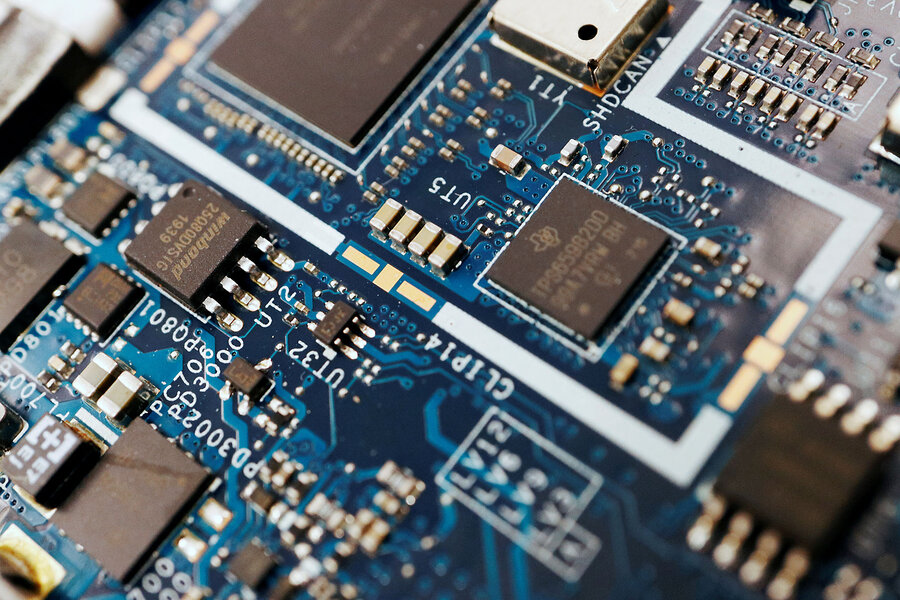
Microchips are essential to many aspects of modern life, including artificial intelligence. Both the United States and China want unfettered access to the latest chips, and that could become an obstacle to a stable relationship between the two countries.
Beyond the handshakes and photo ops at his summit talks with Chinese leader Xi Jinping, this new potential choke point is proving a major obstacle to the “stable” relationship that both leaders say they’re seeking.
At issue isn’t hulking barrels of oil, but tiny products that are a fraction of the width of a human hair: the microchips essential to everything from consumer gadgets to cars, from modern infrastructure to military hardware.
And essential, above all, to the world’s newest economic frontier – what Mr. Trump has termed the main theater of U.S. competition with China: artificial intelligence.
About 90% of the most advanced semiconductor chips are produced in a single place. It’s the island democracy of Taiwan, which Mr. Xi has said he’s determined to “reunite” with mainland China, by force if necessary.
Some 70% of the high-end memory chips in demand from the data centers that power AI come from South Korea. The country sits across the Demilitarized Zone from North Korea, whose dictatorial leader, Kim Jong Un, has been emboldened by his expanding nuclear weapons arsenal, and his new military partnership with Russia.
Inicio del artículo, extracto de The Christian Science Monitor. Para leer el resto, abra el artículo en el sitio del medio.
MarketNews muestra el titular y el resumen publicados por el medio. El artículo completo se lee en el sitio del editor. (www.csmonitor.com)