El Salvador put soldiers on the streets of Haiti’s capital. It’s not clear how long they’ll stay.
Resumen detallado
Observers say that El Salvador’s failure to provide a timeline and operating procedures for its soldiers in Haiti puts civilians and international ...
Observers say that El Salvador’s failure to provide a timeline and operating procedures for its soldiers in Haiti puts civilians and international security forces at risk.
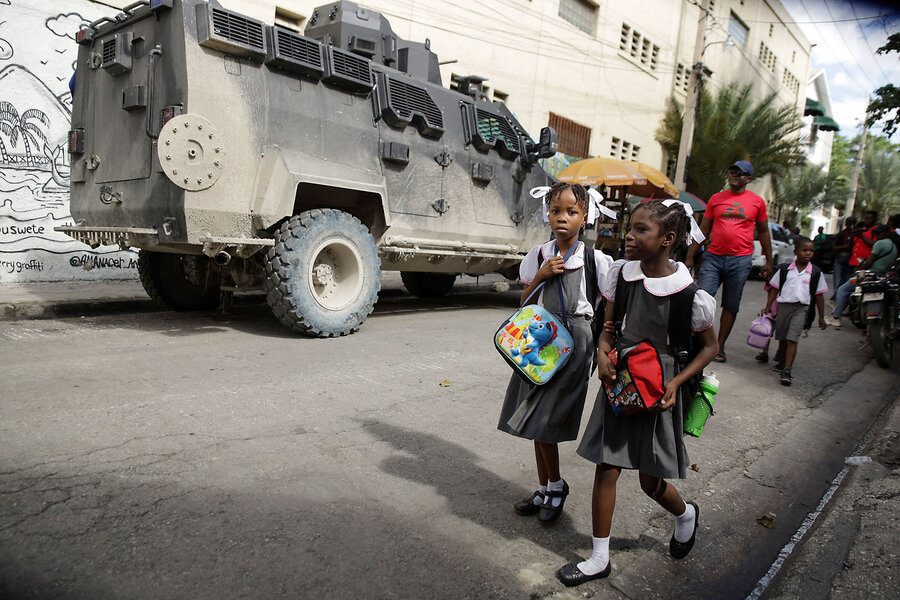
When El Salvador deployed more than 2,000 troops to Haiti this fall, they joined an already-crowded security landscape of international forces and private contractors operating in the Caribbean nation.
In a montage of video clips released by El Salvador’s government in mid-November, Haitians stop Salvadoran troops in the streets of Port-au-Prince to share high-fives. Uniformed soldiers are seen perched on the highest seats in Haiti’s national soccer stadium, ready to secure a gang-occupied neighborhood below. And an armed robotic dog waddles down a narrow alleyway, prepared to engage with gang members.
In Haiti, the public is happy about the arrival of foreign troops from El Salvador, who are taking on criminal gangs. But basic questions about the mission these forces are carrying out, and how long they will stay, are still murky.
Yet the arrival of Salvadoran troops is raising concerns from human rights advocates, regional governments, and the United Nations. They say El Salvador has failed to provide clear operating procedures for its soldiers in Haiti, which puts civilians and international security forces at risk. In early November, a top U.S. official in Haiti warned the prime minister that Salvadoran troops “nearly killed” forces from the UN-backed Gang Suppression Force during a shootout, Axios reported.
El Salvador’s President Nayib Bukele ordered the deployment of troops to Haiti in mid-October, after four Salvadoran aviation technicians went missing. President Donald Trump praised the move. But there are questions about Mr. Bukele’s longer term plans, including how long his country’s troops will remain in Haiti, especially if casualties rise.
“Within the Haitian population there’s a change in behavior since the Salvadoran troops arrived.
“Their hope makes sense,” he says.
The roots of Haiti’s…
Inicio del artículo, extracto de The Christian Science Monitor. Para leer el resto, abra el artículo en el sitio del medio.
MarketNews muestra el titular y el resumen publicados por el medio. El artículo completo se lee en el sitio del editor. (www.csmonitor.com)