BNP Paribas sees ‘panic selling’ as the AI selloff drags the S&P 500 into a correction and wipes out the Nasdaq’s 2026 gains
Resumen detallado
The S&P 500 and Dow slid more than 10% below their records Friday as the AI selloff spread. Some on Wall Street called it panic.
The S&P 500 fell into a correction Friday, and the Nasdaq Composite gave back everything it had gained in 2026.
The S&P 500 closed more than 10% below its Oct. 6 record close, and the Dow also ended in correction territory. The S&P fell 3.59% to 6,918.45, its seventh straight losing session and its longest losing streak since February 2020.
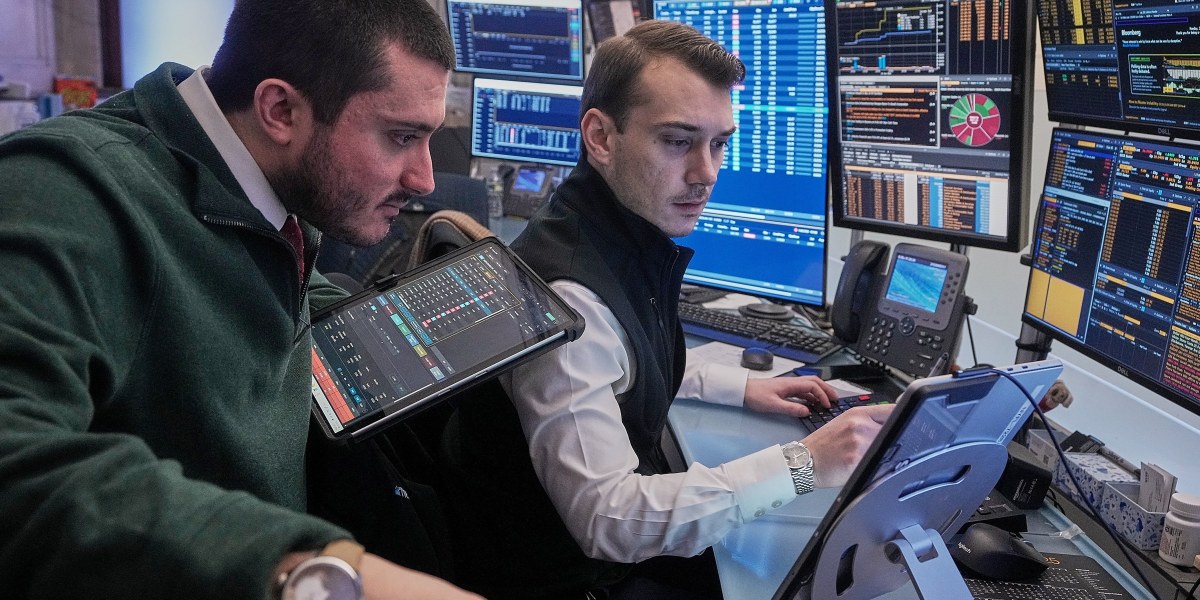
Investors were “panic selling” as they tried to judge whether enthusiasm for AI had peaked, Benedicte Lowe, an equity derivatives strategist at BNP Paribas, told CNBC.
Anthropic led the AI slide, as Fortune reported Friday morning. The Claude maker raised $81.34 billion in an IPO that valued it at $1.414 trillion, and its shares fell about 9% Friday, their second day of trading, giving back much of Thursday’s 17% pop. Reuters cited worries about slower data-center expansion, higher borrowing costs and Jensen Huang’s departure as Nvidia CEO. Huang resigned on Nov. 12, and CFO Colette Kress is interim CEO.
The people with the most money in stocks already felt it. Those with the largest stockholdings reported a decline in personal finances in the University of Michigan’s November survey, which ran through Nov. 16, “consistent with continued AI-related agitation in stock markets,” survey director Joanne Hsu said.
Chipmakers took the worst of it. Micron, hotlink]Broadcom[/hotlink], Nvidia, and AMD were down between roughly 12% and 14%. The VIX, Wall Street’s fear gauge, topped 30 for the first time since March, CNBC reported.
The selling wasn’t only in the U.S. Taiwan’s stock index fell 5.65% Friday, capping its steepest weekly drop since October 1997, according to LSEG data cited by CNBC. Japan’s Nikkei and South Korea’s Kospi each fell about 5%.
Washington added to it. President Donald Trump threatened a “tremendous tax” on U.S. companies that build data centers abroad, CNBC reported.
“Given the solid economic and fundamental backdrop, the move appears to be highly sentiment driven,” Chris Larkin, head of trading at E*Trade from Morgan…
Inicio del artículo, extracto de Fortune. Para leer el resto, abra el artículo en el sitio del medio.
MarketNews muestra el titular y el resumen publicados por el medio. El artículo completo se lee en el sitio del editor. (fortune.com)