This year’s humpback whale migration was missing something vital – the calves and their mothers
Resumen detallado
Humpbacks survived centuries of whaling. But melting sea ice and krill shortages pose another challenge entirely.
After centuries of whaling, humpback whales of the southern hemisphere were close to extinction. As few as 5,000 animals were left in the oceans. But after efforts to end whaling culminated in a 1985 moratorium, the whales began one of the biggest comebacks in conservation. Around 50,000 humpback whales now migrate along the eastern Australian coastline.
For decades, scientists associated with the Humpback Whale Sentinel Programme have monitored southern hemisphere humpback whales during the winter as they migrate from Antarctica to their tropical breeding grounds. This programme uses humpback whales as a sentinel species to track broader changes in the Antarctic sea-ice ecosystem. Humpback whales rely heavily on krill, and krill in turn rely on sea ice. If there’s a change in whale behaviour, health or reproduction, it signals a change in the supporting ecosystem.
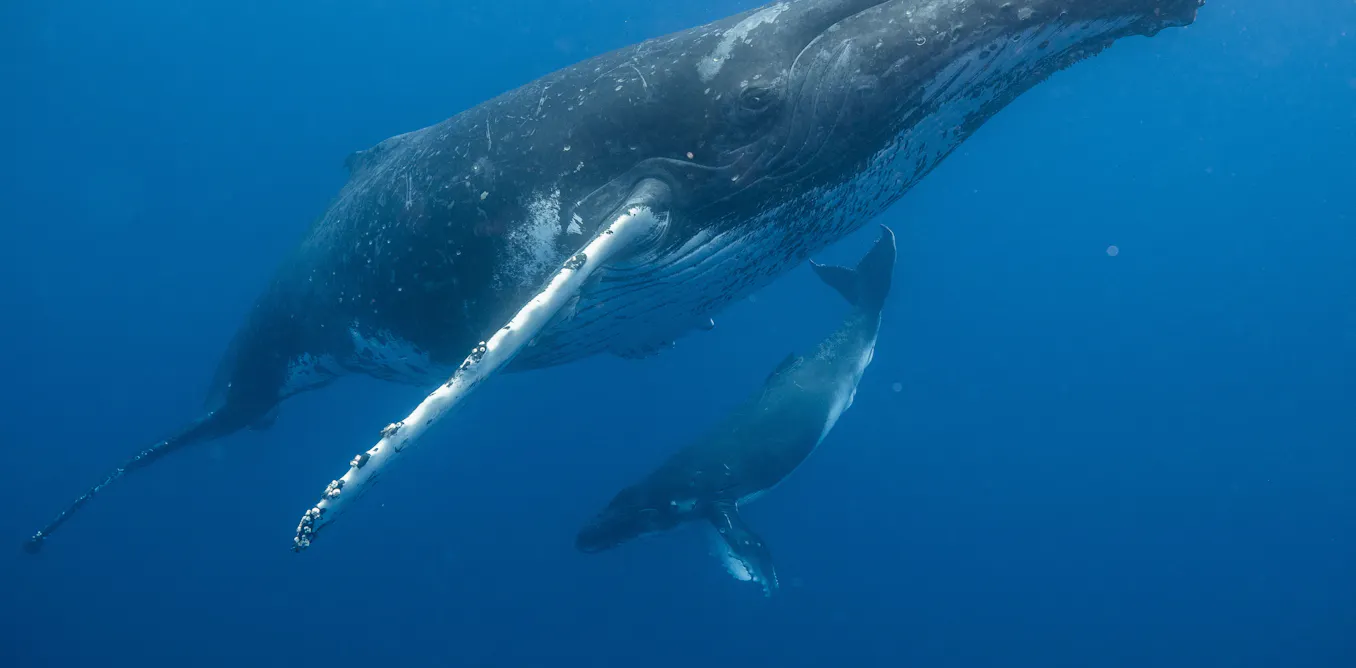
This winter, the migration was missing something vital – its calves. Data from the Cetacean Research Centre reports a massive drop in calving during the northern migration off Western Australia’s Ningaloo coast. The number of calves sighted each day fell from a 12-year average of ten calves to less than two during the recent 2026 winter season.
As the season progressed, reports came in from Ecuador, where low calf numbers coincided with unusually warm ocean conditions, while Brazil reported low calf numbers and an increase in strandings of young whales. In Reunion Island, only one calf was sighted. New Caledonia reported both low calf numbers and known returning whales. In Queensland’s Moreton Bay, calf numbers were down 90% from 2025.
These reports come almost a decade after Antarctica’s sea ice suddenly shifted to a low ice regime, suggesting climate-driven ecosystem impacts.
Humpback whales in the southern hemisphere usually don’t eat during their months-long migration to warmer waters to breed. They rely on their fat supplies accumulated over the Antarctic summer, when they feed on large swarms of krill.
Sa…
Inicio del artículo, extracto de The Conversation AU. Para leer el resto, abra el artículo en el sitio del medio.
MarketNews muestra el titular y el resumen publicados por el medio. El artículo completo se lee en el sitio del editor. (theconversation.com)