‘End your war, end it now’: Albanese gives Putin a serve at APEC
Resumen detallado
The Australian prime minister has seized his opportunity to send Russia’s president and US president Donald Trump a message about war, economics and artificial intelligence.
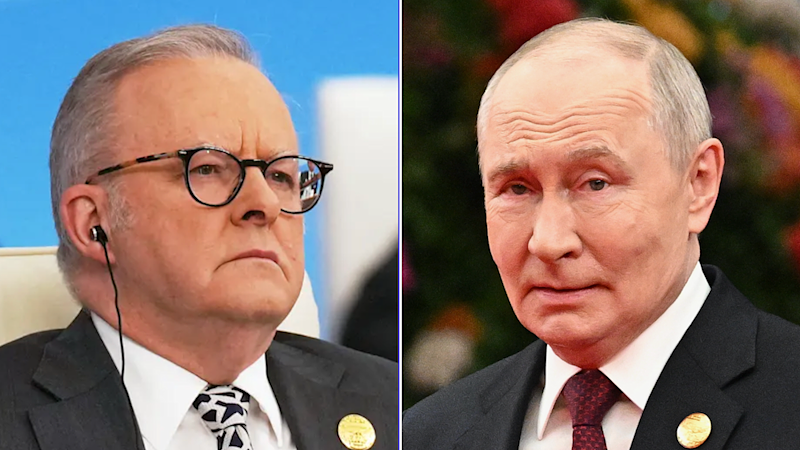
Shenzhen: Australian Prime Minister Anthony Albanese has used the international stage to stare down Vladimir Putin and demand he end the war in Ukraine while urging historic talks between Russia, China and the United States to produce “positive outcomes”.
Putin was expected to push for favourable terms to end Russia’s five-year invasion of Ukraine during a trilateral meeting with US President Donald Trump and Chinese leader Xi Jinping in Shenzhen in southern China on Thursday afternoon.
The talks, which Xi hosted at an exclusive lakeside villa on the sidelines Asia-Pacific Economic Cooperation (APEC) summit, marked the first time a sitting US president has sat down for face-to-face discussion with his country’s two foremost authoritarian rivals.
Addressing the APEC leaders’ meeting earlier on Thursday, Albanese said the wars in Ukraine and the Middle East were rupturing global economies and causing cost of living pressures.
“We must do all we can to end them,” he said in remarks to summit’s plenary session, which counted Putin, Trump and Xi among the audience of APEC’s 21 members.
While his comments were implicitly critical of Trump’s war in Iran, Albanese was direct in singling out the Russian leader.
“And I say very directly to President Putin: end your war, end it now,” he said, according to a transcript of the comments.
The speech was not broadcast live, but sources in the room said Albanese looked directly at Putin when he made his comments, while the Russian president looked down.
Trump’s decision to sit down with Putin and Xi in China has generated a mix of criticism, anxiety and scepticism among Western commentators and US allies.
Inicio del artículo, extracto de The Age. Para leer el resto, abra el artículo en el sitio del medio.
MarketNews muestra el titular y el resumen publicados por el medio. El artículo completo se lee en el sitio del editor. (www.theage.com.au)