America’s farmers are harvesting a bounty. Why are they struggling?
Résumé détaillé
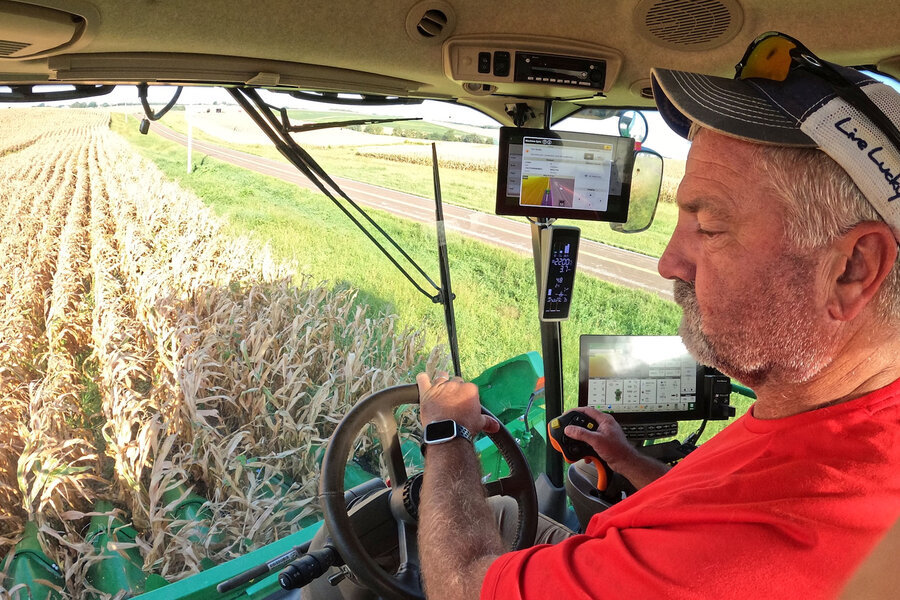
Farmers feel squeezed as wars affect fuel and fertilizer prices, alongside tariffs’ toll on things like equipment prices and foreign markets.
Farmers feel squeezed as wars affect fuel and fertilizer prices, alongside tariffs’ toll on things like equipment prices and foreign markets.
America’s farmers are bringing in a plentiful harvest. What many aren’t bringing in is much profit.
As the 2026 harvest winds down, rising production costs and inadequate crop prices are eating into farmers’ income, particularly among Midwest corn and soybean growers, even with a potential record in government subsidies.
For consumers, weary of sticky, persistent inflation, the horizon is a bit brighter: The U.S. Department of Agriculture (USDA) early forecast predicts grocery prices will rise just 1% next year, the smallest annual increase since 2019.
U.S. farmers have had a strong harvest this fall, which can help ease inflation. But rising costs and falling profits are leaving America’s farmers more dependent on government aid, raising questions about the future.
There’s “an affordability squeeze on the consumer end in terms of prices going up … but also at the farm,” says David Ortega, food economist and professor at Michigan State University in East Lansing, Michigan. “You have input costs, right? This is really squeezing producers, especially crop farmers.”
Here in the Midwest, farmers have largely finished a bin-buster harvest. The corn crop is expected to be the second-largest ever. Soybeans are on track to set a record. As of Sunday, Illinois farmers had harvested 93% of their corn and 96% of their soybeans. Other key producing states, such as Iowa and Indiana, are not far behind, although Iowa’s corn harvest was lagging.
But net farm income is expected to fall 5.5% from last year’s total, once adjusted for inflation, according to USDA. A big reason: the rising costs of inputs.
“Between diesel and fertilizer, that has made it hard to make a profit,” says John Ackerman, a fourth-generation farmer here in Morton, Illinois.
Début de l'article, extrait de The Christian Science Monitor. Pour lire la suite, ouvrez l'article chez le média.
MarketNews présente le titre et le résumé publiés par le média. L'article complet se lit sur le site de l'éditeur. (www.csmonitor.com)