What the birth of chess boxing, and the Wu-Tang Clan, taught me about claiming a title for yourself: book excerpt
Resumen detallado
The fusion sport shows the virtue of carving out your own niche, author and chess master Jennifer Shahade argues in her book.
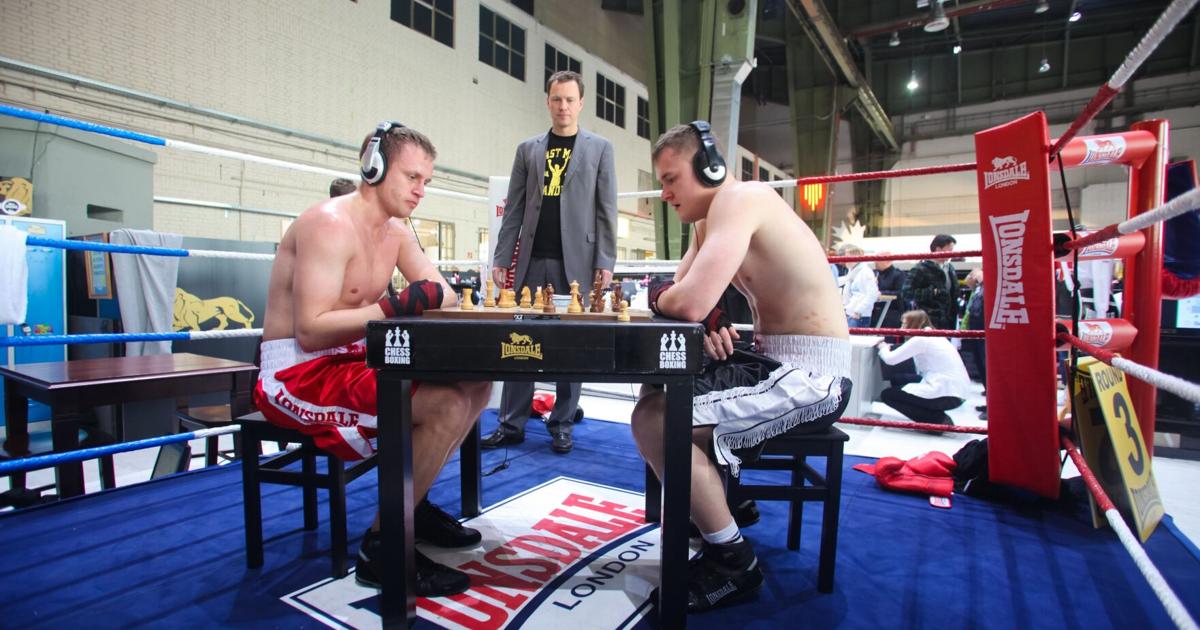
Chess strains the mind; boxing, the body. What is demanded of those who try to do both at the same time? Chess master Jennifer Shahade talked to a chessboxing pioneer in this excerpt from her book “Thinking Sideways: How to Think Like a Chess Player and Win at Life.” (Shahade and Star Opinion Editor Jordan Himelfarb explore strategy, gender and power — and what it means to find the better move when the obvious one fails — Nov. 23 at Soulpepper Theatre.)
I arrived in Berlin when the city was a sudden epicentre of the poker and chess worlds. Both the World Series of Poker Europe and the World Rapid and Blitz Chess Championships hit the German capital in 2015, and I was there for them.
After checking in, I met my host Iepe Rubingh, a tall and charismatic artist. Iepe was well known for traffic-stopping performances in Berlin and Tokyo to protest gentrification. But what he was most famous for was inventing a new sport that would challenge all categories: chessboxing.
I first heard the words on the Wu-Tang Clan’s song ‘Da Mystery of Chessboxin’, but never imagined them combining into a real activity. While chess and boxing might seem like opposite ends of a spectrum demanding different skills, there is more commonality than meets the eye. Chess is a fight on a square and boxing is a fight in a larger square. Chess has more physicality than it first seems, while boxing requires mental strength and strategy as well as brawn.
Iepe was inspired by a graphic novel by French artist Enki Bilal that depicts two men facing off in an ultimate challenge: 12 rounds of boxing followed by a four-hour chess match. Years later, in 2002, after Iepe started training in a boxing gym in Berlin, he met his friend Jean Louis Veenstra for drinks, who was a lawyer by trade and an amateur chess player and boxer. The idea of a fight came up. But this was no ordinary bar brawl conjured up by two hyped young men at 2am.
This new sport needed some rules. Iepe carefully devised it so that chess and…
Eight…
Inicio del artículo, extracto de Toronto Star. Para leer el resto, abra el artículo en el sitio del medio.
MarketNews muestra el titular y el resumen publicados por el medio. El artículo completo se lee en el sitio del editor. (www.thestar.com)