At Art Mumbai, UAE galleries reflect on historic and contemporary ties between India and the Gulf
Resumen detallado
Nujoom Alghanem’s Voyage has the uncanny effect of feeling both tempestuous and serene, like looking at a boat on a misty dawn or, conversely, on a cloudless day. A lot of this is…
Nujoom Alghanem’s Voyage has the uncanny effect of feeling both tempestuous and serene, like looking at a boat on a misty dawn or, conversely, on a cloudless day.
A lot of this is due to the painting’s grit and texture: the dabs and creases of black paint that have been superimposed on the abstracted seascape, the boat with its sailors. Without the black paint, the scene would have plunged into indecipherable abstraction.
It wouldn’t have been a bad painting – if anything, the white figures would have evoked a textual quality – but it would have been a completely different work. The painting would have lost its delightful climatic ambiguity. It would no longer have been a seascape.
Louvre Abu Dhabi's Art Here 2026 traces the ties that bind India and the Gulf
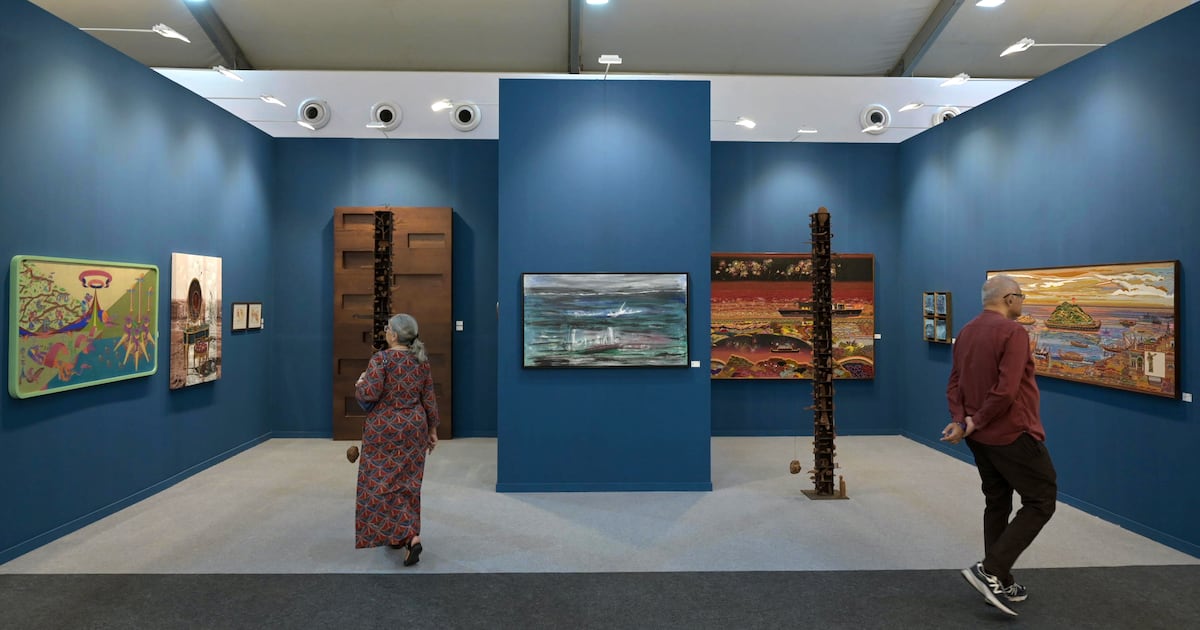
At Art Mumbai, Abu Dhabi’s Rizq Art Gallery is highlighting the painting’s maritime imagery. Voyage is one of several works by Alghanem that draw on the UAE’s seafaring traditions.
In Mumbai, this aspect also comes to allude to the city’s historic position as a trading hub between India and the Gulf region.
“I had a theme in mind: Mumbai as a trade conduit between India and the Gulf,” says Shafeena Yusuff Ali, founder and executive director of the Rizq Art Initiative and its gallery. “All the artists we worked with [in the show] always thought about this idea.”
Rizq Art Gallery is showing works by three other Emirati artists. Reem Al Mubarak is presenting a sculptural work that makes use of teak – the preferred timber of dhow ships. The work is carved with a poem her great-grandfather wrote to a hakim, whom he had crossed the sea to visit in India seeking treatment.
Ruqqaya Al Hashmi’s Points of Contact utilises henna, pointing to the shared heritage of the two regions. Najat Makki, meanwhile, is showing works that exhibit how she draws formal inspiration from the seafaring traditions of the UAE.
Inicio del artículo, extracto de The National. Para leer el resto, abra el artículo en el sitio del medio.
MarketNews muestra el titular y el resumen publicados por el medio. El artículo completo se lee en el sitio del editor. (www.thenationalnews.com)