How did the COP31 climate agreement fall apart – and what happens now?
Resumen detallado
Division over fossil fuels at this year’s UN climate summit scotched any hope of a deal – despite Australian efforts.
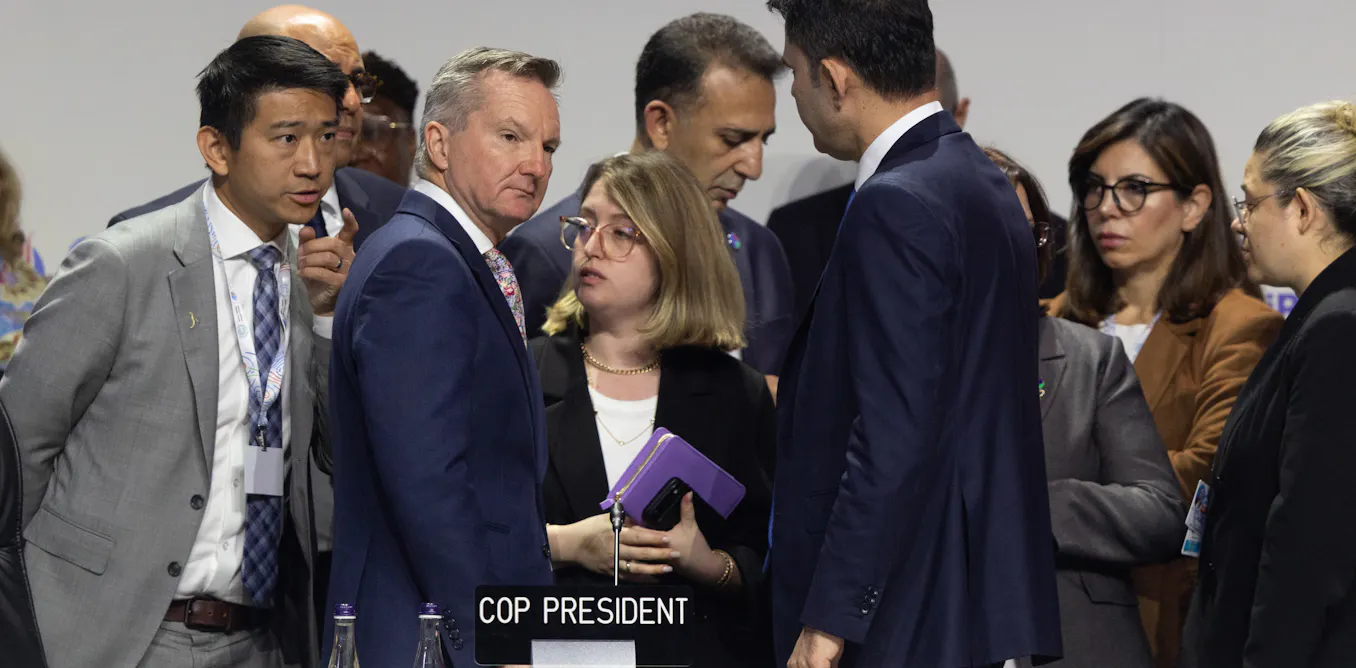
Two days after the COP31 global climate summit was supposed to finish, the talks in Antalya, Turkey, have come to an end – but not as we might have hoped.
Agreement simply could not be reached. The sticking point was the omission of fossil fuels in draft texts. The European Union led a revolt, shattering the consensus needed to adopt the cover text proposed by the Turkish and Australian conveners.
In a year of unprecedented climate disasters, a supercharged El Niño and as the world heads inevitably past 1.5 °C of warming, the EU and other nations said that the international process did not meet the moment.
Some coverage has suggested the rejection of the cover text is a sign the entire summit was a failure. This isn’t quite right.
These texts have always been add-ons to the formal negotiation process. Countries have regularly agreed these political, overarching statements, particularly since the Glasgow meeting in 2021, but they are not a requirement.
Its failure does not signal the end of the COP process – or the breakdown of the Paris Agreement. What it may mean is that international climate cooperation will look different from this point onwards.
For many observers, the litmus test for success at COP31 was whether countries could make any headway on the root cause of climate change – fossil fuels. Unfortunately, fossil fuels proved unmentionable.
Three years ago at COP28 in Dubai, countries agreed to “transition away from fossil fuels”, marking the first time fossil fuels had explicitly been mentioned in an official decision text in decades of negotiations.
The Dubai text was hailed as “the beginning of the end of the fossil fuel era”. But there was little sign that hope would be realised in Turkey.
Inicio del artículo, extracto de The Conversation AU. Para leer el resto, abra el artículo en el sitio del medio.
MarketNews muestra el titular y el resumen publicados por el medio. El artículo completo se lee en el sitio del editor. (theconversation.com)