Florida’s stormwater ponds become floating solar farms as costs fall and demand rises
Resumen detallado
Of the tens of thousands of retention ponds designed to collect runoff during Florida's frequent downpours, some are also being used to generate solar power, expanding sustainable…
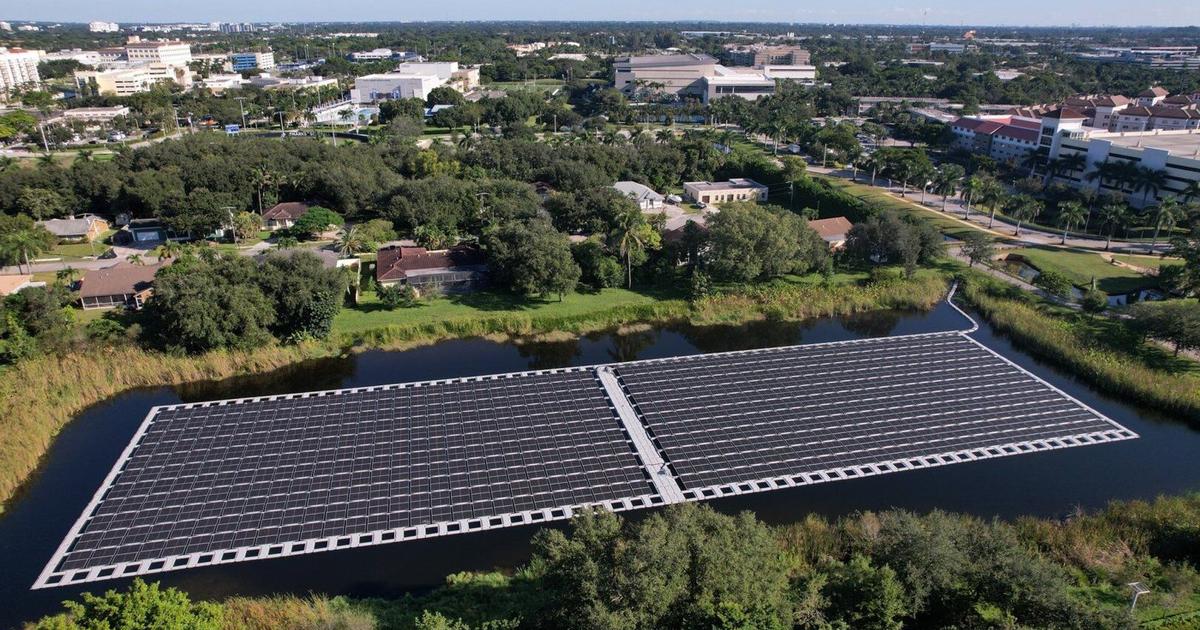
Of the tens of thousands of retention ponds designed to collect runoff during Florida’s frequent downpours, some are also being used to generate solar power, expanding sustainable energy production in the Sunshine State.
Floating photovoltaics — solar panels mounted on buoyant structures anchored in reservoirs and ponds — have become less expensive since the technology emerged two decades ago. They can generate electricity without competing for scarce available land, and the cooling effect of the water may even boost output. Researchers caution, though, that the cost of water-based solar remains high and the environmental impact is not fully understood.
After about 20 years, “people have started to believe, have started to see that it works, that it’s fairly reliable, and that lenders and investors have also gained confidence in the technology,” said Oktoviano Gandhi, a scientist at the Qatar Environment and Energy Research Institute.
While the United States has been slow to adopt the technology, Florida’s geography, climate and development history make it particularly well suited for floating solar projects to address growing electricity demand.
The median reported cost of floating solar projects fell from $2.41 per watt in 2015 to $1.25 per watt in 2024, a decline of about 48%, Gandhi said. Nevertheless, floating solar still costs more upfront than comparable land-based solar. He said published comparisons suggest a premium of roughly 10% to 25%.
While adoption of the technology has grown since the first pilot was installed in Japan in 2007, Gandhi said, floating solar accounts for less than 1% of global solar capacity.
By the end of 2024, more than 9.6 gigawatts of floating solar generating capacity had been installed in 66 countries and regions, Gandhi said.
Rafael Almeida, a freshwater ecosystem scientist and assistant professor at Indiana University Bloomington, said floating solar’s growth is part of the broader expansion of solar energy development, driven by…
“It’s…
Inicio del artículo, extracto de Toronto Star. Para leer el resto, abra el artículo en el sitio del medio.
MarketNews muestra el titular y el resumen publicados por el medio. El artículo completo se lee en el sitio del editor. (www.thestar.com)