Baboons made themselves at home in this town and a battle between their defenders and haters ensued
Detailed summary
SIMON'S TOWN, South Africa (AP) — The divisions over baboons run deep in Simon's Town, where their defenders and haters have clashed on social media and sometimes in real life
SIMON’S TOWN, South Africa (AP) — The divisions over baboons run deep in Simon’s Town, where their defenders and haters have clashed on social media and sometimes in real life for years.
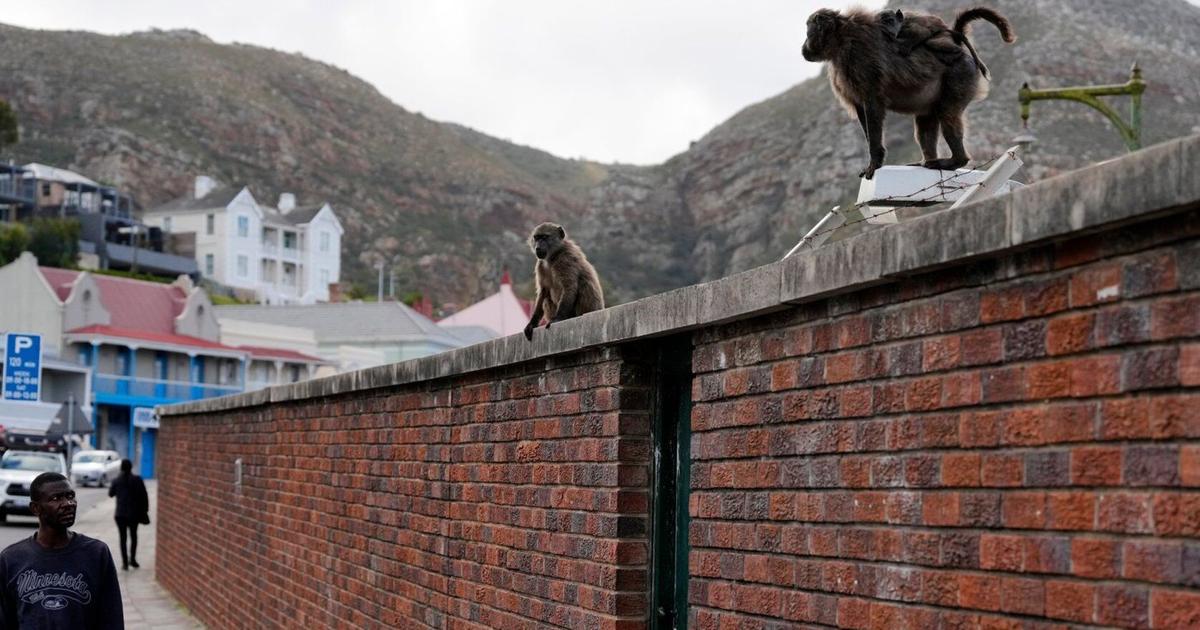
Sleepy Simon’s Town in South Africa and its population of around 8,000 are riled up about whether to share their coastal town with two troops of chacma baboons that have invaded from the lower slopes behind Cape Town’s famous Table Mountain, which many of the city’s suburbs push up against. Roughly 60 baboons have moved in on a semi-permanent basis — in town by day, and back to the hills to sleep at night.
The situation in Simon’s Town has become untenable, said Gregg Oelofse, a city environmental official and a member of Cape Town’s baboon unit.
And so the city has settled on a solution after years of fierce debate. The two Simon’s Town troops will be moved to enclosures between around 2 and 3.5 hectares (5 and 8.6 acres) in size, where they will be contained by electric fences.
The males will be neutered, ensuring the troops die out in 20 to 30 years because they can’t breed.
“Baboons and people don’t do well when they’re forced to live together,” Oelofse said. “They do well when they live adjacent to each other.” He said moving the baboons to the “semiwild” enclosures was the best of limited options. The other would be to cull them.
While some Simon’s Town residents seek peaceful baboon-human coexistence on the streets, and welcome them, the reality is that baboons are not good neighbors, and others want them out.
The smart but troublesome animals climb buildings, smash windows, break into homes to steal food and fight with dogs. They rummage through trash cans, flinging trash about.
Simon’s Town deploys “baboon monitors” to manage its primate problems. They sometimes shoot baboons with propellants from paintball guns or use “bear bangers” — non-lethal cartridges that make a gunshot-like noise — to scare them away.
Opening of the article, excerpted from Toronto Star. To read the rest, open the article on the publisher's site.
MarketNews shows the headline and summary published by the outlet. The full article is on the publisher's website. (www.thestar.com)