World leaders set out clashing priorities as COP31 turns to negotiations
Detailed summary
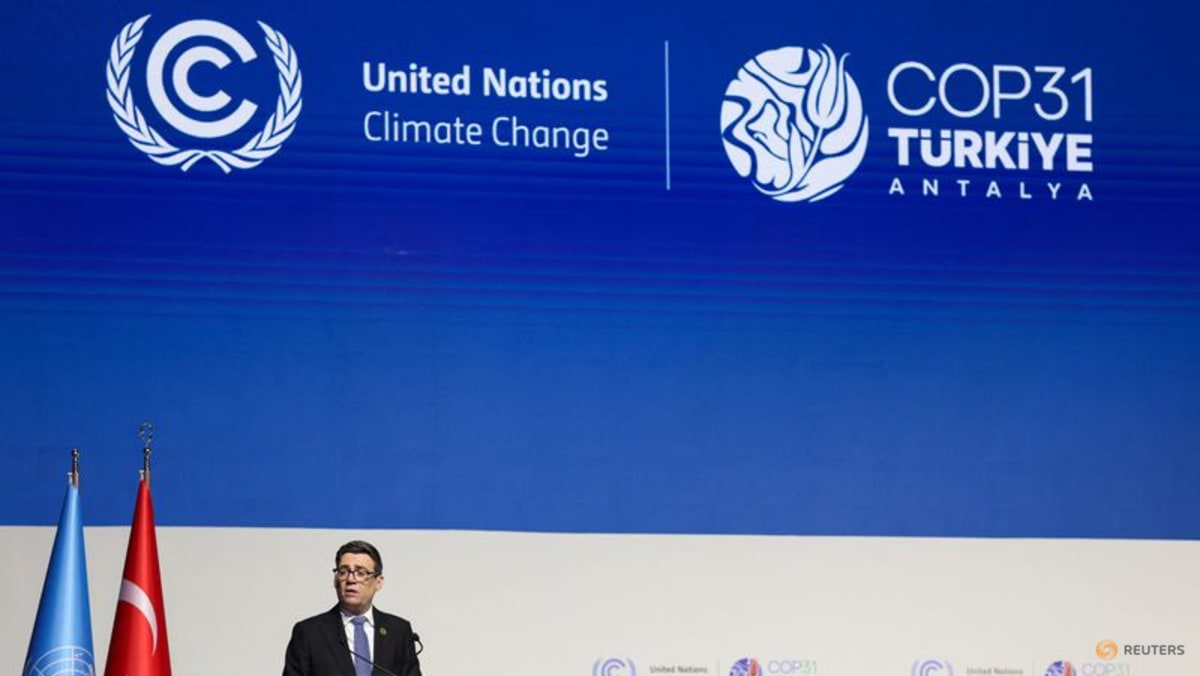
ANTALYA: World leaders have set out competing positions and made clashing demands in two days of intense speech-making at the COP31 climate change talks in Türkiye, leaving negotiators with a tough task to draft a meaningful deal that all can agree.
Small island states, among the most vulnerable in the world as global warming makes sea levels rise, pleaded for urgent cuts to greenhouse gas emissions.
European leaders, meanwhile, lined up behind a proposal to expand global electrification, developing countries asked for more finance from rich ones, and fossil fuel producers said oil, gas, and coal should continue to be used.
"We reaffirm our sovereign right to strengthen our energy and oil industry as a driver of our national development," Venezuela's acting President Delcy Rodriguez told the conference, after UN leaders had made the case for bringing to an end the age of fossil fuel.
Apart from trying to accommodate incompatible national positions aired on Wednesday (Nov 11) and Thursday (Nov 12), conference host Türkiye and negotiations lead Australia also have the challenge of trying to make progress when wars and inflation have pushed climate concerns down the political agenda.
"It's my job to steer consensus, not to bang tables and demand any particular action, but to steer consensus to the strongest, most ambitious possible outcome within the constraints of that consensus-driven process," Chris Bowen, Australia's COP31 president of negotiations, told Reuters.
Asked what a good deal might look like, he said: "I have many more hours of consultations with partners to do."
Climate activists say short-term political concerns should not get in the way of addressing an issue that will get more pressing if ignored.
A UN report last month found the world was already on course to break through the 1.5 degrees Celsius (2.7 degrees Fahrenheit) warming limit that countries had agreed to pursue under the 2015 Paris Agreement to prevent the worst effects of climate change.
Opening of the article, excerpted from CNA. To read the rest, open the article on the publisher's site.
MarketNews shows the headline and summary published by the outlet. The full article is on the publisher's website. (www.channelnewsasia.com)