Russia wants to build a new security framework to end the war. This is why it won’t work
Resumen detallado
Vladimir Putin wants to counter NATO with his own security pact, but there are reasons to be sceptical.
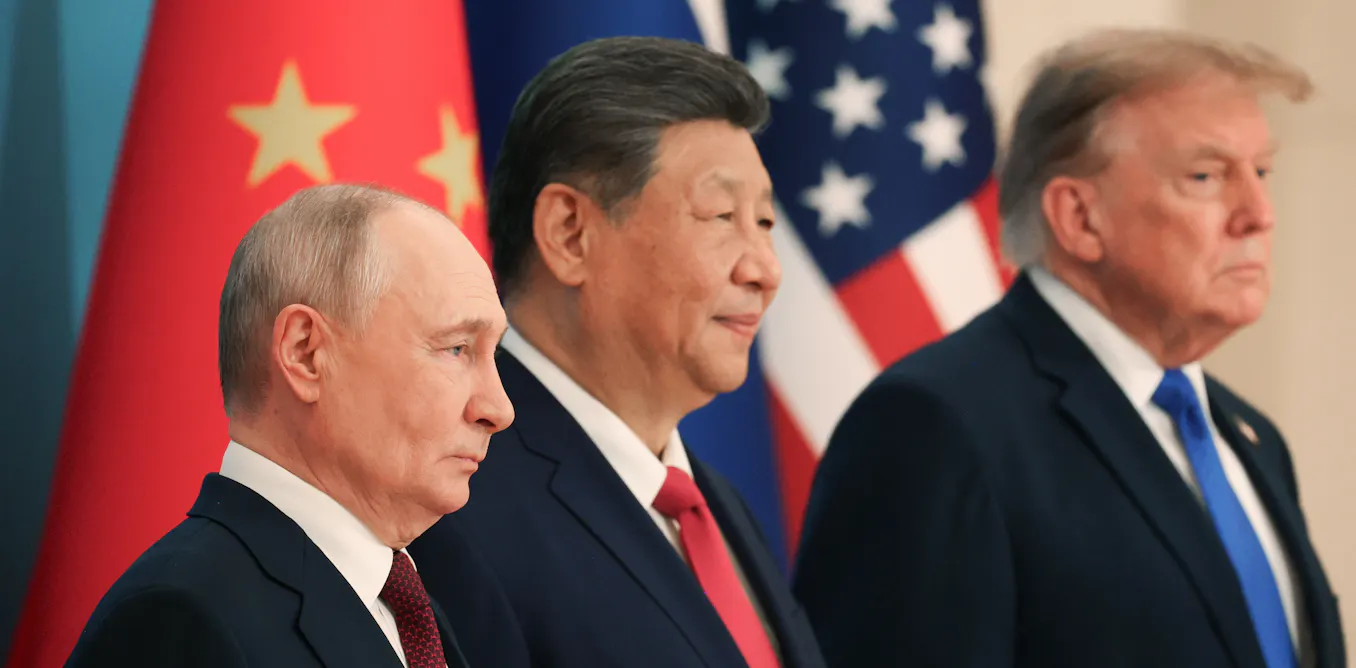
When negotiators from Russia, the United States and Ukraine met in Abu Dhabi recently for peace talks on ending the Ukraine war, the Russians pushed a long-held demand for a new security architecture for Europe. Washington has appeared open to this, with US President Donald Trump touting a “big, beautiful agreement” that “might involve all of Europe”.
While little was revealed about what such a framework would look like specifically, a recent speech by Russian Foreign Minister Sergey Lavrov provides some clues.
At a security conference in Minsk, Belarus, earlier this month, Lavrov proposed a new security architecture for the entire Eurasian continent.
Reiterating the claim Russia has long made to justify its war in Ukraine, Lavrov said NATO had repeatedly pledged not to expand eastward to contain Russia, but did so anyway. And, he said, the West is now pursuing a new “NATO-style military-political bloc in Asia”.
In response, Lavrov said Russia wanted to build a new security framework that would encompass all of Europe and Asia – echoing the Soviet Union’s communist alliances during the Cold War.
A new arrangement like this would be “committed to the principles of indivisible security, openness and equality”, Lavrov said, adding European nations were welcome to join. Russia does not “desire nor plan any war whatsoever with Europe”, he stressed. But he added:
A security proposal based on “sovereignty” and “equality” may sound appealing to some states across the region. However, there are several reasons to be sceptical.
And despite Russian President Vladimir Putin’s claims he is not against “having a dialogue with Europe, Moscow has made clear it does not want European representatives in the Ukraine peace talks. So it stands to reason Europe wouldn’t have a voice in a future security agreement either.
That said, the political view towards Russia in Europe is evolving. As economic pressures continue to mount, support for right-wing, populist parties is growing, including one…
Inicio del artículo, extracto de The Conversation AU. Para leer el resto, abra el artículo en el sitio del medio.
MarketNews muestra el titular y el resumen publicados por el medio. El artículo completo se lee en el sitio del editor. (theconversation.com)