How Truffle Seaweed Became Nordic Cuisine’s Most Coveted Ingredient
Resumen detallado
In Norway’s remote Lofoten archipelago, two entrepreneurs are braving Arctic waters to harvest one of the world’s most prized delicacies: truffle seaweed. It’s notoriously…
In Norway’s remote Lofoten archipelago, two entrepreneurs are braving Arctic waters to harvest one of the world’s most prized delicacies: truffle seaweed. It’s notoriously difficult to cultivate and painstaking to pick, so why are the world’s top chefs so hooked?
“We call that the smell of money,” grins Tamara Singer, in response to my scrunched-up nostrils. To me, the aroma wafting my way smells less like endorphin-inducing ‘dosh’ and more like what it is: dehydrating fish corpses. ‘Pungent’ doesn’t quite cut it.
I’m picking my way down the rocky shores of the remote Lofoten archipelago in Norway’s Arctic Circle, trusting my footing to the woolly-hat-wearing, wetsuit-clad co-founders of Lofoten Seaweed, Tamara and Angelita Eriksen. As we walk, I can’t take my eyes off the macabre scene: hundreds of stockfish hang from the hjells (wooden trellises) lining the road while row upon row of empty racks stand between them. I ask how many fish are hanging here. “There used to be a lot more,” Tamara says, her response subdued. The large gaps in the racks speak volumes about the state of an industry that was once the economic backbone of the country.
Despite the decline in fishing quotas, Norway has the second-longest coastline in the world (after Canada) and its vast seas remain a source of great bounty and profit for those intrepid enough to wrest a living from them. The brisk waters in this region, like the ones I’m about to step into, are home to at least 30 types of seaweed, one of which has found itself at the cutting edge of the global gastronomy scene.
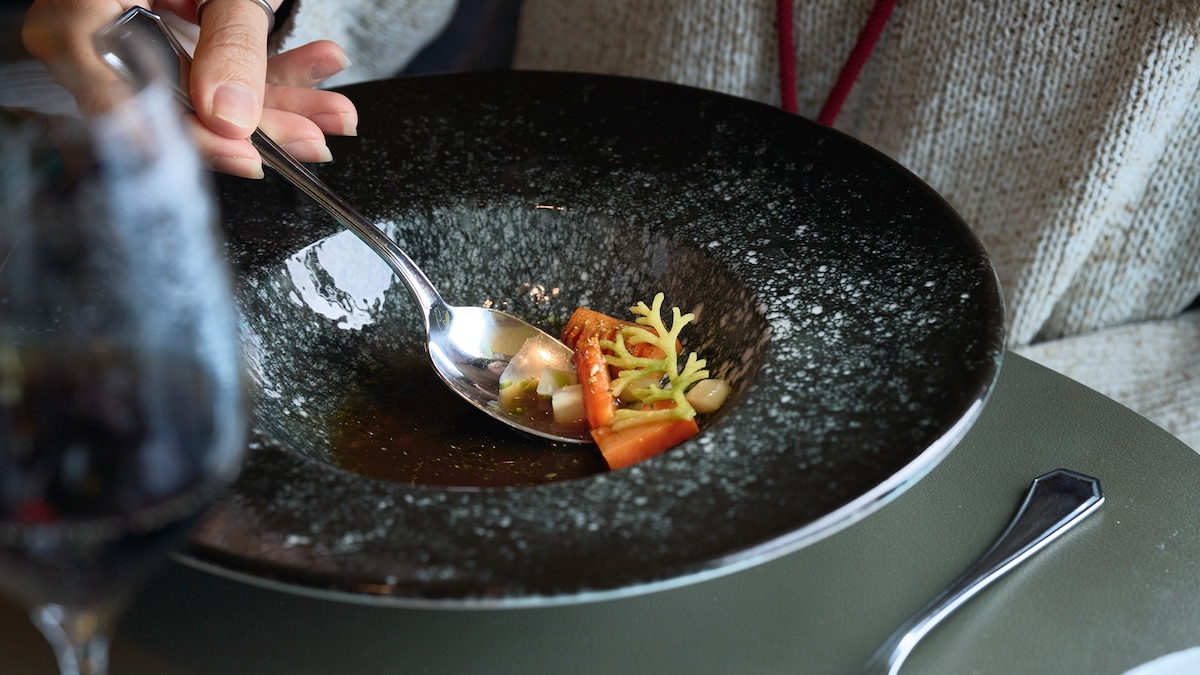
“It’s actually an epiphyte (a plant that grows on another plant),” Tamara tells me while wading into the shallows, rifling through a huge orange bucket of recently foraged goods. She’s referring to truffle seaweed, an algae that can retail for almost €1,000 (£860) per kilo, and has become popular in Michelin-starred restaurants across the globe.
“You have the knotted wrack, which is very round, and then this red algae,”…
Ori…
Inicio del artículo, extracto de National Geographic. Para leer el resto, abra el artículo en el sitio del medio.
MarketNews muestra el titular y el resumen publicados por el medio. El artículo completo se lee en el sitio del editor. (www.nationalgeographic.com)


