NASA's Voyager 1 probe poised to achieve mega-distance milestone
Resumen detallado
WASHINGTON - NASA's Voyager 1 has already traveled farther than any other spacecraft from Earth since its launch in 1977. The probe, which exited our solar system years ago and is…
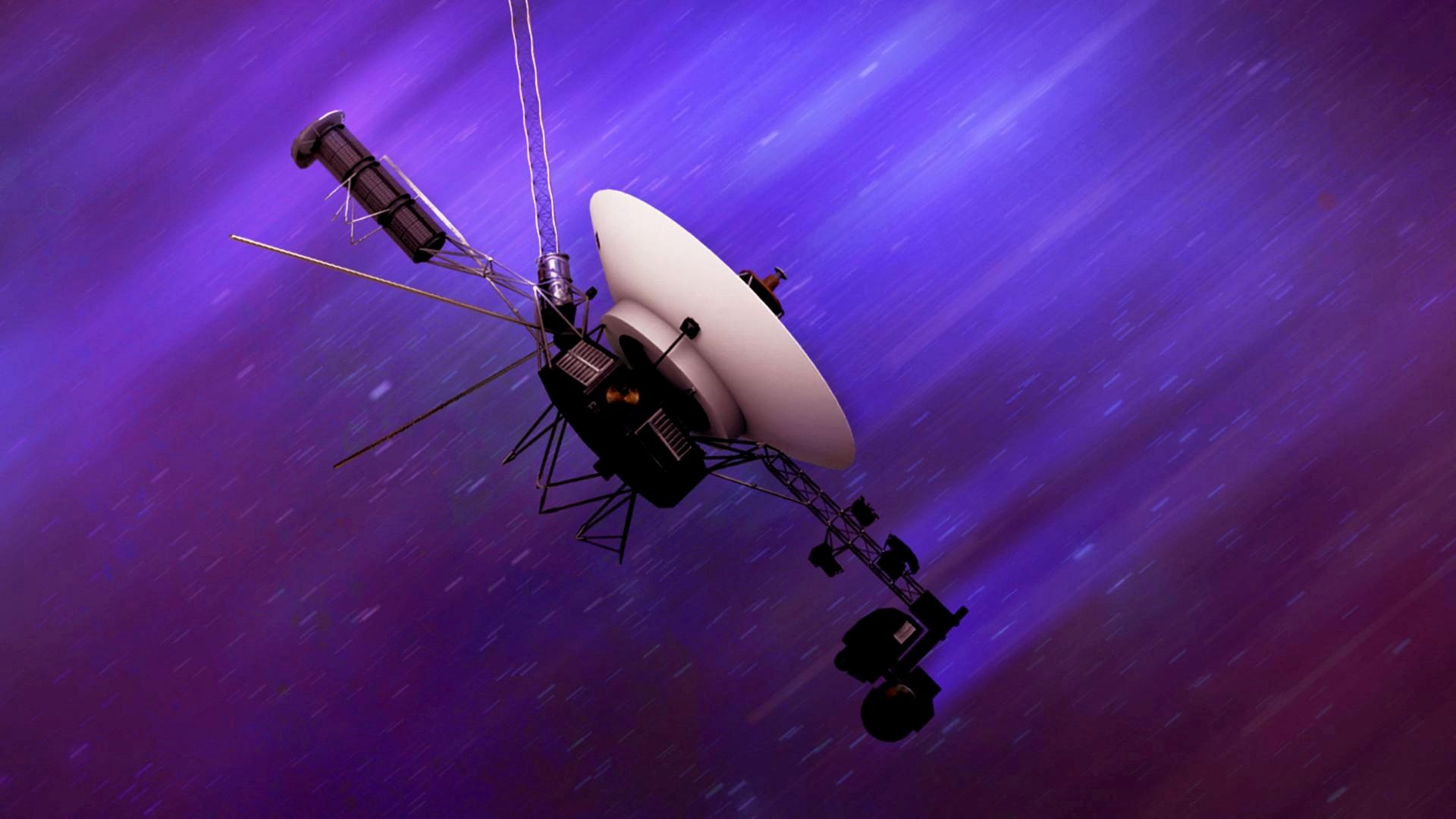
WASHINGTON - NASA's Voyager 1 has already traveled farther than any other spacecraft from Earth since its launch in 1977. The probe, which exited our solar system years ago and is journeying through interstellar space, is now on the cusp of a remarkable milestone — traversing a light-day, the distance light travels in 24 hours.
A light-day is about 16 billion miles (26 billion km). The US space agency said Voyager 1, flying at almost 38,000 miles per hour (61,000 kph) through the virtual vacuum of space, will reach that distance from Earth on Wednesday at 5:16 a.m. ET (1016 GMT). The robotic spacecraft has the distinction of being the most distant human-made object.
"I view it as an engineering milestone, marking the amazing longevity of Voyager 1 — and also an engineering achievement to be able to communicate with Voyager 1 at its distance," said astrophysicist Alan Cummings, a senior research scientist in the Space Radiation Laboratory at Caltech who has been a Voyager program scientist since 1973.
A light-year may be a more familiar concept for many people, a metric used for vast cosmic distances. It is the distance a particle of light, called a photon, travels in a year — about 5.9 trillion miles (9.5 trillion km). For instance, the closest stars beyond our solar system are the three that make up the Alpha Centauri system, about 4.24 light-years away.
Voyager 1 and twin spacecraft Voyager 2 were launched 49 years ago, exploring planets in the outer solar system before continuing onward. Voyager 1 was carried into space on September 5, 1977, atop a Titan IIIE-Centaur rocket from Cape Canaveral in Florida 16 days after the launch of Voyager 2, but overtook its twin within months.
"Voyager 1 returned a wealth of new information about Jupiter and Saturn, and their moons," Cummings said.
It discovered a thin ring around Jupiter and two previously undetected Jovian moons, Thebe and Metis. It then spotted five new moons around Saturn as well as a ring called the G-ring.
"Voya…
Inicio del artículo, extracto de GMA News. Para leer el resto, abra el artículo en el sitio del medio.
MarketNews muestra el titular y el resumen publicados por el medio. El artículo completo se lee en el sitio del editor. (www.gmanetwork.com)