Ending Energy Poverty: Why South Africa Needs Public Investment in Distributed Renewable Energy
Resumen detallado
Decentralised renewable energy offers the fastest and most cost-effective path to ending energy poverty in South Africa, yet government policy continues to…
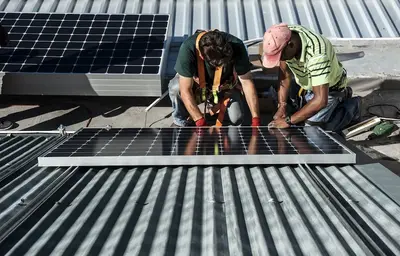
Energy poverty is a major contributor to stunted childhood development, arguably the most damaging feature of rampant inequality, and a barrier to inclusive economic growth. The opportunities to eliminate energy poverty, particularly through decentralised deployment of renewable energy technologies, are increasingly affordable, especially for a middle-income country with South Africa’s abundant natural resources.
Signs suggest this will receive the concerted government attention it deserves; for example, Minister Kgosientsho Ramokgopa recently said the government will increase Free Basic Electricity (FBE) from 50 kWh to 200–300 kWh per household per month. However, the government prioritises market reform by establishing a wholesale electricity market and a new Electricity Pricing Policy, with cost-reflective pricing as the central principle.
Over the past two decades, the Integrated National Electrification Programme (INEP), tasked with expanding the electricity distribution network, has been neglected. The INEP, which receives direct funding from Treasury for Eskom to implement, in cooperation with local government, has increased connections, but at a rate that often falls behind the growing number of households. Last year, the Department of Electricity and Energy (DEE) reported 1.6 million households without any electricity.
Various policies, programmes, and pilot projects aim to deliver energy services beyond the grid, including some worthwhile local government initiatives under the Free Basic Alternative Energy policy. Still, most depend on international donors or local philanthropy. The collective impact on energy poverty has been marginal, largely because ambiguous mandates and fragmented responsibilities make it hard to adopt a comprehensive national approach.
Extensive research unpacks the immediate and enduring benefits of adequate energy services in poor households, where the value of each unit of energy is far higher than the system-wide aggregate; for…
Socia…
Inicio del artículo, extracto de Mail & Guardian. Para leer el resto, abra el artículo en el sitio del medio.
MarketNews muestra el titular y el resumen publicados por el medio. El artículo completo se lee en el sitio del editor. (mg.co.za)

