After Congress, expanded nutrition program bill’s next test is funding
Resumen detallado
Education Secretary Sonny Angara highlights the need for adequate funding for the proposed law to be effective, as budgets fall short of the required amounts for comprehensive feeding programs
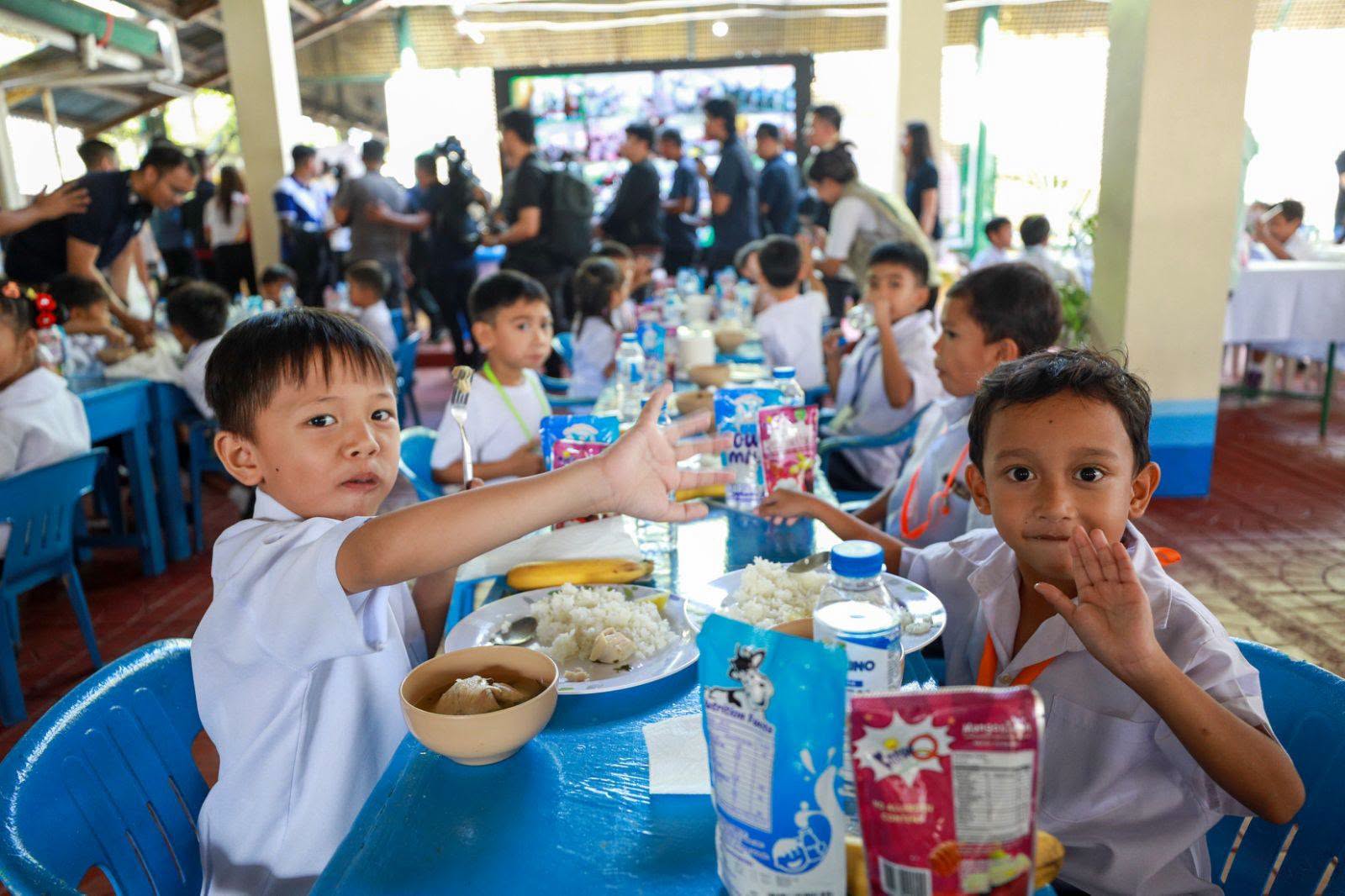
FEEDING PROGRAM. Students receive hot meals during the school-based feeding program at Pulilan Central School in Bulacan on July 8, 2026.
This is AI-generated. Read the article for full context. Report any errors.
MANILA, Philippines – Efforts to strengthen the country’s feeding program to address malnutrition and learning gaps moved forward in Congress with the national children’s nutrition bill.
On Monday, November 23, the Senate ratified the reconciled version of the bill, which seeks universal feeding for kindergarten to Grade 3 public school students, according to Senator Bam Aquino.
The final version of the proposed law must still be sent to Malacañang. Once signed by President Ferdinand Marcos Jr., it would amend the Masustansyang Pagkain para sa Batang Pilipino Act.
The measure, a Marcos priority bill, would establish the national nutrition program, which introduces the “life-stage approach.” It essentially seeks to replace the fragmented implementation of feeding programs and align nutrition interventions from the first 1,000 days up to 11 years old, as well as for pregnant adolescent students.
“It’s an ambitious program…. The coverage is one hot meal per day for at least 200 days,” Pasig City Representative Roman Romulo, the chairman of the House committee on basic education and culture, told Rappler.
Romulo also noted that under the bill, there should be an increase in meal funding, which should be directly spent on food costs and not cover maintenance and operating expenses.
The bill also mandates sourcing products from local farmers and fisherfolk for the hot meals.
Inicio del artículo, extracto de Rappler. Para leer el resto, abra el artículo en el sitio del medio.
MarketNews muestra el titular y el resumen publicados por el medio. El artículo completo se lee en el sitio del editor. (www.rappler.com)