Bleeding, birth defects: Congo residents sue over alleged mining pollution
Resumen detallado
A landmark lawsuit in Congo sees 27 residents accuse a Chinese-owned copper and cobalt mine of poisoning their community and the government of failing to protect them.
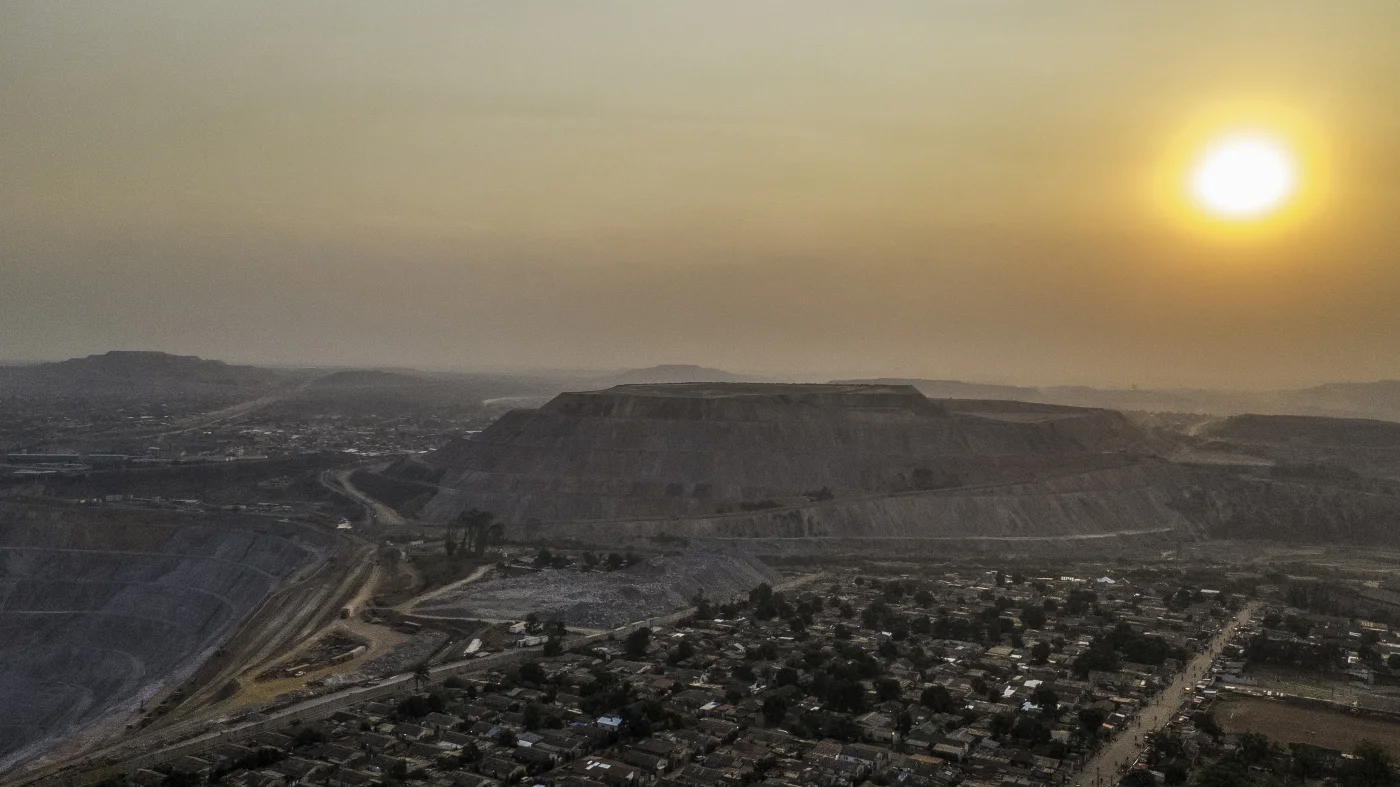
A general view of a neighborhood on the outskirts of Kolwezi, in the Democratic Republic of Congo, where industrial mining operations are encroaching on residential areas and artisanal miners dig shafts beside homes, Sept. 27. Across the city, in the heart of Africa's copper belt, open-pit mines are eating into neighborhoods as mining concessions increasingly overlap. Marie Ruwet/AFP via Getty Images hide caption
KOLWEZI, Democratic Republic of Congo — In a small cinderblock home in the scrub beside a Chinese-owned copper and cobalt mine in Kolwezi, a mother shares a story of devastating loss.
She believes pollution from the neighboring mine is responsible for her family's suffering.
She has lost three children. Two died at birth. A third suffered repeated nosebleeds before dying. One of her two surviving children has stunted growth.
Now she and 26 other residents are taking the company to court in a rare attempt to hold alleged polluters accountable in the Democratic Republic of Congo. They are also suing the government, accusing it of failing to enforce environmental regulations.
Like other plaintiffs, she asked NPR not to identify her, fearing retribution from the company or government. Although the claimants' names are public in court documents, they want to avoid further exposure. Their lawyers also fear the plaintiffs could face intimidation from other locals.
"Our children are the first victims," she said, as the sun set over a nearby mound of mine tailings. "What we're hoping for is to see justice done."
The plaintiffs, whose case began Nov. 3, describe similar problems: contaminated water, nosebleeds, skin rashes, miscarriages and birth defects, which they blame on mining pollution.
The mine, known as COMMUS, is owned by Chinese multinational Zijin and lies in Kolwezi, a city of more than 500,000 people in the heart of Congo's copper belt, a southern region with vast mineral reserves.
Inicio del artículo, extracto de NPR. Para leer el resto, abra el artículo en el sitio del medio.
MarketNews muestra el titular y el resumen publicados por el medio. El artículo completo se lee en el sitio del editor. (www.npr.org)