The world got used to endless Saudi cash. The Iran war ushered in a new reality
Resumen detallado
The fund that invested billions in Uber and backed the $55 billion takeover of Electronic Arts is now aiming to limit foreign investments to 20% of its portfolio, down from 30% in 2020.
Head west out of Paris, and well-heeled suburbs give way to sleepy commuter towns. There, two dots on the map illustrate one of the most dizzying pipelines of wealth on the planet: Saudi Arabia. About 14 miles outside the capital sits Château Louis XIV, a close copy of the nearby real thing in Versailles; Saudi Crown Prince Mohammed bin Salman bought the Château in 2015 for $300 million.
Turn north from there and you arrive at the small town of Cergy, where MBS inked a €6 billion deal in August to build three theme parks, apartment blocks, hotels, and infrastructure upgrades. “This project is designed to breathe new life into the territory,” Jean-Paul Jeandon, the area’s president, told me one rainy October evening. Without the Saudi deal, he said, Cergy faced poor growth prospects.
The town is not alone in tapping funds thousands of miles away—for good reason: For the past decade, the pool of Saudi money has seemed bottomless. With a steady influx of cash from vast oil reserves, the kingdom’s Public Investment Fund, or PIF—of which MBS is chairman—has seen its assets rocket 600% since 2015, to more than $900 billion, and has splurged on soccer, tech giants, California EV manufacturer Lucid, London’s Heathrow Airport, and numerous other investments, all while building mega-size tourism sites, arenas, and entertainment complexes back home.
Driving the action has been one defining project: Vision 2030, MBS’s signature strategy to transform the country by ending its overwhelming dependence on oil. No investment has seemed too big or costly; in fact, mammoth spending was the point: It positioned Saudi Arabia as a major player in tech, AI, entertainment, and other fields. Host the six-month World Expo extravaganza in 2030 in Riyadh? And the 2034 FIFA World Cup? The answer to both: We must.
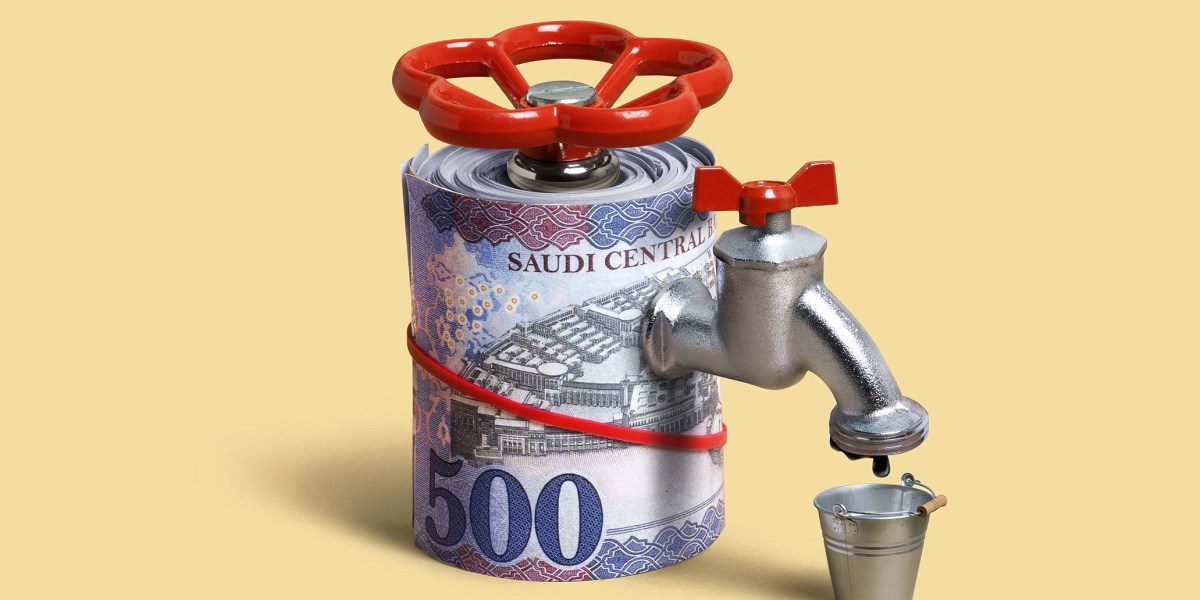
But that giant pool may be drying up, and with it, Saudi Arabia’s splashiest plans for remaking its economy.
Companies will need to hunt hard for funding as deep as the PIF’s.
Inicio del artículo, extracto de Fortune. Para leer el resto, abra el artículo en el sitio del medio.
MarketNews muestra el titular y el resumen publicados por el medio. El artículo completo se lee en el sitio del editor. (fortune.com)