Preliminary study finds a clue in the quest to help diagnose CTE in the living
Resumen detallado
Scientists stumbled onto a hint that measuring a toxic protein tied to Alzheimer’s disease just might one day be useful in diagnosing a different brain disease in ...
WASHINGTON (AP) — Scientists stumbled onto a hint that measuring a toxic protein tied to Alzheimer’s disease just might one day be useful in diagnosing a different brain disease in football players and others who have suffered repeated blows to the head.
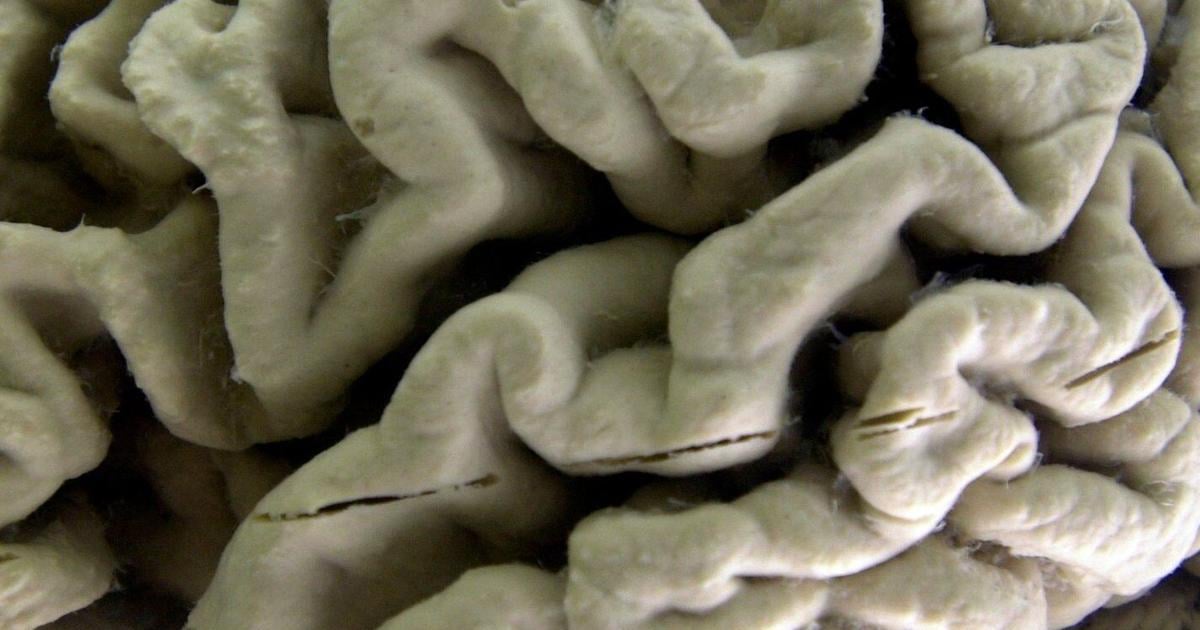
Doctors evaluate symptoms such as mood swings and memory loss to try to tell if patients may have CTE, or chronic traumatic encephalopathy, a disease linked to concussions and other brain trauma. But other diseases cause similar symptoms, and a CTE diagnosis can only be confirmed by examining the brain after death.
The new clue involves a protein called tau that normally supports neurons but becomes abnormal in Alzheimer’s, tangling inside those nerve cells. Researchers at Washington University in St. Louis were using autopsy samples to study a tau fragment called eMTBR-tau243 that may help track those tangles when they found something unusual: a patient with high levels of that biomarker even though records showed the person didn’t have Alzheimer’s but advanced CTE instead.
The researchers turned to a larger collection of autopsied brain and other samples, and eventually tested blood stored from 11 people who had been classified as having CTE.
Compared to healthy people, levels of eMTBR-tau243 were higher in those with advanced CTE, said study coauthor Chihiro Sato, a WashU assistant neurology professor. That biomarker couldn’t reliably identify early-stage CTE.
It is an interesting but very preliminary finding, requiring far larger studies to see if there is a real connection, cautioned Dr. Rudolph Castellani, a neuropathologist at Northwestern University who wasn’t involved with the research.
Abnormal tau is found in several brain diseases, many of which can overlap in older adults, adding to the difficulty in teasing apart its role in any one disease, including CTE. Sato, who studies such tauopathies, also stressed much more research is needed.
The findings were published late Friday by the medical journal JAMA and…
The…
Inicio del artículo, extracto de Toronto Star. Para leer el resto, abra el artículo en el sitio del medio.
MarketNews muestra el titular y el resumen publicados por el medio. El artículo completo se lee en el sitio del editor. (www.thestar.com)