Climate change made Indonesian wildfires more severe, scientists say
Résumé détaillé
While a very strong El Niño was the dominant factor in determining the extremely low levels of rainfall across Indonesia from July, human-induced climate change contributed around 1.6 degrees Celsius of additional heat during the fire season, said a report by climate research group World Weather Attribution.
Your browser is out of date, and may not be compatible with our website. A list of the most popular web browsers can be found below. Just click on the icons to get to the download page.
While a very strong El Niño was the dominant factor in determining the extremely low levels of rainfall across Indonesia from July, human-induced climate change contributed around 1.6 degrees Celsius of additional heat during the fire season, said a report by climate research group World Weather Attribution.
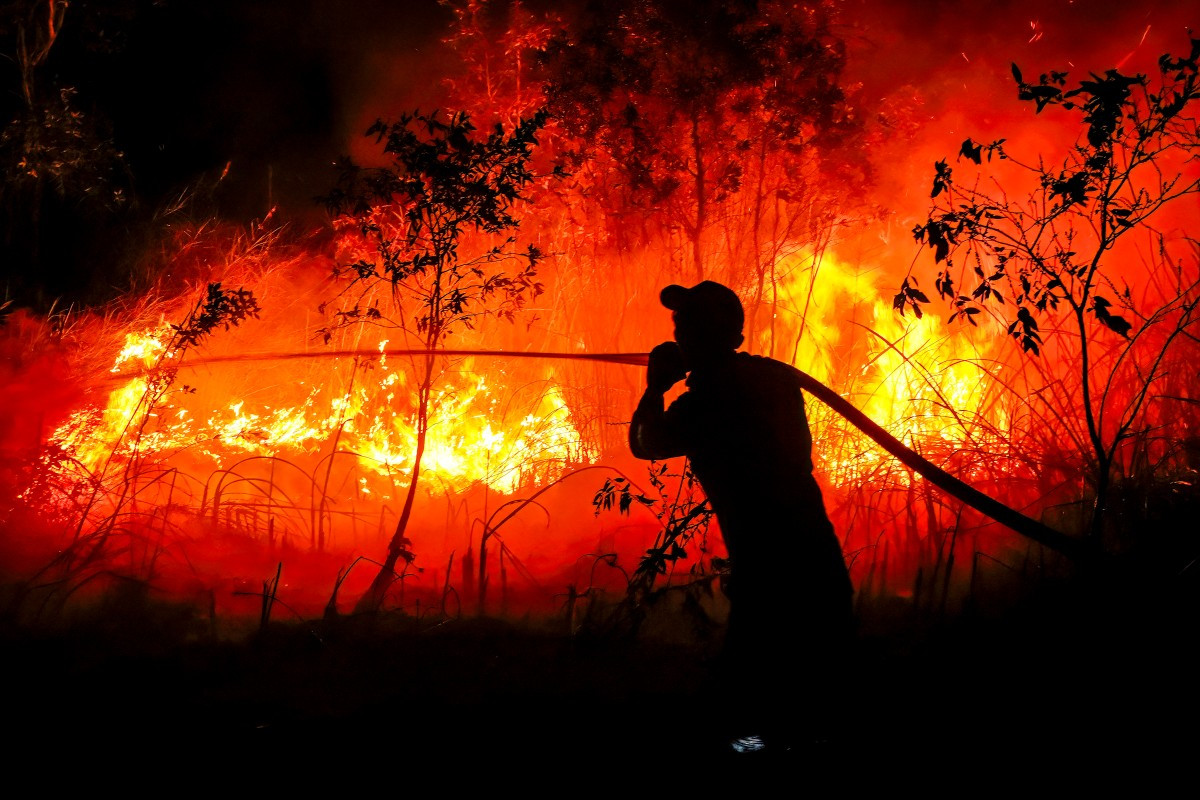
ildfires that hit large parts of Indonesia from August to October and plunged much of Southeast Asia into hazardous smoke were made much worse by "record-breaking" heat caused by human-induced climate change, scientists said on Friday.
While a very strong El Niño was the dominant factor in determining the extremely low levels of rainfall across Indonesia from July, human-induced climate change contributed around 1.6 degrees Celsius of additional heat during the fire season, said a report by climate research group World Weather Attribution.
"Human-induced warming made these (fire-prone) atmospheric conditions about three times more likely as well as more intense," the group said.
"The conditions that we saw this year would simply just not have happened in a world without the human contribution to climate change, even with the very strong El Niño that we're seeing," said Theodore Keeping, a researcher into wildfires and extreme weather at Imperial College London who contributed to the report.
"You have multiple different drivers changing in different ways, but what we can say with very high confidence is that the driving weather conditions of these fires are getting more severe," he told a briefing.
Pramudhian Firdaus, a wildfire researcher at Melbourne University, said September 2026 was Indonesia's fifth-driest September since 1991, with rainfall below normal levels across 84 percent of the country.
Decades of land-use change, involving extensive deforestation and the draining of…
Début de l'article, extrait de The Jakarta Post. Pour lire la suite, ouvrez l'article chez le média.
MarketNews présente le titre et le résumé publiés par le média. L'article complet se lit sur le site de l'éditeur. (www.thejakartapost.com)