Inside Al Fahidi Fort Museum: Dubai’s oldest building reopens with a new story to tell
Resumen detallado
Al Fahidi Fort reopens to the public on Thursday after a five-year restoration, bringing visitors back inside Dubai’s oldest surviving building. The Bur Dubai landmark, which…
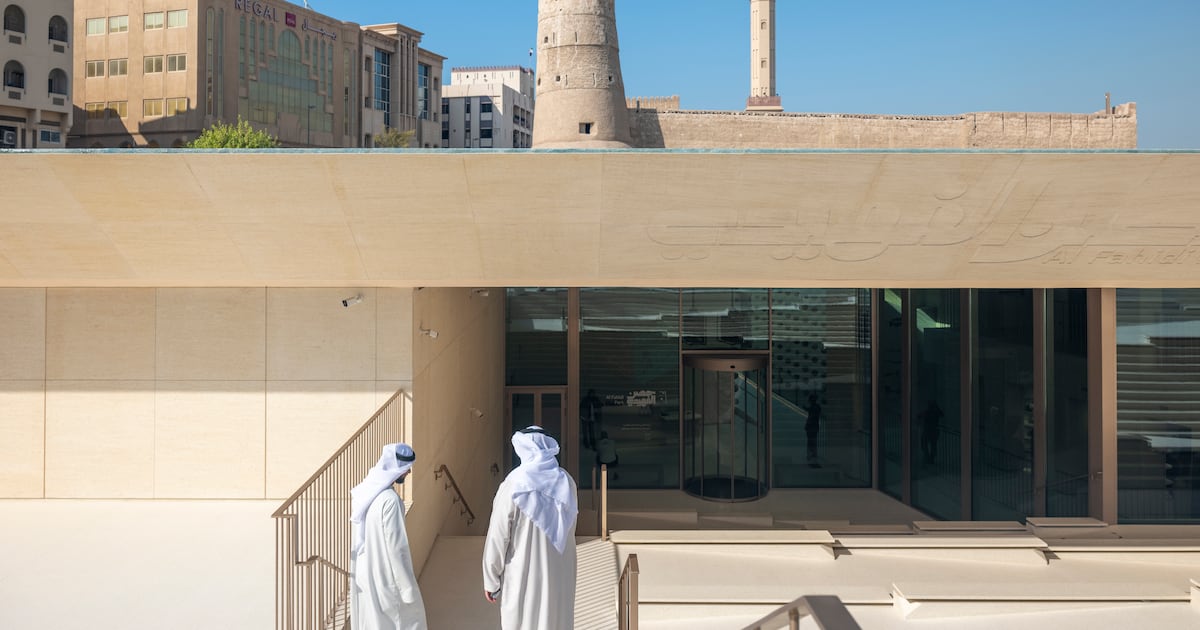
Al Fahidi Fort reopens to the public on Thursday after a five-year restoration, bringing visitors back inside Dubai’s oldest surviving building.
The Bur Dubai landmark, which housed Dubai Museum for half a century, now tells the story of the fort itself and the people who lived and worked there.
Built in 1787 to protect the settlement along Dubai Creek, the fort has served as a residence for the ruling family, a seat of government, a prison and an armoury. In 1971, the then ruler of Dubai, Sheikh Rashid bin Saeed, turned it into the emirate’s first museum, introducing residents and tourists to life in the emirate before oil.
Switzerland refused visas to Gaza survivors. Now their film is its Oscar choice
Many visitors will remember walking through a replica souq or seeing the equipment pearl divers took to sea. Between its opening and 2019, the museum recorded nearly 17 million visits, according to Dubai Culture. Its original floor plan is now among the exhibits at the renamed Al Fahidi Fort Museum.
Those who visit now will find six permanent galleries, a new underground extension and more than 700 objects on display. The collection ranges from archaeological finds in Dubai dating back 8,000 years to military objects associated with Sheikh Mohammed bin Rashid, Vice President and Ruler of Dubai. It also includes a sword and dagger belonging to his grandfather, Sheikh Saeed bin Maktoum, who ruled Dubai from 1912 to 1958.
Al Fahidi Fort remained the seat of government until 1896, when Sheikh Maktoum bin Hasher Al Maktoum was Ruler of Dubai and the ruling family moved to Al Shindagha, a neighbourhood near the mouth of the creek. Its oldest surviving section is the 12-metre south-western tower, built from coral and marine stone bonded with lime and gypsum. The roof was made with palm trunks and wooden beams.
Visitors can climb the tower and walk through the courtyard. The extension below ground gives the museum more space, with a skylight offering a view of the fort above.
Ayisha…
Inicio del artículo, extracto de The National. Para leer el resto, abra el artículo en el sitio del medio.
MarketNews muestra el titular y el resumen publicados por el medio. El artículo completo se lee en el sitio del editor. (www.thenationalnews.com)