European-Japanese spacecraft BepiColombo begins orbit of Mercury, with a glitch reported
Resumen detallado
BepiColombo will be the third spacecraft to visit the planet and just the second to orbit it. Read more at straitstimes.com.
European-Japanese spacecraft BepiColombo will perform its long-awaited Mercury Orbit Insertion after eight years of travelling, the European Space Agency said.
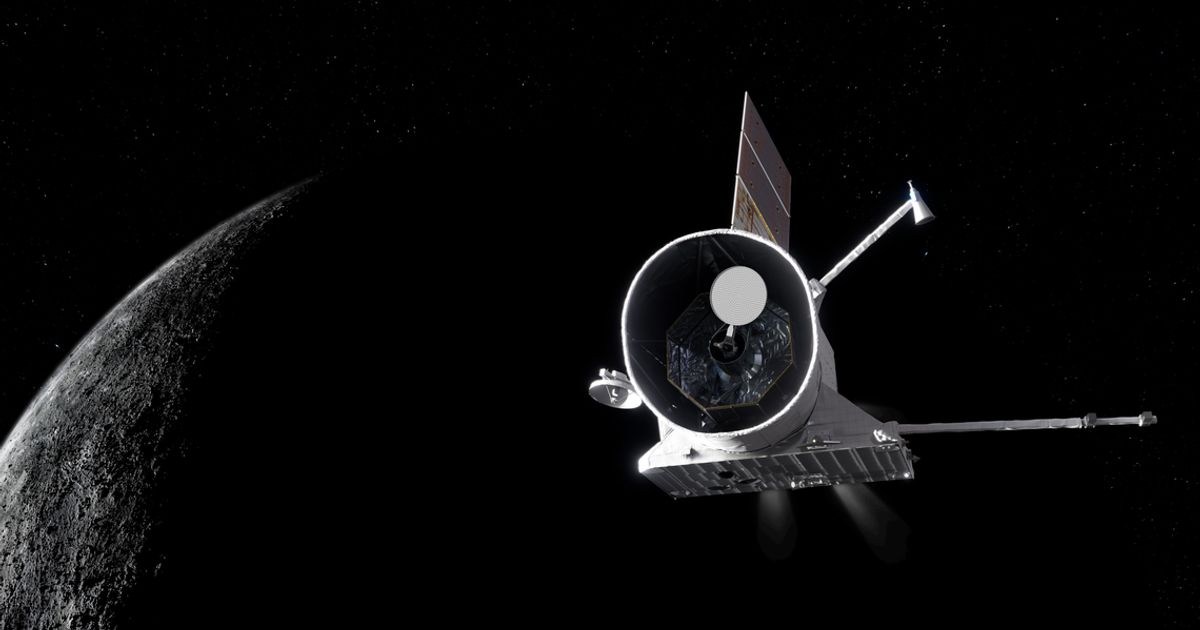
After an eight-year journey, the European-Japanese spacecraft BepiColombo has begun orbiting the solar system’s smallest and innermost planet Mercury, though the European Space Agency said on Nov 22 a glitch has occurred involving its thrusters.
Mercury, only slightly larger than Earth’s moon, is the least explored of the four planets in the inner solar system, with BepiColombo only the third spacecraft to visit the planet and just the second to orbit it.
It is a joint mission of the European Space Agency, or ESA, and the Japan Aerospace Exploration Agency, or JAXA.
In a social media post on Nov 22, ESA said the spacecraft had a successful entry into orbit, but during the maneuver, “the thruster burn was shorter than planned following a software issue.”
“The spacecraft is safe and teams at ESOC (the European Space Operations Centre) are working to understand what happened,” ESA said, adding that “updates will be provided on Monday.”
The robotic spacecraft, launched in 2018, is a composite of ESA’s Mercury Planetary Orbiter and JAXA’s Mercury Magnetospheric Orbiter, which have different scientific objectives and are due to separate on Dec 9 and 10. Routine science operations are slated to commence in April.
The mission will seek to answer questions about Mercury such as why it has a magnetic field, why ice exists in the polar craters of a sun-scorched planet, and what is the nature of enigmatic depressions called “hollows” on its surface.
Mercury’s surface looks similar to that of the moon, with numerous impact craters. There are expanses of smooth terrain as well as cliffs, some up to 1.6km tall.
Inicio del artículo, extracto de The Straits Times. Para leer el resto, abra el artículo en el sitio del medio.
MarketNews muestra el titular y el resumen publicados por el medio. El artículo completo se lee en el sitio del editor. (www.straitstimes.com)