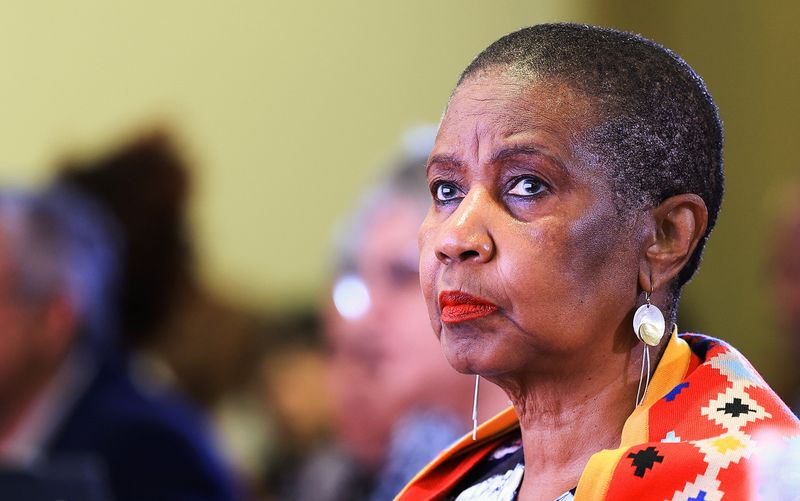
Phumzile Mlambo-Ngcuka — deputy president who sat through Aids denial, then helped end it
Resumen detallado
Phumzile Mlambo-Ngcuka’s journey from anti-apartheid activist to South Africa’s first woman deputy president, UN Women chief and global champion of equality.
She was appointed South Africa’s first woman deputy president after a quarrel she had not started. An inquiry cleared her of wrongdoing in the Oilgate affair, but the courts later set its report aside, leaving the matter unresolved. Although she served under Thabo Mbeki, she helped turn his government away from Aids denial, then led the United Nations agency for women.
Phumzile Mlambo-Ngcuka’s mother was a community health nurse by day, and in the evenings she turned the kitchen of the family house in Clermont, a township outside Durban, into a school. The pupils were adults whom apartheid had kept out of the classroom or given an education that taught them almost nothing. Her 11-year-old daughter was the assistant.
Nearly 60 years later, in an interview with the Robert Bosch Academy in Berlin, she remembered what had moved her. “The greatest joy was when they had learned to write and to count,” she said. “Then they could manage their own money. The seed was planted there.”
Her father, Michael Mlambo, was a schoolteacher who brought exercise books home to mark. Learning was the work of the house. As a young girl at primary school in Clermont, she decided she would love to be a professor. From there she went to Inkamana Abbey, a Catholic school in northern KwaZulu-Natal, and matriculated at Ohlange High School in Inanda. John Dube, the first president of the African National Congress, had founded it, and Nelson Mandela cast his vote there in 1994.
Her first year at university, 1976, was the year of the Soweto uprising, when tens of thousands of black schoolchildren walked out of their classrooms to protest against an education system that forced them to learn Afrikaans. The government answered with deadly violence. Mlambo-Ngcuka organised protests and was barred from studying in South Africa, so she crossed into Lesotho and took her degree in arts and education at the National University of Lesotho, as much activist as student.
Her fiancé, Bulelani Ngcuka, a lawyer from…
A…
Inicio del artículo, extracto de Daily Maverick. Para leer el resto, abra el artículo en el sitio del medio.
MarketNews muestra el titular y el resumen publicados por el medio. El artículo completo se lee en el sitio del editor. (www.dailymaverick.co.za)