Delhi pollution explained: Worst pre-Diwali air in three years
Résumé détaillé
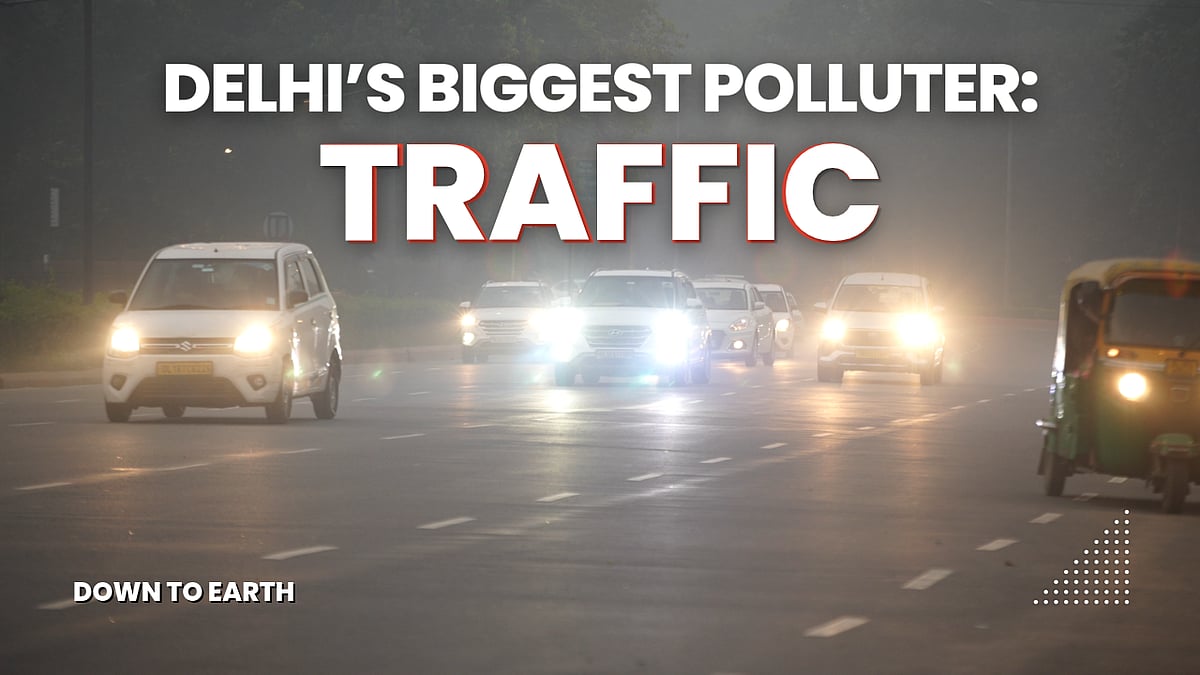
Delhi's pre-Diwali air quality in 2026 reached its worst in three years, with PM2.5 levels surging 97% higher than 2025. Transport contributed 52% of local pollution, while NCR districts added significantly. Emergency traffic measures failed to ease congestion, prompting CSE to call for sustained emission cuts and expanded public transport for long-term solutions.
Delhi's air quality had already deteriorated to its worst pre-Diwali levels in three years, even before the festival began, according to an analysis by the Delhi-based think tank Centre for Science and Environment (CSE) released on November 11, 2026.
In the week before Diwali, Delhi's average PM2.5 concentration was 236 micrograms per cubic metre (µg/m³), 97 per cent higher than the 120 µg/m³ recorded in 2025 and 32 per cent higher than the 179 µg/m³ in 2024.
Except for a brief improvement following rainfall in late September, Delhi's pre-winter air quality was worse this year than in 2025. In both years, pollution levels spiked just before Diwali. CSE's Anumita Roychowdhury said Delhi's baseline pollution levels were now higher.
Between October 1 and November 8, 11 of Delhi's 13 officially identified pollution hotspots recorded lower pollution levels than during the same period last year.
Anand Vihar recorded a 49 per cent improvement, followed by Wazirpur at 41 per cent, Ashok Vihar at 40 per cent and Bawana at 22 per cent. However, Jahangirpuri remained the most polluted hotspot, with an average PM2.5 concentration of 163 µg/m³.
Areas outside the official hotspot list also recorded high pollution levels. These included Vivek Vihar (144 µg/m³), Sonia Vihar (139 µg/m³), ITO (137 µg/m³), Delhi Technological University (135 µg/m³), NIH Narela (122 µg/m³) and NSUT Jaffarpur (111 µg/m³).
Data from the Indian Institute of Tropical Meteorology (IITM) for November 1–8 showed that neighbouring National Capital Region (NCR) districts contributed 54.43 per cent of Delhi's PM2.5 pollution, while sources within Delhi accounted for 33.06 per cent. Stubble burning contributed 14.29 per cent.
Stubble burning's contribution was 11.5 per cent on November 1 and 8.6 per cent on November 2, peaking at 16.2 per cent on November 4.
On November 6, when Delhi's air quality index (AQI) reached 382 and Stage III of the Graded Response Action Plan (GRAP) was invoked, stubble burning's contribution…
Début de l'article, extrait de Down To Earth. Pour lire la suite, ouvrez l'article chez le média.
MarketNews présente le titre et le résumé publiés par le média. L'article complet se lit sur le site de l'éditeur. (www.downtoearth.org.in)