ASEAN leaders sign new power grid deal. What’s next for Philippines?
Detailed summary
Philippine Energy Secretary Sharon Garin says the ADB and World Bank have 'indicated their interest in financing' regional power grid connections, which could require hundreds of billions of dollars in investment
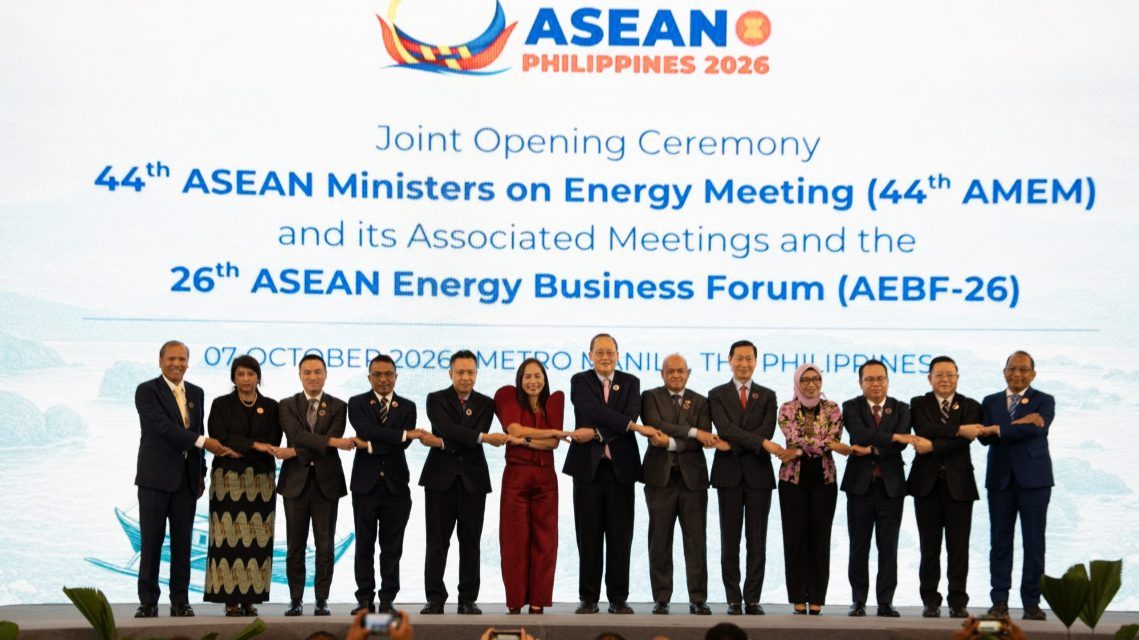
ASEAN. Energy ministers from different ASEAN member-states pose ahead of discussions on regional energy issues, on October 7, 2026.
This is AI-generated. Read the article for full context. Report any errors.
MANILA, Philippines – Southeast Asian nations have long dreamed of an interconnected electricity network. Now, they are one step closer after all 11 ASEAN countries completed the signing of a power grid agreement that could eventually allow them to buy and sell electricity across borders.
The Enhanced Memorandum of Understanding (MOU) on the ASEAN Power Grid officially entered into force upon completion of its signing on Sunday, November 15, during the 49th ASEAN Summit in Manila.
According to ASEAN, the agreement “covers cooperation on infrastructure planning, institutional arrangements, policy and regulatory development, and access to financing, including for overland transmission lines and subsea power cables.” (Watch ADB’s brief explainer video below:
The agreement builds on discussions during the 48th ASEAN Summit in Cebu last May, when leaders pushed for greater regional energy connectivity, particularly through submarine power cables connecting the region’s island economies. This continued during the ASEAN energy ministers’ meeting in Manila last October, when all member countries at the time reached a consensus on the agreement.
With all ASEAN countries now manifesting their support for an interconnected grid, the proposal now moves down to the more detailed technical, legal, and financial levels of discussion.
For the Philippines, the benefits could be significant. Connecting to neighboring countries could allow the country to import electricity when domestic supplies are tight. Beyond improving reliability, it could also help move the Philippines’ away from expensive and dirty fossil fuel generation. (READ: Solar for whom? What Philippines can learn from Pakistan’s rooftop boom)
The Philippines itself operates three major electricity grids, Luzon, Visayas…
Opening of the article, excerpted from Rappler. To read the rest, open the article on the publisher's site.
MarketNews shows the headline and summary published by the outlet. The full article is on the publisher's website. (www.rappler.com)