The Cables That Bring You High-Speed Internet Could Also Help Save Orcas
Résumé détaillé
Nearly a million miles of fiber-optic cables have been laid on the ocean floor. Scientists say they have proof of concept that we could use it to monitor whales and orcas.
Nearly a million miles of fiber-optic cables have been laid on the ocean floor. Scientists say they have proof of concept that we could use it to monitor whales and orcas.
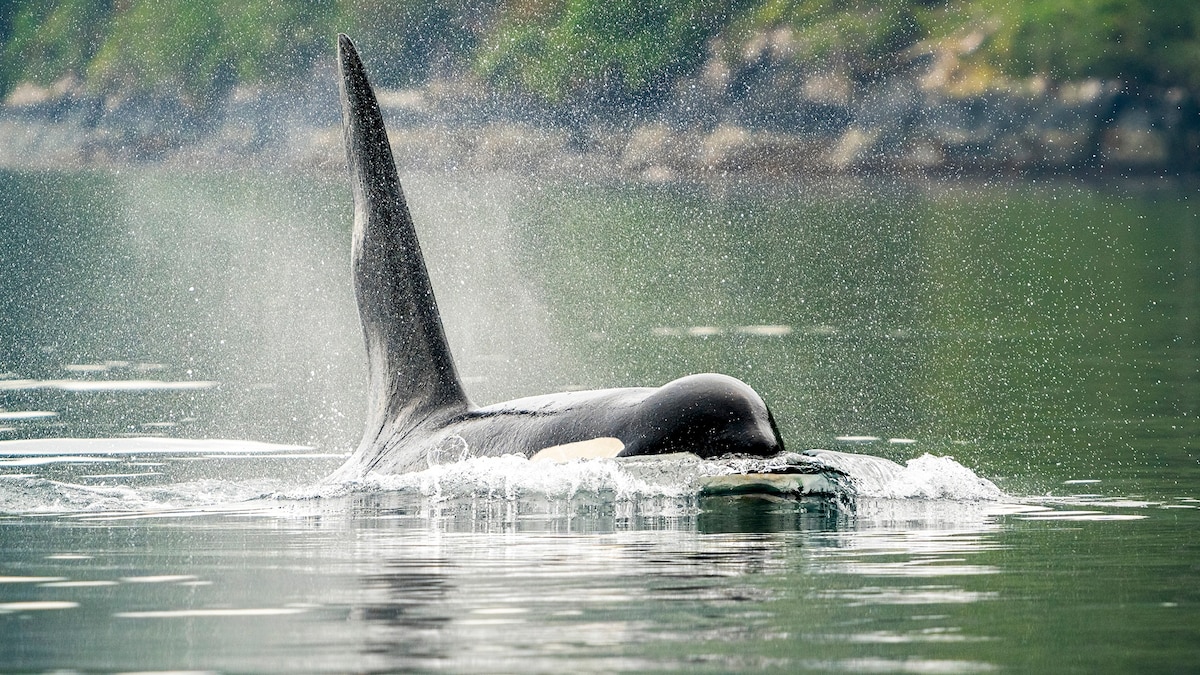
On the rocky shore of San Juan Island, northwest of Seattle, a thin black line of fiber-optic cable emerges from the Salish Sea and snakes up to Val Veirs’s garage. It’s the same sort of cable that telecommunications companies use to provide high-speed internet, but this one has a different purpose. It’s there to eavesdrop on orcas.
For a quarter century, Veirs, a retired physicist turned bioacoustics researcher, and his wife Leslie have stationed underwater microphones called hydrophones along their beachfront property to record the clicks and whistles of nearby orcas. Hydrophones are the gold standard for underwater acoustic monitoring, but they can only listen from a single location. Fiber-optic cables, by contrast, can detect sound along their entire length, which can span miles. Each cable functions like a continuous string of hydrophones—thousands of ears in the ocean that could capture exquisite detail about the lives of marine mammals.
Veirs and other scientists hope these details can teach them about orca behavior like how they hunt, when they migrate, and how noisy underwater activity interferes with their habits.
His at-home set-up is a proof of concept—one that seems to be working. Despite the challenges involved in picking up high-pitched orca calls, the results so far are promising, as detailed in a new paper published in the Journal of the Acoustical Society of America.
Fiber-optic cables are built to transmit data in pulses of light, not to detect sound. Yet those same pulses can be co-opted, says Shima Abadi, an acoustics expert at the University of Washington who is leading the experiment set up at Veirs’ house. Every noise in the sea—a whale’s call, a ship’s engine, a collapsing glacier—generates sound waves.
To interpret the sonic fingerprint within those light distortions, Abadi…
Thi…
Début de l'article, extrait de National Geographic. Pour lire la suite, ouvrez l'article chez le média.
MarketNews présente le titre et le résumé publiés par le média. L'article complet se lit sur le site de l'éditeur. (www.nationalgeographic.com)