VICO 2026 opens in Ho Chi Minh City as industry weighs its future
Detailed summary
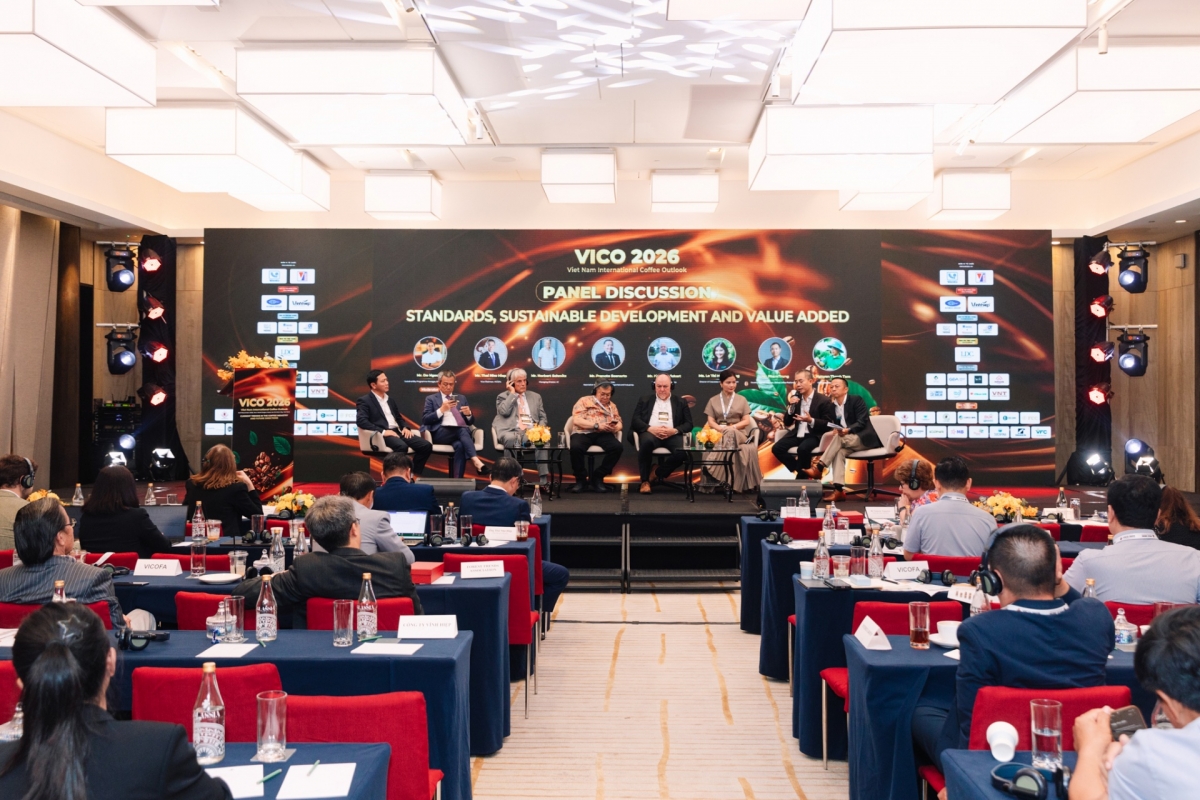
VICO 2026 has opened in Ho Chi Minh City, bringing regulators, international coffee organisations, and businesses together to debate the trends shaping the industry.
The two-day event, running November 16–17, centres on market fluctuations, new regulations, quality and value addition, climate change, green finance, technology, and cooperation among coffee-producing countries. At the conference, a Nestlé Vietnam representative set out the changes needed for Vietnam's coffee industry to shift from quantity to quality, value, and sustainable supply.
Held by the Vietnam Coffee and Cocoa Association, VICO 2026 brings together regulatory bodies, international coffee organisations, and businesses across the value chain to discuss emerging trends shaping the industry in Vietnam and globally.
Speaking at a panel discussion on 'Quality, Sustainability and Value Addition in the Coffee Industry', Le Thi Hoai Thuong, director of corporate affairs at Nestlé Vietnam, said, "The long-term competitiveness of Vietnamese coffee must be built upon the foundation of the value chain, starting with soil health, the adaptive capacity of farming households, and collaboration among all stakeholders."
"To enhance the value of Vietnamese coffee, we must look beyond production volumes and final-stage processing. Value must be created right from the farm through preserving and improving soil health, conserving biodiversity, using resources more efficiently, ensuring more consistent quality, and improving farmers' livelihoods," Thuong said.
According to Nestlé Vietnam, soil degradation is both an environmental issue and a direct threat to yield stability, coffee quality, production costs, and supply chain resilience. Regenerative agriculture is therefore an important approach to restoring soil health, improving water-use efficiency, and promoting biodiversity.
Through NESCAFÉ Plan, Nestlé supports farmers in adopting regenerative agricultural practices that help reduce the use of chemical fertilisers and pesticides by around 20 per cent, while saving 40–60 per cent of irrigation water.
The programme has helped increase household incomes by between 30 and 150 per…
As…
Opening of the article, excerpted from Vietnam Investment Review. To read the rest, open the article on the publisher's site.
MarketNews shows the headline and summary published by the outlet. The full article is on the publisher's website. (vir.com.vn)